CM Bhajan Lal marks 1975 Emergency anniversary, honours democracy fighters
Synopsis
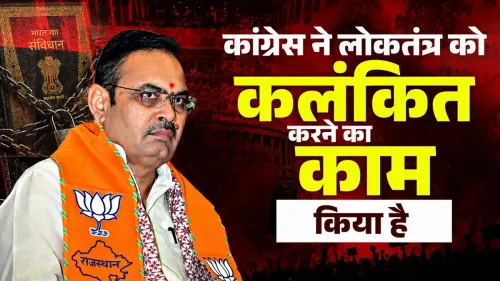
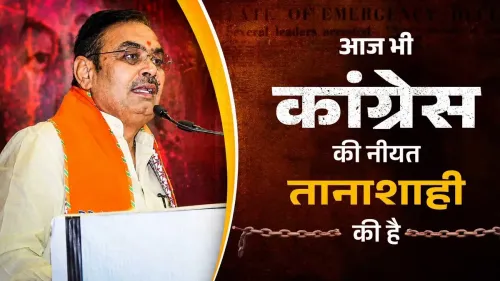
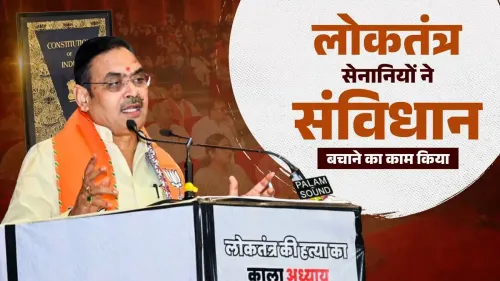
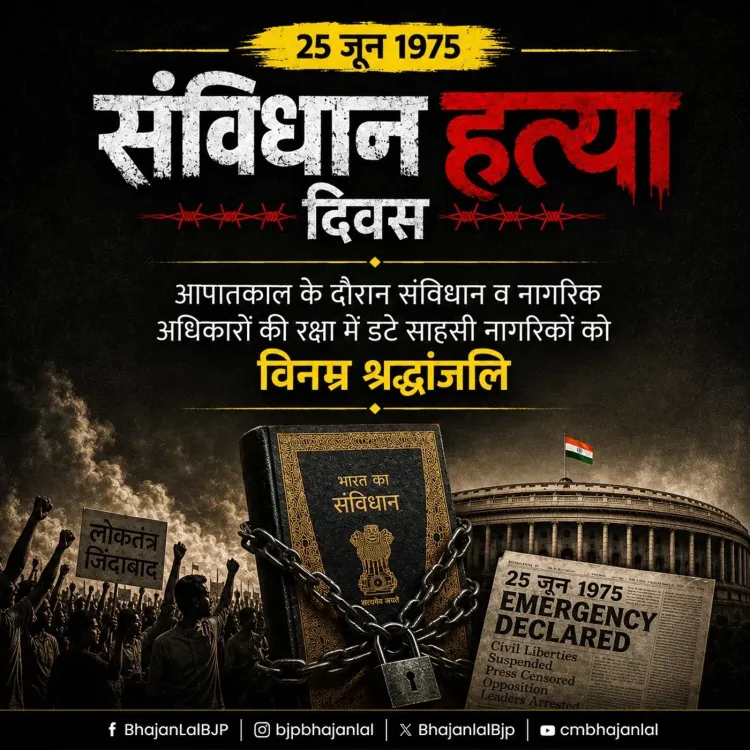
Rajasthan Chief Minister Bhajan Lal Sharma on 25 June 2026 marked the 51st anniversary of the 1975 Emergency, calling it a dark chapter imposed by the Congress government and paying tribute to all who fought to restore democracy under the hashtag #SamvidhanHatyaDiwas.
Key Takeaways
Rajasthan CM Bhajan Lal Sharma posted a tribute on 25 June 2026 marking the anniversary of the 1975 Emergency .
The Emergency was declared on 25 June 1975 by then PM Indira Gandhi under Article 352 , lasting 21 months .
Sharma described the period as one of open suppression of 'freedom of expression, civil rights and constitutional values.' He saluted all democracy fighters and patriots who resisted repression during the Emergency.
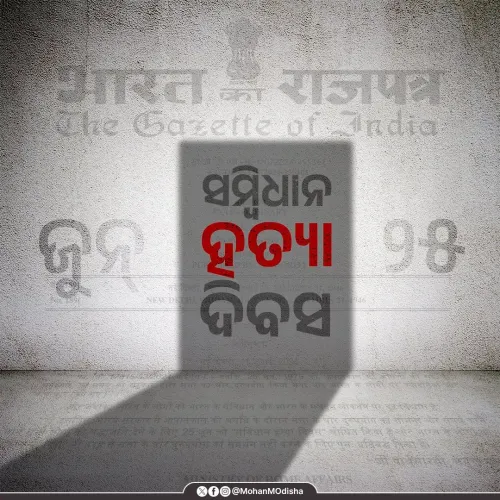
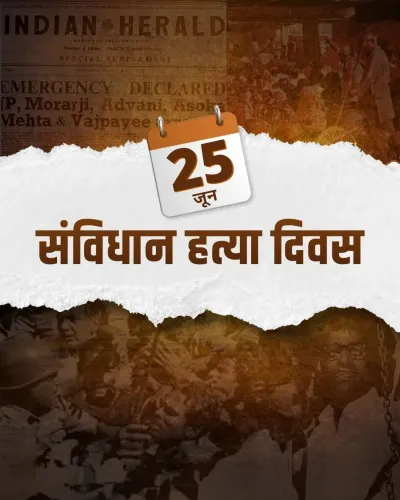
The post was tagged #SamvidhanHatyaDiwas , the designation given to 25 June as a day of constitutional remembrance.
The BJP uses the anniversary annually to contrast its democratic record with what it calls the Congress party's authoritarian legacy.
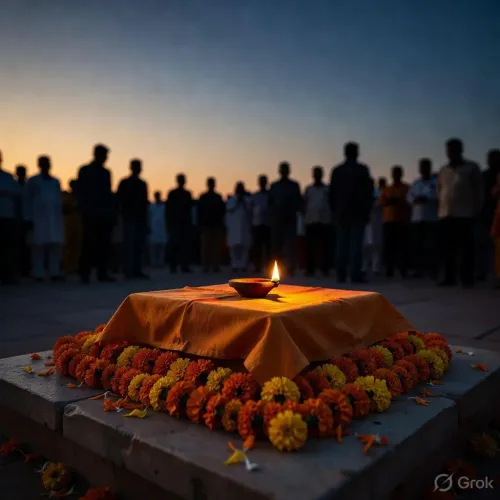
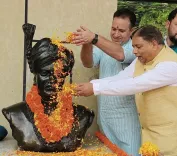
Rajasthan Chief Minister Bhajan Lal Sharma on Thursday, 25 June 2026 paid tribute to those who resisted the 1975 Emergency, calling it a dark chapter in India's democratic history and honouring all who fought to restore constitutional values during that period.
Context
Sharma's post, shared under the hashtag #SamvidhanHatyaDiwas (Constitution Murder Day), recalled that the Emergency was imposed on 25 June 1975 by the then Congress government. In his words, it was a period when 'freedom of expression, civil rights and constitutional values were openly suppressed, and attempts were made to weaken democratic institutions.'
He offered salutations — kotishaḥ naman (salute a crore times) — to all democracy fighters and patriots who struggled for the protection and restoration of democracy despite torture, repression and persecution during that dark period.
Policy Backdrop
On 25 June 1975, then Prime Minister Indira Gandhi declared a national Emergency under Article 352 of the Constitution, citing internal disturbance. The proclamation suspended civil liberties, imposed press censorship, and led to the detention of thousands of opposition leaders and activists without trial for 21 months.
The Emergency ended in March 1977, after which general elections produced a historic defeat for the Indian National Congress and brought the first non-Congress government to power at the Centre. Opposition stalwart Jayaprakash Narayan had been among the most prominent voices leading the resistance movement against the Emergency from the outset.
The BJP-led central government formally designated 25 June as Samvidhan Hatya Diwas to be observed annually as a day of remembrance for the Emergency's assault on constitutional democracy.
Stakeholders and Impact
The anniversary resonates with civil liberties advocates, former Emergency detainees, and political parties across the spectrum. For the BJP, the date serves as a recurring occasion to highlight what it describes as the Congress party's authoritarian legacy, contrasting it with its own stated commitment to constitutional governance.
For the Congress, the anniversary typically prompts either silence or counter-narratives defending the Emergency as a response to political instability — a debate that has persisted across decades of Indian political discourse.
What's Next
Similar tributes from other BJP chief ministers and senior central government leaders are expected through the day, as the party customarily uses the anniversary for coordinated messaging. Counter-statements from Congress leaders on the same date would continue a long-running political exchange over the memory and meaning of the Emergency period.
The broader pattern of historical memory politics around 25 June suggests the day will remain a fixture in India's political calendar, with each anniversary sharpening the contrast both major parties seek to draw about their respective democratic credentials.
Point of View
Particularly on the anniversary itself when the narrative commands maximum attention. By invoking Samvidhan Hatya Diwas — a designation that frames the Emergency as a constitutional murder — the party elevates a historical grievance into an active electoral and ideological argument. The tribute to 'democracy fighters' also serves to appropriate a resistance legacy that cuts across party lines, claiming moral continuity with those who opposed authoritarianism. As India's two dominant national parties continue to contest the meaning of constitutional democracy, the Emergency anniversary has become a reliable annual flashpoint for that contest.
NationPress
23 Sept 2026
Frequently Asked Questions
Why is 25 June observed as Samvidhan Hatya Diwas?
25 June is observed as Samvidhan Hatya Diwas (Constitution Murder Day) to mark the anniversary of the 1975 Emergency declared by then Prime Minister Indira Gandhi , which suspended civil liberties and democratic rights for 21 months . The BJP-led government designated the day to remember it as an assault on constitutional values.
What did Bhajan Lal Sharma say about the 1975 Emergency?
Rajasthan CM Bhajan Lal Sharma called the Emergency a 'dark chapter' in India's democratic history, saying freedom of expression, civil rights and constitutional values were openly suppressed. He paid tribute to all democracy fighters who resisted repression to restore democracy.
Who imposed the Emergency in India in 1975?
The national Emergency was imposed on 25 June 1975 by then Prime Minister Indira Gandhi under Article 352 of the Constitution, with the ruling Indian National Congress citing internal disturbance as justification.
How long did the 1975 Emergency last?
The 1975 Emergency lasted 21 months , ending in March 1977 . The subsequent general elections resulted in a defeat for the Congress and the formation of India's first non-Congress central government.
Who was Jayaprakash Narayan and what was his role in the Emergency?
Jayaprakash Narayan , popularly known as JP, was a veteran opposition leader who spearheaded the popular movement against the 1975 Emergency , calling for its withdrawal and mobilising mass resistance against the suspension of civil liberties.