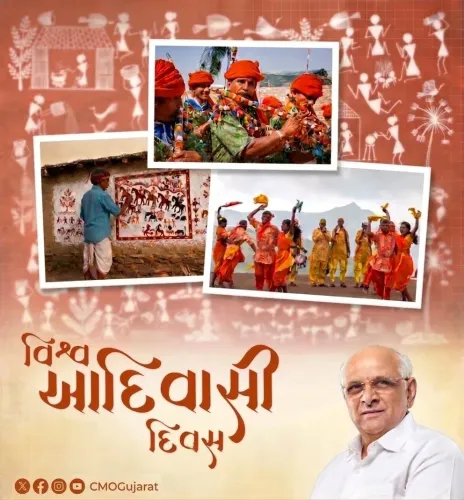
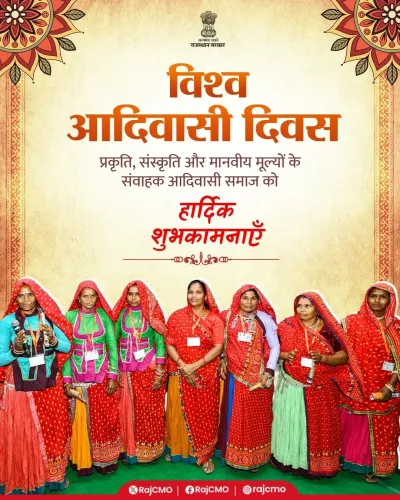
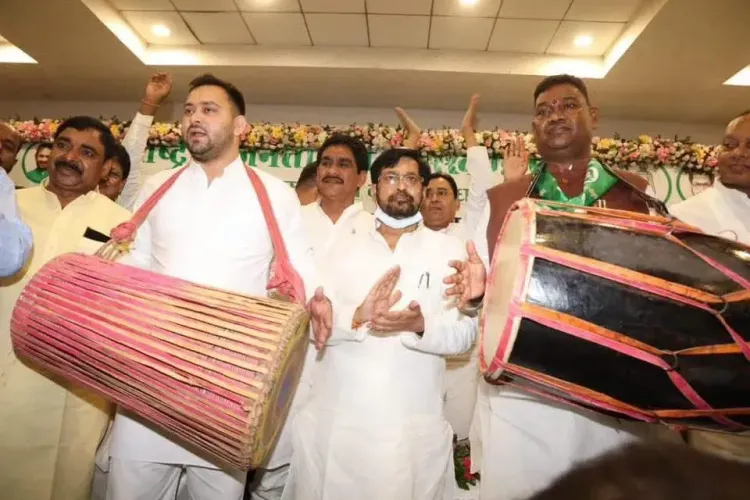
Tejashwi Yadav marks World Tribal Day, vows to protect Adivasi rights
Synopsis
On International Day of the World's Indigenous Peoples, RJD leader Tejashwi Yadav called India's Adivasi communities the guardians of 'jal, jungle, zameen aur jeevan' and pledged to protect their identity, rights, and ancient heritage.
Key Takeaways
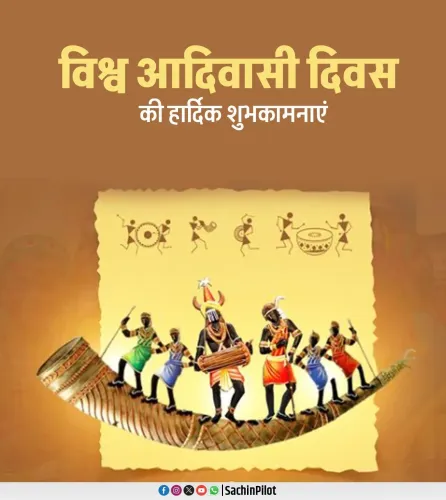
Tejashwi Yadav posted a World Tribal Day message on 9 August 2026 , greeting all citizens and honouring Adivasi culture.
He used the phrase 'jal, jungle, zameen aur jeevan' — water, forest, land, and life — a cornerstone slogan of India's Adivasi rights movement.
The post closed with 'Jai Johar!' , the traditional Adivasi solidarity greeting, signalling cultural recognition beyond routine political messaging.
The UN established International Day of the World's Indigenous Peoples in 1994 ; India observes it with particular significance given its large Scheduled Tribe population.
The Forest Rights Act, 2006 remains a key legislative reference point for Adivasi land and resource rights in India.
As Bihar's Leader of the Opposition , Tejashwi's pledge to protect Adivasi interests underscores the RJD's continued outreach to marginalised communities.
On World Tribal Day, August 9, RJD leader Tejashwi Yadav invoked the shared heritage of India's indigenous communities — their forests, their land, their centuries-old traditions — and called on the nation to renew its commitment to Adivasi rights and identity.
Posting in Hindi with the salutation 'Jai Johar!' — the traditional Adivasi greeting of solidarity — Tejashwi described tribal society as the custodians of 'jal, jungle, zameen aur jeevan' (water, forest, land, and life), a phrase that has long anchored the Adivasi rights movement in India. He called their rich culture, civilisation, and ancient traditions 'an invaluable heritage and the foundation of our nation's philosophy of life.'
A day rooted in a UN pledge, an Indian struggle
International Day of the World's Indigenous Peoples is observed every 9 August — a date the United Nations established in 1994 to spotlight the rights, cultures, and challenges of indigenous communities globally. In India, where Scheduled Tribes number in the tens of millions across states like Jharkhand, Chhattisgarh, Odisha, and Bihar, the day carries particular political and constitutional weight. India's Constitution affords Scheduled Tribes special protections — land safeguards, cultural rights, and reserved representation. The landmark Scheduled Tribes and Other Traditional Forest Dwellers (Recognition of Forest Rights) Act, 2006 was a legislative attempt to correct decades of displacement by recognising tribal communities' rights over forest land and resources they had inhabited long before modern administrative boundaries were drawn.Tejashwi's pledge and its political resonance in Bihar
Bihar has a significant Scheduled Tribe population, and Adivasi welfare has been a recurring fault line in state politics. As Leader of the Opposition in the Bihar Legislative Assembly, Tejashwi's statement is both a cultural tribute and a political signal — a reminder that the RJD's social coalition has historically included marginalised communities alongside OBCs. His call to protect Adivasi 'identity, rights, and interests' echoes a broader opposition argument: that forest rights implementation remains incomplete and that tribal communities continue to face displacement pressures. The phrase 'saajhi virasat, saajhi shahadat, saajhi ladaai' — shared heritage, shared martyrdom, shared struggle — frames Adivasi history not as a footnote but as central to India's national story. Every August 9, political statements flow freely. What Adivasi communities watch for is what follows — in budget allocations, in forest rights settlements, and in the halls of state legislatures where their futures are actually decided.Point of View
Jungle, zameen' is not incidental — it is the vocabulary of a decades-long Adivasi rights movement that the RJD wants to be seen as championing. Against a backdrop of ongoing debates over forest rights implementation and tribal displacement, the statement positions the party as a natural ally of Scheduled Tribe communities. Whether such pledges translate into concrete legislative action in the Bihar Assembly is the question that will define their credibility.
NationPress
23 Sept 2026
Frequently Asked Questions
What is World Tribal Day and why is it observed on August 9?
World Tribal Day , formally the International Day of the World's Indigenous Peoples, is observed on 9 August every year. The United Nations designated this date in 1994 to raise awareness of the rights, cultures, and challenges of indigenous communities worldwide. August 9 marks the day the UN's Working Group on Indigenous Populations first met in 1982 .
What did Tejashwi Yadav say on World Tribal Day 2026?
Tejashwi Yadav greeted all citizens on World Tribal Day and described Adivasi society as the custodians of 'jal, jungle, zameen aur jeevan' — water, forest, land, and life. He called their culture and traditions an invaluable national heritage and pledged to protect Adivasi identity, rights, and interests, closing with 'Jai Johar!'
What does 'Jai Johar' mean?
'Jai Johar' is a traditional greeting and salutation used among Adivasi communities in India, particularly in states like Jharkhand . It expresses solidarity, pride, and respect within indigenous communities and has become widely recognised as a symbol of Adivasi identity.
What is the Forest Rights Act that relates to Adivasi communities?
The Scheduled Tribes and Other Traditional Forest Dwellers (Recognition of Forest Rights) Act, 2006 is a central law that recognises the rights of tribal and other forest-dwelling communities over land and resources they have traditionally occupied. It was enacted to address historical injustices of displacement and denial of resource access.
Why does Tejashwi Yadav's statement on Adivasi rights matter in Bihar politics?
Bihar has a substantial Scheduled Tribe population, and Adivasi welfare is a significant political concern in the state. As Leader of the Opposition , Tejashwi Yadav's public commitment to Adivasi rights signals the RJD 's intent to maintain and expand its social coalition, which has historically included marginalised and tribal communities alongside OBC groups.