CM Bhajan Lal Sharma marks Samvidhan Hatya Diwas, targets Congress over 1975 Emergency
Synopsis
On the 51st anniversary of the 1975 Emergency, Rajasthan CM Bhajan Lal Sharma accused Congress of being democracy's 'predator', citing the 42nd Constitutional Amendment as a 'Mini-Constitution' that gutted India's founding document. The post was part of the BJP's annual Samvidhan Hatya Diwas observance.
Key Takeaways
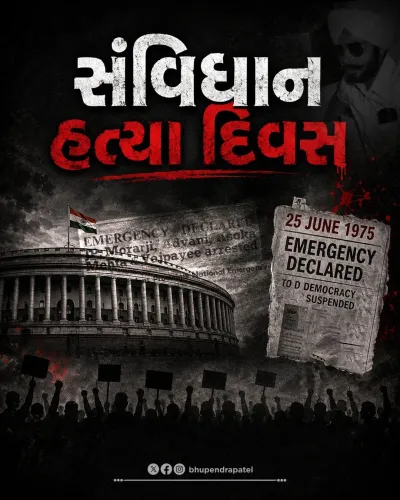
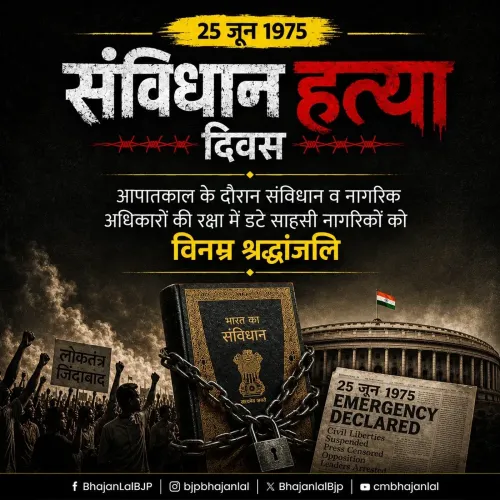
Rajasthan CM Bhajan Lal Sharma posted on X on 25 June 2026 marking Samvidhan Hatya Diwas .
He accused Congress of being a 'predator of democracy' rather than its protector.
He referenced the 42nd Constitutional Amendment of 1976 , calling it so sweeping it amounted to a 'Mini-Constitution.' The 1975 Emergency was proclaimed on 25 June 1975 and lasted until March 1977 , suspending civil liberties and enabling mass arrests.
The BJP has institutionalised 25 June as Samvidhan Hatya Diwas as part of its annual counter-narrative against Congress on constitutional matters.
The 44th Amendment (1978) by the Janata Party reversed several Emergency-era changes introduced by the 42nd Amendment.
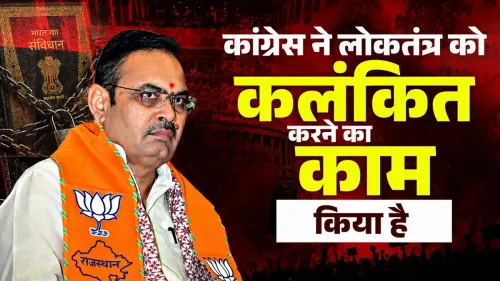
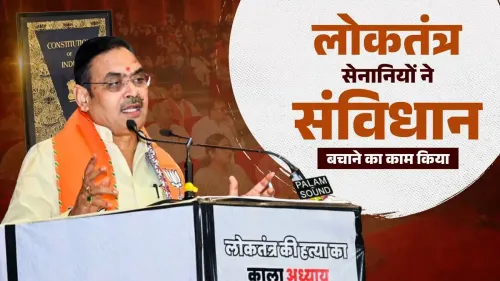
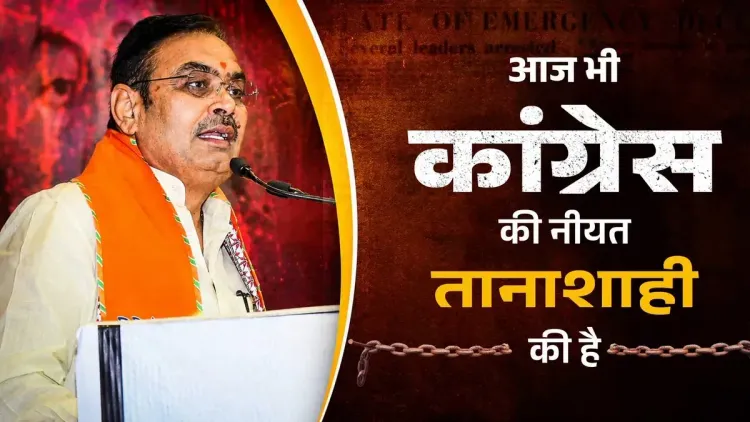
Rajasthan Chief Minister Bhajan Lal Sharma on Thursday, 25 June 2026 marked Samvidhan Hatya Diwas with a sharp attack on the Indian National Congress, accusing the party of being a 'destroyer, not a protector, of democracy' during the 1975 Emergency. Sharma posted on X, pointing to the sweeping constitutional amendments passed during that period as evidence of Congress's disregard for the Constitution.
In his post, Sharma wrote: 'Kांग्रेस लोकतंत्र की रक्षक नहीं, भक्षक है' — 'Congress is not the protector of democracy, it is its predator.' He added that the constitutional amendments carried out during the Emergency were so extensive that the resulting document could be called a 'Mini-Constitution.'
Context
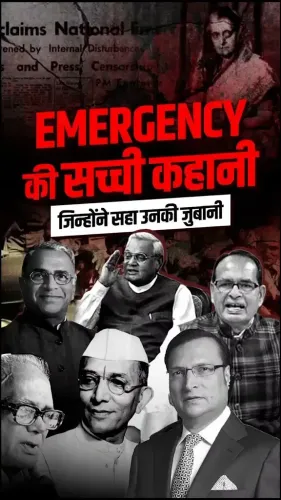
The post was made on the 51st anniversary of the Emergency, proclaimed on 25 June 1975 by the then-government under Article 352 of the Constitution. The proclamation suspended civil liberties, led to mass arrests of political opponents, and imposed widespread press censorship. The Emergency lasted until March 1977.
The reference to a 'Mini-Constitution' points directly to the 42nd Constitutional Amendment Act of 1976, passed by Parliament during the Emergency. That amendment made far-reaching changes to the Constitution — adding the words 'socialist' and 'secular' to the Preamble, curtailing the Supreme Court's power of judicial review, and extending the term of the Lok Sabha from five to six years, among other provisions. Constitutional scholars have long regarded it as among the most consequential and controversial amendments in India's history.
Policy Backdrop
The BJP formally institutionalised 25 June as Samvidhan Hatya Diwas — 'Constitution Murder Day' — to mark the anniversary of the Emergency proclamation. The observance is framed as a counter-narrative to the opposition's constitutional messaging, positioning the Emergency period as the gravest assault on Indian democracy in the republic's history.
After the Emergency ended, the Janata Party government passed the 44th Constitutional Amendment in 1978, reversing several changes introduced by the 42nd Amendment, including restoring the original five-year term of the Lok Sabha and strengthening certain fundamental rights.
Stakeholders and Impact
The Indian National Congress, as the party in government during the Emergency, bears the primary political burden of this anniversary in the BJP's framing. Opposition parties broadly contest this narrative, arguing that the current government's own record on press freedom and civil liberties deserves scrutiny. Constitutional scholars note that the 42nd Amendment remains a reference point in ongoing debates about the limits of Parliament's amending power.
State-level BJP leaders across India, including Chief Ministers, typically amplify the Samvidhan Hatya Diwas messaging through social media and public events, making it a coordinated annual political exercise rather than a solitary statement.
What's Next
Annual observances on 25 June have increasingly become a fixture in the BJP's political calendar, with the messaging expected to intensify ahead of any upcoming state or national elections. References to the Emergency and the 42nd Amendment are also likely to resurface in parliamentary debates on constitutional matters, keeping the 1975-77 period central to the ruling party's contrast with the Congress-led opposition.
Point of View
The messaging gains a veneer of constitutional precision that is harder for the opposition to dismiss outright. The annual cadence of Samvidhan Hatya Diwas signals that this is not reactive commentary but a structured political exercise, coordinated across state and national leadership. As long as Congress contests the BJP on constitutional grounds, the Emergency will remain the ruling party's most potent historical counter-argument.
NationPress
24 Sept 2026
Frequently Asked Questions
What is Samvidhan Hatya Diwas?
Samvidhan Hatya Diwas, or 'Constitution Murder Day,' is observed by the BJP on 25 June each year to mark the anniversary of the Emergency proclaimed in 1975, which the party argues was the gravest assault on India's Constitution and democratic freedoms.
What did Bhajan Lal Sharma say about Congress on 25 June 2026?
Rajasthan CM Bhajan Lal Sharma posted on X accusing Congress of being a 'predator of democracy,' pointing to the sweeping 42nd Constitutional Amendment passed during the 1975 Emergency as evidence, calling it a 'Mini-Constitution.'
What was the 42nd Constitutional Amendment?
The 42nd Constitutional Amendment Act of 1976 was passed during the Emergency and made extensive changes to India's Constitution, including adding 'socialist' and 'secular' to the Preamble, curtailing judicial review, and extending the Lok Sabha's term to six years. It is widely regarded as one of the most far-reaching and controversial amendments in India's constitutional history.
When was the Emergency declared in India and how long did it last?
The Emergency was proclaimed on 25 June 1975 by the then-government under Article 352 of the Constitution. It suspended civil liberties and lasted until March 1977, a period of approximately 21 months.
What is the BJP's political purpose behind Samvidhan Hatya Diwas?
The BJP uses Samvidhan Hatya Diwas as an annual political counter-narrative, framing the 1975-77 Emergency as the Congress party's most serious attack on Indian democracy. The observance is designed to challenge Congress's positioning as a defender of constitutional values, especially ahead of elections.