Pradhan Marks 25 June as 'Samvidhan Hatya Diwas'
Synopsis
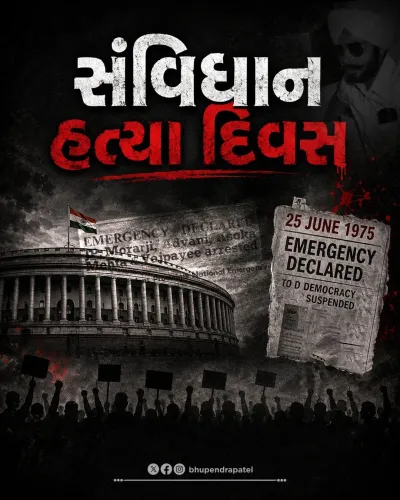
Union Education Minister Dharmendra Pradhan on 25 June 2026 commemorated the 51st anniversary of the 1975 Emergency, calling it 'Samvidhan Hatya Diwas' and describing the declaration as executive arrogance that imprisoned democracy and crushed fundamental rights.
Key Takeaways
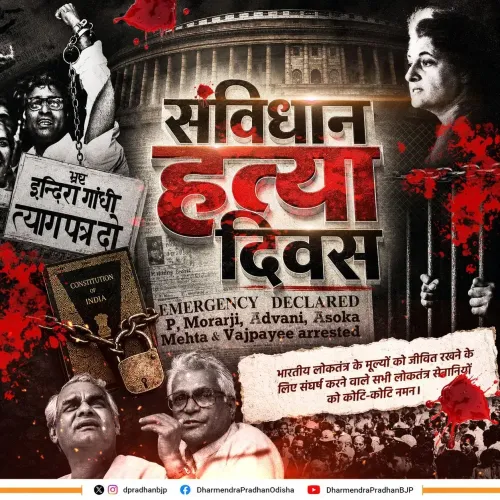
Dharmendra Pradhan posted on X on 25 June 2026 marking the day as 'Samvidhan Hatya Diwas' (Constitution Murder Day).
He described the 1975 Emergency as an act of 'arrogance of power' that crushed the soul of the Constitution and imprisoned democracy.
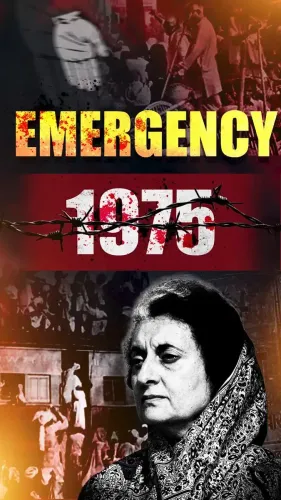
The national Emergency was proclaimed on 25 June 1975 under Article 352 , suspending fundamental rights for 21 months until March 1977 .
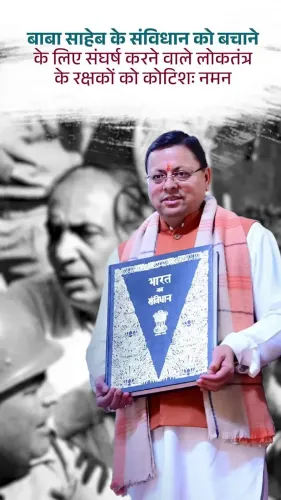
Pradhan called the protection of the Constitution and democratic values a 'national duty of all citizens' .
As Union Education Minister , Pradhan's framing of the Emergency has potential implications for how the period is taught under the NEP 2020 curriculum framework.
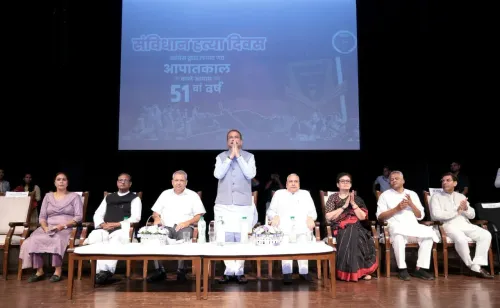
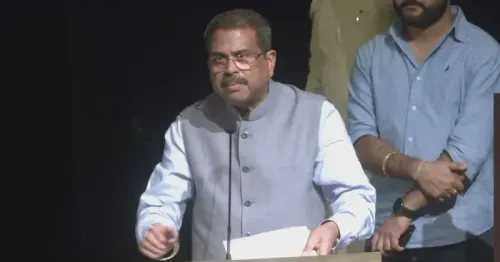
Union Education Minister Dharmendra Pradhan on Thursday, 25 June 2026 marked the 51st anniversary of the 1975 Emergency by calling the day 'Samvidhan Hatya Diwas' — Constitution Murder Day — and describing the declaration of Emergency as an act of executive arrogance that crushed the soul of the Constitution and imprisoned democracy itself.
Context
Posting on X in Hindi, Pradhan wrote: '25 जून 1975 — जब सत्ता के अहंकार ने संविधान की आत्मा को कुचलते हुए देश पर आपातकाल थोप दिया और लोकतंत्र को बंदी बना दिया गया' ('25 June 1975 — when the arrogance of power, crushing the soul of the Constitution, imposed Emergency on the country and democracy was taken prisoner'). He added that the entire nation was pushed into the shadow of fear and repression after fundamental rights were abolished.
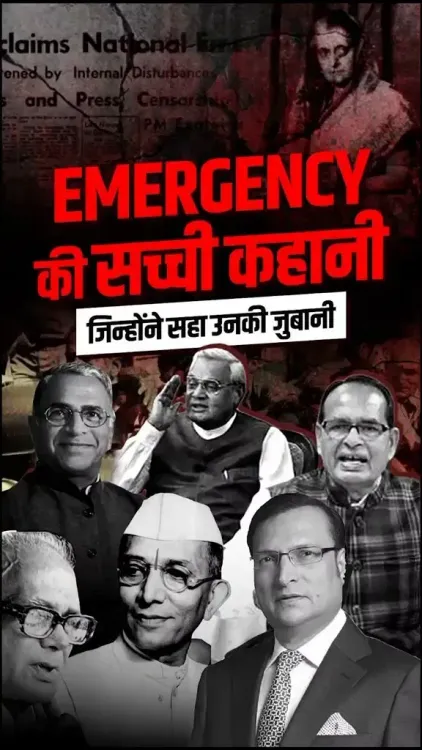
The post was accompanied by a video and carried the hashtag #SamvidhanHatyaDiwas, underscoring the BJP's framing of the day as a solemn constitutional reckoning rather than a purely political anniversary.
Policy Backdrop
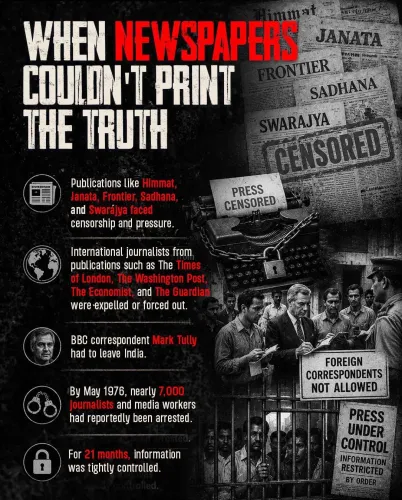
On 25 June 1975, the President of India proclaimed a national Emergency under Article 352 of the Constitution on the advice of then Prime Minister Indira Gandhi of the Indian National Congress. The Emergency lasted 21 months — until March 1977 — during which civil liberties were suspended, the press was censored, and opposition leaders were detained without trial.
The suspension of fundamental rights during that period remains one of the most contested episodes in post-Independence Indian political history, cited repeatedly in debates about constitutional safeguards, judicial independence, and the limits of executive authority.
Stakeholders and Impact
Pradhan, in his capacity as Union Education Minister, has a direct policy stake in how the Emergency era is taught and remembered. Under the National Education Policy (NEP) 2020 framework, curriculum reform and the integration of constitutional history into school and university syllabi remain active areas of policy discussion. His post signals that the Emergency's legacy could inform future educational content decisions.
For Indian citizens and the political opposition, the annual 25 June observance has become a flashpoint. The BJP uses the day to highlight what it describes as the Congress party's record of democratic backsliding, while critics argue the commemoration is deployed for contemporary political advantage. Pradhan's message explicitly frames constitutional protection as a 'national duty of all of us' — a formulation that transcends partisan attribution even as it is rooted in BJP political messaging.
What's Next
Ministerial statements and parliamentary references on future 25 June anniversaries are expected to grow in institutional weight, particularly if the government formalises the observance through an official gazette notification or integrates Emergency-era events into NEP-aligned curriculum modules. Pradhan's dual role — as a senior BJP leader and as the minister who oversees educational content — means his annual framing of this day carries both political and pedagogical consequence. How the constitutional lessons of 1975 are eventually encoded in India's classrooms may prove to be the most lasting dimension of this remembrance.
Point of View
Using the anniversary to draw a moral contrast with the Congress party's governance record. The choice of the term 'Samvidhan Hatya Diwas' — Constitution Murder Day — is deliberate: it elevates a political grievance into a constitutional and civic duty, making dissent from the framing harder to articulate. What gives this year's statement added weight is Pradhan's ministerial portfolio: as Education Minister, he sits at the intersection of political memory and curriculum policy, raising the possibility that Emergency-era history could receive more prominent treatment in schools under NEP 2020. The annual 25 June observance is thus evolving from a party ritual into a potential instrument of state-directed historical pedagogy.
NationPress
24 Sept 2026
Frequently Asked Questions
What is Samvidhan Hatya Diwas?
'Samvidhan Hatya Diwas', or Constitution Murder Day, is an observance on 25 June marking the anniversary of the declaration of the 1975 Emergency in India, which suspended fundamental rights and democratic processes for 21 months . The BJP uses the day to highlight what it calls an assault on the Constitution by the then Congress government.
What happened on 25 June 1975 in India?
On 25 June 1975 , the President of India proclaimed a national Emergency under Article 352 of the Constitution on the advice of Prime Minister Indira Gandhi . The Emergency lasted until March 1977 , during which civil liberties were suspended, the press was censored, and opposition leaders were detained.
Why did Dharmendra Pradhan post about the 1975 Emergency?
Dharmendra Pradhan , Union Education Minister and senior BJP leader, posted on 25 June 2026 to mark the 51st anniversary of the Emergency declaration, calling it 'Samvidhan Hatya Diwas' and framing the protection of the Constitution as a national duty for all citizens.
What were the consequences of the 1975 Emergency in India?
During the 21-month Emergency from June 1975 to March 1977 , fundamental rights guaranteed by the Constitution were suspended, press freedom was curtailed through censorship, and opposition political leaders were detained without trial, representing one of the most significant curtailments of civil liberties in post-Independence India.
What is the connection between the 1975 Emergency and the National Education Policy?
As Union Education Minister , Dharmendra Pradhan oversees curriculum development under the National Education Policy 2020 . His annual framing of the Emergency as a constitutional lesson raises the possibility that Emergency-era history could be given more prominent treatment in school and university syllabi going forward.