Rajnath Singh calls organ donation humanity's greatest gift
Synopsis
Union Defence Minister Rajnath Singh on 13 July 2026 called organ donation the greatest gift to humanity and highlighted doctors as the most critical force in spreading awareness, lending Cabinet-level weight to India's voluntary donation movement.
Key Takeaways
Rajnath Singh described organ donation as 'the greatest gift that can be given to humanity' in a post on 13 July 2026 .
He identified doctors as the most important actors in spreading organ donation awareness.
India's organ donation framework is governed by the Transplantation of Human Organs Act, 1994 and coordinated by NOTTO , established in 2011 .
Voluntary organ donation rates in India remain well below transplant demand, making awareness a persistent national health priority.
A Cabinet-rank minister's endorsement from outside the Health Ministry signals broader political will behind the organ donation cause.
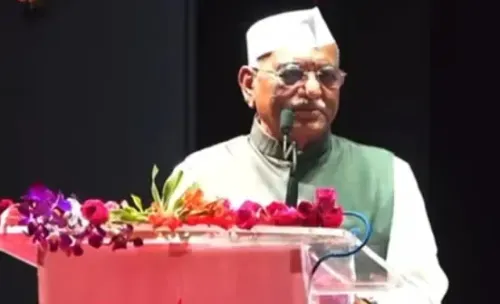
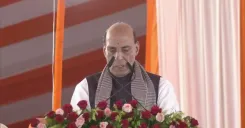
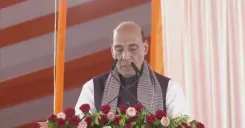
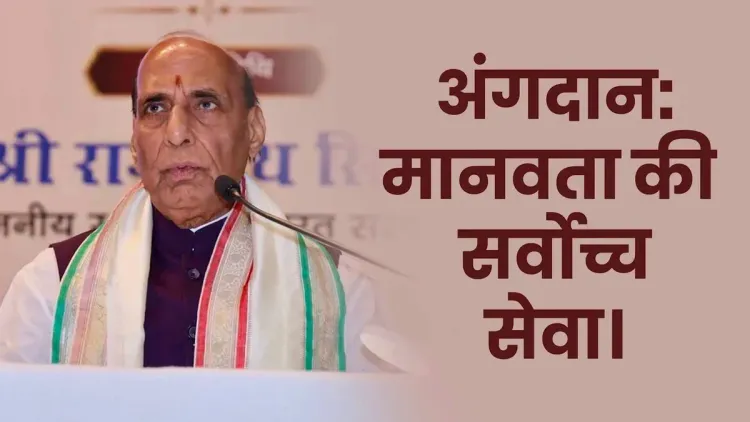
Union Defence Minister Rajnath Singh on Monday, 13 July 2026, called organ donation the greatest gift one can give to humanity, emphasising that doctors play the most critical role in spreading awareness about it. The statement, shared on his official X account, underscores a cross-ministry push to strengthen India's voluntary organ donation movement.
Context
In his post, Rajnath Singh wrote in Hindi: 'Angdaan manavta ko diya ja sakne wala sabse bada uphaar hai, aur iske prati jagrukta failane mein doctors ki bhumika sabse mahatvapurna hai.' Translated: 'Organ donation is the greatest gift that can be given to humanity, and the role of doctors in spreading awareness about it is the most important.' The message places the medical community at the centre of India's organ donation challenge — a deliberate framing that echoes longstanding health ministry guidance to hospitals and clinicians.
Policy Backdrop
India's organ donation framework rests on two pillars. The Transplantation of Human Organs Act, 1994 banned commercial organ trade and established a legal structure for voluntary donation. The National Organ and Tissue Transplant Organisation (NOTTO), set up in 2011 under the Directorate General of Health Services, coordinates procurement, allocation and awareness at the national level. Despite this architecture, voluntary donation rates in India remain significantly below demand, making awareness campaigns a recurring priority for successive governments. Cross-ministry endorsements — such as a statement from the Defence Ministry — amplify the message beyond the health ecosystem and signal broader political will.
Stakeholders and Impact
Doctors and hospitals are the primary audience of Rajnath Singh's message. Medical professionals are often the first point of contact for grieving families in intensive-care settings, and their ability to counsel families sensitively is widely considered the single biggest lever for increasing deceased donation numbers. Potential donors — and their families — are the secondary audience; public statements by senior leaders help normalise the conversation around pledging organs. NOTTO and state transplant coordination centres stand to benefit from heightened public and institutional attention generated by such high-profile advocacy.
What's Next
Observers will watch whether this statement is followed by coordinated state-level organ donation awareness programmes or any legislative proposals to strengthen hospital-level transplant coordination mechanisms. The Ministry of Health and Family Welfare has periodically run pledge-drive campaigns, and a signal from a Cabinet-rank colleague in a different ministry often precedes or accompanies such drives. Whether Rajnath Singh's post is part of a wider, organised awareness push — or a standalone expression of support — will become clearer in the days ahead.
Point of View
Suggesting this may be more than a standalone remark. The emphasis on doctors as the primary change-agents reflects a policy consensus that supply-side counselling, not just public advertising, is the real bottleneck in India's donation ecosystem. Sustained Cabinet-level attention of this kind, if translated into institutional action through NOTTO and state health departments, could meaningfully shift the needle on a persistently low donation rate.
NationPress
13 Jul 2026
Frequently Asked Questions
What did Rajnath Singh say about organ donation?
On 13 July 2026, Rajnath Singh said organ donation is the greatest gift one can give to humanity and that doctors play the most important role in spreading awareness about it.
What is NOTTO and what does it do?
NOTTO, the National Organ and Tissue Transplant Organisation, is a central government body established in 2011 under the Directorate General of Health Services. It coordinates organ and tissue procurement, allocation and awareness across India.
What law governs organ donation in India?
The Transplantation of Human Organs Act, 1994 governs organ donation in India. It bans commercial organ trade and provides the legal framework for voluntary donation and transplantation.
Why is organ donation awareness important in India?
Voluntary organ donation rates in India remain significantly lower than the demand for transplants. Awareness campaigns — especially by medical professionals who counsel families — are considered the most effective way to close this gap.
Why is a Defence Minister commenting on organ donation?
Cross-ministry endorsements by senior Cabinet ministers help amplify health messages beyond the health ecosystem. Such statements signal broader political will and can precede coordinated government awareness campaigns.