CM Himanta Reviews Assam's Specialised Cancer Care Progress
Synopsis
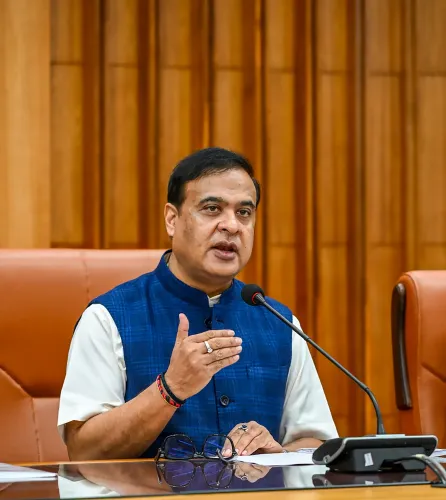
Assam Chief Minister Himanta Biswa Sarma on 7 July 2026 shared a detailed video on the state's specialised cancer care progress, spotlighting a network built through the Assam Cancer Care Foundation, Tata Trusts partnership, BBCI upgrades, and the Atal Amrit Abhiyan health insurance scheme.
Key Takeaways
CM Himanta Biswa Sarma shared a video on 7 July 2026 detailing Assam's specialised cancer care progress.
The Assam Cancer Care Foundation , a public-private partnership with Tata Trusts , was set up to build seven district cancer hospitals across the state.
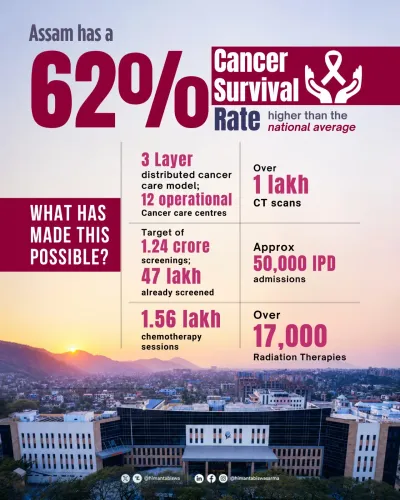
Borooah Cancer Institute in Guwahati has been upgraded as the regional hub for cancer treatment, research, and training.
Atal Amrit Abhiyan , launched in 2016 , provides up to Rs 2 lakh annual health coverage for cancer and critical illnesses to low-income families.
Assam's model combines state investment with central schemes including Ayushman Bharat to reduce out-of-state referrals for oncology care.
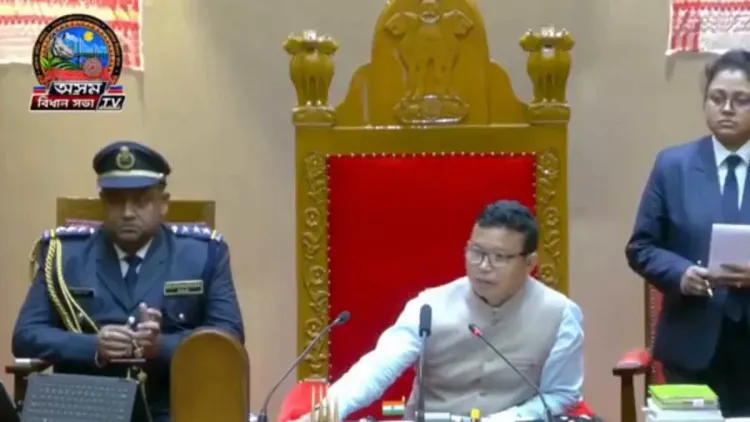
Assam Chief Minister Himanta Biswa Sarma on Tuesday, 7 July 2026, shared a detailed video account of the advances made in specialised cancer care across Assam, urging his followers to watch the full account of the state's oncology infrastructure journey.
Context
The Chief Minister's post arrives as Assam has been steadily building out a network of cancer treatment facilities to reduce the burden on patients who previously had to travel out of the state for tertiary care. The video, shared without additional text beyond an invitation to 'do listen', signals a broader effort by the state government to communicate health-sector progress directly to citizens.
Specialised oncology care has long been a gap in Northeast India, where patients with cancer diagnoses historically faced long journeys to metros such as Kolkata, Vellore, or Delhi for treatment. Addressing this gap has been a stated priority of the Sarma administration since it took office in 2021.
Policy Backdrop
The foundation for Assam's cancer care expansion was laid in 2016 with the launch of Atal Amrit Abhiyan, the state government's health insurance programme that provides up to Rs 2 lakh in annual coverage for cancer and other critical illnesses to low-income families. The scheme brought financial protection to thousands of households otherwise unable to afford oncology treatment.
A landmark 2017–18 agreement with Tata Trusts set the stage for seven new district-level cancer hospitals to be built across the state under the Assam Cancer Care Foundation, a public-private partnership entity. The initiative was designed to complement the upgradation of Dr. B. Borooah Cancer Institute (BBCI) in Guwahati — the state's premier cancer facility — into a regional hub for treatment, research, and training.
At the national level, Assam's efforts dovetail with Ayushman Bharat and the National Programme for Prevention and Control of Cancer, Diabetes, Cardiovascular Diseases and Stroke, providing additional financial and programmatic support to the state's oncology network.
Stakeholders and Impact
The primary beneficiaries of Assam's cancer care build-out are patients in districts far from Guwahati, who previously faced prohibitive travel costs and delays in diagnosis. District-level cancer centres, once fully operational, are intended to offer chemotherapy, radiation, and palliative services closer to home.
District health services, oncology staff, and frontline health workers also stand to benefit from the training and capacity-building functions being developed at BBCI. The Assam Cancer Care Foundation model has attracted attention from other NEDA-ruled states seeking to replicate the public-private approach to closing regional gaps in specialised care.
What's Next
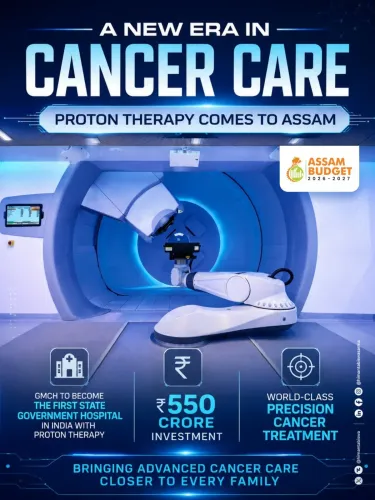
Observers will watch for operational status updates on the new district cancer centres and any supplementary budget allocations for oncology equipment in the next session of the Assam Legislative Assembly. The Chief Minister's decision to share a detailed video account suggests the administration may be preparing for a broader public communication campaign around health outcomes ahead of future electoral cycles.
As non-communicable diseases — including cancer — continue to rise in incidence across the Northeast, the sustainability of funding, the pace of staffing new facilities, and integration with central health schemes will determine whether Assam's model translates into measurable improvement in survival and early-detection rates.
Point of View
And its success or shortfall will serve as a benchmark for other Northeast states under the NEDA umbrella. The emphasis on specialised care also signals a policy pivot from communicable-disease dominance in Northeast health discourse toward non-communicable disease infrastructure.
NationPress
6 Oct 2026
Frequently Asked Questions
What is Assam's cancer care network?
Assam has built a network of specialised cancer facilities anchored by Dr. B. Borooah Cancer Institute in Guwahati and supported by district-level cancer hospitals developed under the Assam Cancer Care Foundation in partnership with Tata Trusts .
What is the Assam Cancer Care Foundation?
The Assam Cancer Care Foundation is a public-private partnership between the Assam government and Tata Trusts , formed to build seven new cancer hospitals across Assam's districts and reduce dependence on out-of-state treatment.
What is Atal Amrit Abhiyan?
Atal Amrit Abhiyan is an Assam government health insurance scheme launched in 2016 that provides up to Rs 2 lakh in annual coverage for cancer and other critical illnesses to low-income families in the state.
Why did CM Himanta Biswa Sarma post about cancer care?
CM Himanta Biswa Sarma shared a detailed video on 7 July 2026 to inform the public about the progress of specialised cancer care infrastructure in Assam , inviting citizens to watch the full account.
What is Dr. B. Borooah Cancer Institute?
Dr. B. Borooah Cancer Institute (BBCI) in Guwahati is Assam's premier cancer treatment facility, which has been upgraded by the state government to serve as a regional hub for oncology treatment, research, and medical training across Northeast India.