Gujarat Celebrates Janjatiya Gaurav Saptah on Birsa Munda's 151st Birth Anniversary
Synopsis
Gujarat has launched Janjatiya Gaurav Saptah on Birsa Munda's 151st birth anniversary, with the state CMO calling citizens to join week-long events celebrating Adivasi culture, dedication and empowerment under CM Bhupendra Patel and PM Narendra Modi's direction.
Key Takeaways
Gujarat is observing Janjatiya Gaurav Saptah to mark the 151st birth anniversary of Birsa Munda on 15 November .
The week-long celebration is being held under the guidance of PM Narendra Modi and the leadership of CM Bhupendra Patel .
Birsa Munda , known as Dharti Aaba , led the late-19th-century Ulgulan uprising against British land policies displacing Adivasi communities.
The Central government instituted Janjatiya Gaurav Divas on 15 November 2021 ; Gujarat has expanded this into a full state-wide week of events.
The Saptah focuses on three pillars: Adivasi culture, dedication and empowerment , with programmes across Gujarat's tribal districts.
The CMO's announcement is part of a broader BJP strategy combining cultural recognition of tribal icons with development outreach in Scheduled Tribe constituencies.
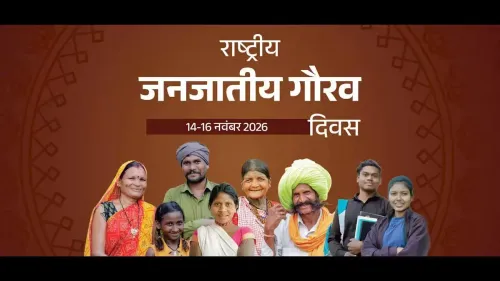
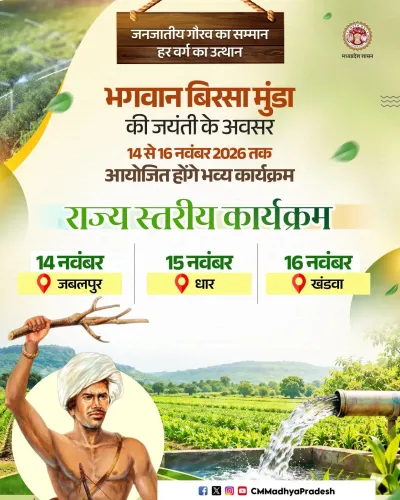
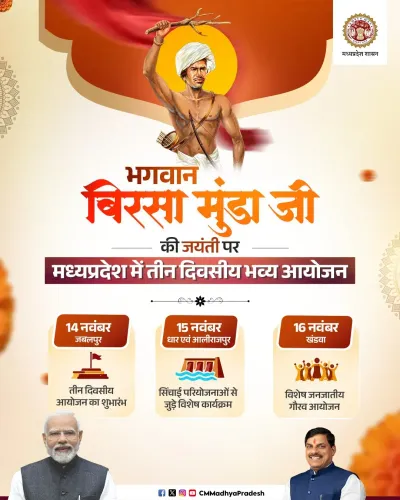
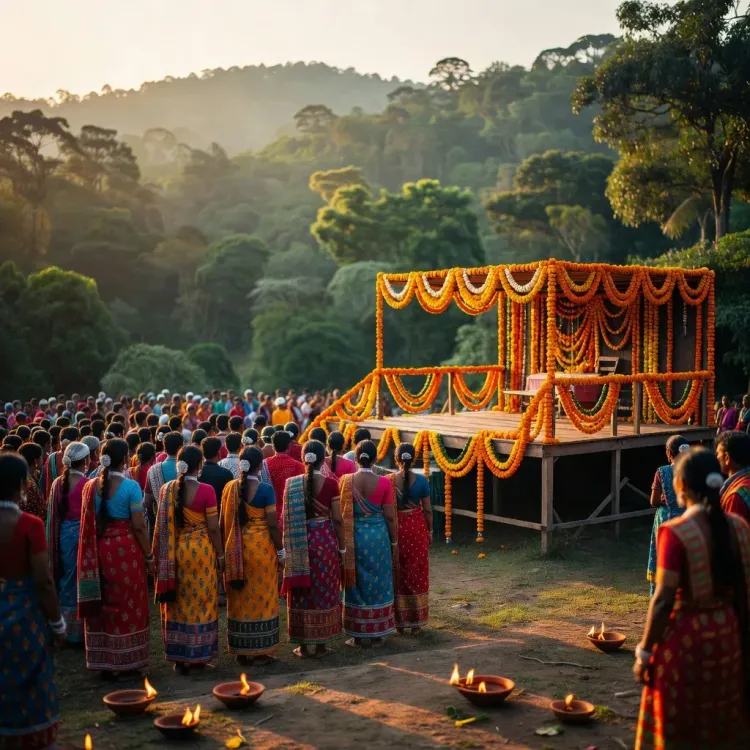
On the 151st birth anniversary of Birsa Munda — the Adivasi icon revered as Dharti Aaba (Father of the Earth) — Gujarat has launched a week-long celebration honouring tribal culture, sacrifice and empowerment, anchored by the state's official observance of Janjatiya Gaurav Saptah.
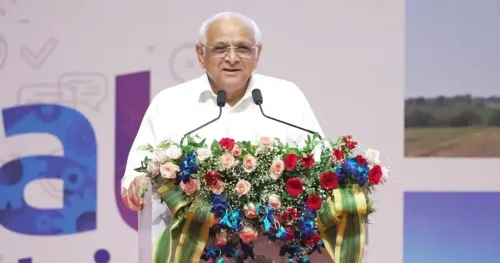
The Chief Minister's Office of Gujarat announced on Saturday, 14 November 2026 that the celebrations are being held under the guidance of Prime Minister Narendra Modi and the leadership of Chief Minister Bhupendra Patel. The post called on citizens to participate in state-organised events and help illuminate 'janjatiya gaurav ni gatha' — the saga of tribal pride.
Who Was Birsa Munda — and Why 151 Years Matter
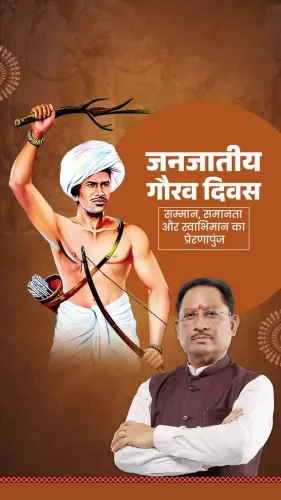
Birsa Munda was born on 15 November 1875 in the Munda tribal community of what is now Jharkhand. In the closing decades of the 19th century he led a fierce uprising — the Ulgulan, or 'Great Tumult' — against British land-seizure policies that were systematically displacing Adivasi communities from ancestral forests. He was barely 25 when he died in colonial custody in 1900, but his resistance became the founding myth of Adivasi political identity across India. The 151st anniversary carries extra weight: a sesquicentennial-plus-one, a moment when the government has chosen to amplify rather than simply observe.
Janjatiya Gaurav Saptah: From National Divas to State-Wide Week
The roots of this celebration run to 2021, when the Central government formally instituted Janjatiya Gaurav Divas on 15 November to mark Birsa Munda's birth anniversary and anchor national recognition of tribal contributions. Gujarat, with significant Adivasi populations concentrated in its eastern and southern tribal belt, has consistently aligned its state calendar with these national observances — expanding the single day into a full week of programming spanning culture, education, health and livelihood outreach.
Under Chief Minister Bhupendra Patel, the state government has organised a range of events across tribal districts, weaving together symbolic commemoration with direct community engagement. The CMO's post explicitly frames the Saptah as dedicated to three pillars: Adivasi culture (sanskriti), dedication (samarpan), and empowerment (sashaktikaran).
Gujarat's Tribal Belt and the Politics of Recognition
Gujarat is home to a substantial Scheduled Tribe population, particularly in districts such as Narmada, Dahod, Chhota Udaipur and the Dang region. Since 2014, BJP-led governments at both the Centre and state level have invested heavily in formalising tribal commemorations alongside welfare delivery — a dual strategy of cultural recognition and development outreach designed to deepen political and social bonds with Adivasi communities. The Janjatiya Gaurav Saptah sits squarely within that arc.
The CMO's call to participate is as much an administrative mobilisation as a cultural one — urging residents to attend state programmes and carry the narrative of tribal pride into their communities. The specific events, scheme announcements and district-level activities scheduled across the week will determine how much concrete ground the celebration covers beyond symbolism.
Point of View
The state government signals a vertical alignment of Centre-state messaging on tribal welfare. The three-pillar framework of culture, dedication and empowerment is carefully constructed: it blends identity politics with the language of development, making it resistant to purely symbolic critique. Whether the week-long events translate into measurable policy advances for Gujarat's Adivasi districts will ultimately define its lasting impact.
NationPress
14 Nov 2026
Frequently Asked Questions
What is Janjatiya Gaurav Saptah in Gujarat?
Janjatiya Gaurav Saptah is a week-long state-organised celebration in Gujarat dedicated to Adivasi culture, sacrifice and empowerment, held around Birsa Munda's birth anniversary on 15 November . It encompasses cultural programmes, government outreach and community events across tribal districts.
Why is Birsa Munda celebrated on 15 November?
Birsa Munda was born on 15 November 1875 . He led the Ulgulan uprising against British land-seizure policies and is revered as Dharti Aaba — Father of the Earth — across Adivasi communities. The Central government designated this date as Janjatiya Gaurav Divas in 2021.
When did the Indian government start Janjatiya Gaurav Divas?
The Central government instituted Janjatiya Gaurav Divas on 15 November 2021 , coinciding with Birsa Munda's birth anniversary, to formally recognise tribal contributions to India's history and culture.
Which districts in Gujarat have large Adivasi populations?
Gujarat's tribal belt includes districts such as Narmada, Dahod, Chhota Udaipur and the Dang region, which have significant Scheduled Tribe populations and are focal points for state welfare and cultural programmes.
Who is leading Gujarat's Janjatiya Gaurav Saptah 2026?
The celebrations are being conducted under the leadership of Chief Minister Bhupendra Patel and guided by Prime Minister Narendra Modi , as announced by the official Chief Minister's Office of Gujarat.