CM Sukhu: No Formality Needed, HP Govt Resolves Grievances on Priority
Synopsis
Chief Minister Sukhvinder Singh Sukhu of Himachal Pradesh declared on 14 November 2026 that citizens face no formality or hesitation in reaching his office, affirming that dialogue and trust drive the government's priority-based grievance resolution approach.
Key Takeaways
CM Sukhvinder Singh Sukhu stated that Himachal Pradesh residents need no formality or hesitation to share their problems with the government.
The statement frames 'dialogue and trust' as the operating culture of the CMO, not a specific new scheme or helpline.
Sukhu has served as Chief Minister since December 2022 , when the Indian National Congress returned to power in the state.
The messaging aligns with a broader Indian governance tradition of janata darbars and CM helplines used to project administrative accessibility.
No specific grievance-redressal metrics or new institutional mechanisms were announced alongside the statement.
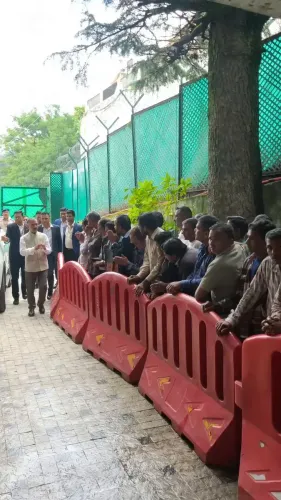
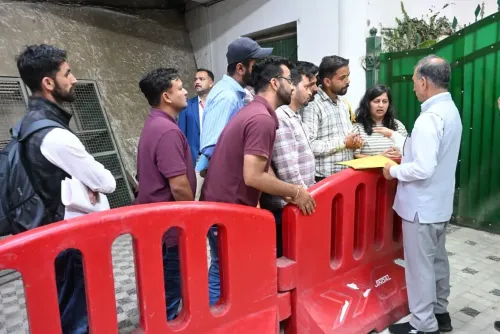
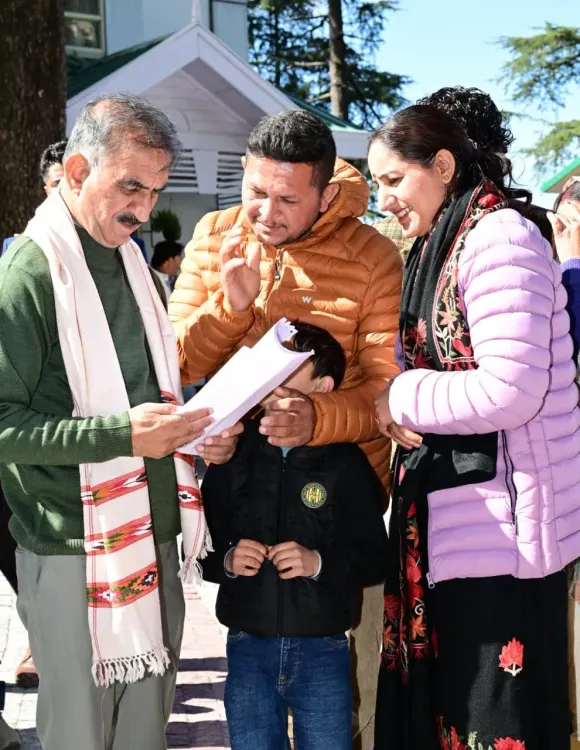
A government that listens — without forms, without hesitation, without the cold distance of bureaucracy. That is the promise Chief Minister Sukhvinder Singh Sukhu of Himachal Pradesh renewed on Saturday, 14 November 2026, in a statement shared by the Chief Minister's Office on X.
In his own words, translated from Hindi: '...ke liye kisi aupcharikta ya sankoch ki aavashyakta nahin hai' — 'There is no need for any formality or hesitation. People share their problems freely. We are maintaining this very dialogue and trust, and resolving people's issues on a priority basis.' The statement, attributed directly to CM Thakur Sukhvinder Singh Sukhu, frames accessible governance not as a scheme or a headline initiative, but as a working culture.The Dialogue Sukhu Is Staking His Office On
Sukhu, who took charge as Himachal Pradesh's Chief Minister in December 2022 after the Indian National Congress returned to power in the hill state, has consistently projected a 'people-first' identity. Before becoming CM, he served as the state Congress president — a role that kept him in close contact with grassroots party workers and ordinary voters across Himachal's rugged, dispersed constituencies. That background now shapes his public communication style: direct, conversational, and deliberately informal. The core of Saturday's message is the dismantling of the barrier between citizen and administration. The words 'no formality, no hesitation' are a pointed signal — to residents of remote hill districts especially — that access to the Chief Minister's Office does not require connections, paperwork, or the navigation of layers of officialdom.Janata Darbars, Helplines, and the Responsive-State Playbook
This kind of messaging sits within a well-worn tradition of Indian state governance. Across the country, chief ministers have used janata darbars, CM helplines, and direct public hearings to project administrative responsiveness. The political logic is straightforward: in states with dispersed, rural populations — and Himachal Pradesh, with its 77 Assembly constituencies spread across mountain terrain, is a textbook case — the perception of access matters as much as the mechanics of delivery. What distinguishes Saturday's statement is its framing around 'dialogue and trust' as an ongoing commitment rather than a one-time event. Sukhu is not announcing a new portal or a helpline number. He is asserting a governing philosophy — that the conversation between citizen and CM is already open, and the office's job is to keep it that way. Whether that philosophy translates into measurable grievance-redressal timelines or new institutional channels remains the live question. The Himachal Pradesh government has not, in this post, attached specific metrics or mechanisms to the promise — and that gap is where intent will eventually be tested against outcomes. For now, the Chief Minister has drawn his line clearly: in his administration, the door is open, the formalities are gone, and the priority is the problem in front of him.Point of View
Sukhu sidesteps the accountability that comes with a specific programme while still signalling responsiveness. The move mirrors a pattern seen across Congress-governed states, where soft-power governance messaging is used to contrast with what the party frames as the procedural distance of rival administrations. The real test will be whether the CMO follows this statement with verifiable grievance-resolution data or expanded direct-access infrastructure.
NationPress
14 Nov 2026
Frequently Asked Questions
What did CM Sukhu say about public grievances in Himachal Pradesh?
CM Sukhvinder Singh Sukhu said that Himachal Pradesh residents need no formality or hesitation to share their problems, and that his government is resolving issues on a priority basis through open dialogue and trust.
Who is Sukhvinder Singh Sukhu?
Sukhvinder Singh Sukhu is the Chief Minister of Himachal Pradesh, in office since December 2022, representing the Indian National Congress. He previously served as the state Congress president.
How can Himachal Pradesh residents raise problems with the CM's office?
According to CM Sukhu's statement, citizens can approach the Chief Minister's Office without any formality or hesitation — the government's stated position is that the channel for sharing problems is already open.
What is a janata darbar and does Himachal Pradesh have one?
A janata darbar is a public audience where citizens can directly present grievances to a chief minister or senior official — a tradition used across Indian states. CM Sukhu's statement reflects a similar philosophy of direct public access, though no specific janata darbar event was announced in this post.
When did the Congress government come to power in Himachal Pradesh?
The Indian National Congress returned to power in Himachal Pradesh in December 2022, with Sukhvinder Singh Sukhu sworn in as Chief Minister.