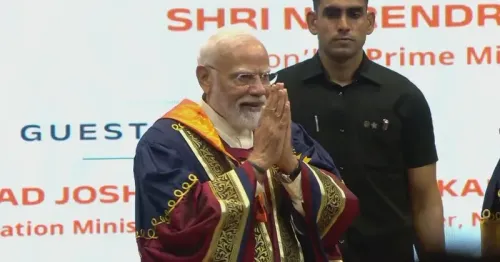
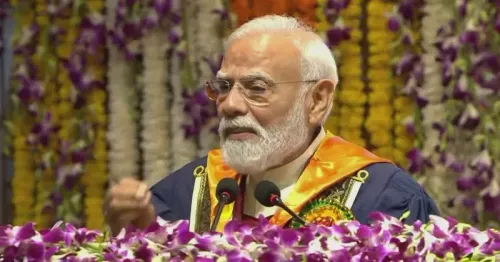
Rijiju: PM Modi joins IIT Kharagpur Platinum Jubilee
Synopsis
Prime Minister Narendra Modi participates in the Platinum Jubilee celebration of IIT Kharagpur, India's first IIT founded in 1951, with Union Minister Kiren Rijiju sharing a live-stream of the historic event on 21 November 2026.
Key Takeaways
IIT Kharagpur is celebrating its Platinum Jubilee (75 years) in 2026 , marking its founding in 1951 as India's first IIT.
Prime Minister Narendra Modi participated in the celebration, continuing a pattern of high-level engagement with elite technical institutions.
Union Parliamentary Affairs Minister Kiren Rijiju shared the live-stream link on 21 November 2026 .
IIT Kharagpur was established as a flagship of post-independence India's drive to build a technical knowledge economy.
The National Education Policy 2020 underpins current government ambitions for IITs to achieve global research competitiveness.
India's IIT network has grown from 1 campus in 1951 to over 23 institutions nationwide.
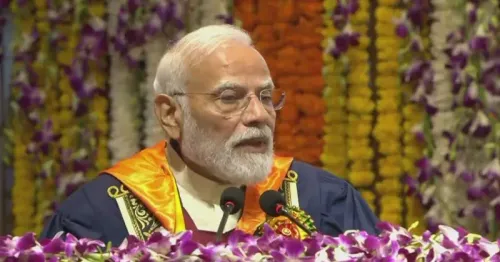
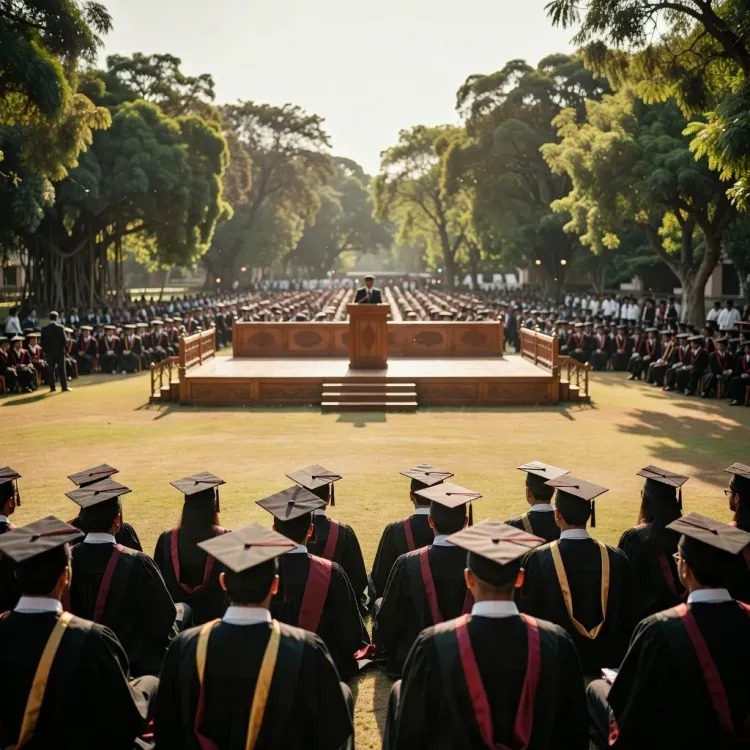
Seventy-five years after India's first Indian Institute of Technology opened its gates in Kharagpur, West Bengal, Prime Minister Narendra Modi joined the Platinum Jubilee celebration of IIT Kharagpur — a milestone that marks not just an institution's anniversary, but the arc of a nation's bet on technical excellence. Union Parliamentary Affairs Minister Kiren Rijiju shared a live-stream link to the event on Saturday, 21 November 2026, inviting followers to watch the Prime Minister participate in the landmark occasion.
India's oldest IIT turns 75
IIT Kharagpur was established in 1951 — the very first institution in what would grow into a network of premier technical universities that now spans the country. Founded as a cornerstone of post-independence India's ambition to build a self-reliant knowledge economy, it predates even the formal IIT Act. Generations of engineers, scientists, and entrepreneurs have passed through its sprawling 2,100-acre campus, making it one of the most consequential educational addresses in Asia.
Modi's continued engagement with elite higher education
The Prime Minister's presence at the Platinum Jubilee is consistent with a pattern of high-level political engagement with India's premier institutes. Modi has repeatedly used IIT convocations and milestone events as platforms to spotlight India's research ambitions and signal policy direction — from calls for industry-academia partnerships to the vision embedded in the National Education Policy 2020, which explicitly prioritises research excellence and global competitiveness at institutions like the IITs. Jubilee events of this scale routinely become stages for fresh announcements on funding, infrastructure, or international collaboration.
What the Platinum Jubilee signals for Indian technical education
Seventy-five is not just a number — it is a reckoning. India's IIT network has expanded dramatically since 1951, growing from a single campus to over 23 institutions nationwide. Yet IIT Kharagpur retains a symbolic primacy: it is the original, the template, the proof of concept. As the institution reflects on seven decades of output, the broader question for policymakers is whether India's technical education ecosystem can now compete at the frontier of global research, not just produce world-class talent that migrates abroad. Modi's attendance puts that question squarely in the national spotlight.
India's first IIT is 75. The ambition that built it is still unfinished — and events like this are where the next chapter gets written.
Point of View
Making the optics of the Prime Minister at the country's oldest IIT deliberately resonant. For the BJP, championing IIT milestones also reinforces a pro-technology, aspirational-India narrative that plays well with the urban middle class and the engineering community. Whether the occasion yields concrete policy announcements on research funding or international collaboration will determine its lasting significance beyond symbolism.
NationPress
21 Nov 2026
Frequently Asked Questions
When was IIT Kharagpur established?
IIT Kharagpur was established in 1951 , making it India's first Indian Institute of Technology and one of the oldest technical universities in the country.
What is the Platinum Jubilee of IIT Kharagpur?
The Platinum Jubilee marks 75 years since IIT Kharagpur's founding in 1951. The celebration in 2026 commemorates the institution's seven decades of contribution to engineering, science, and research in India.
Why did PM Modi attend the IIT Kharagpur Platinum Jubilee?
Prime Minister Narendra Modi participated in the celebration as part of a broader pattern of high-level government engagement with India's premier technical institutions, often using such events to signal education and research policy priorities.
How many IITs are there in India in 2026?
India's IIT network has grown significantly since the first campus opened in Kharagpur in 1951, expanding to over 23 institutions across the country.
What is India's National Education Policy 2020 and how does it relate to IITs?
The National Education Policy 2020 prioritises research excellence and global competitiveness at premier institutions like the IITs, aiming to transform India's higher education landscape into a world-class knowledge economy.