Shekhawat Shares Live Stream of PM Modi at IIT Delhi Convocation

Synopsis
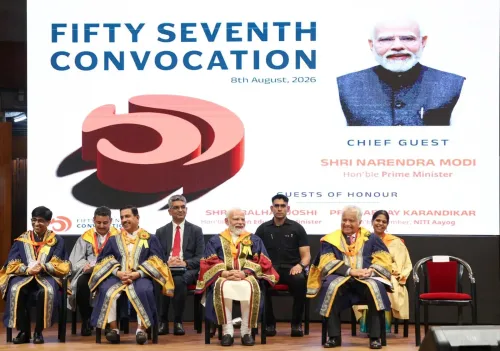
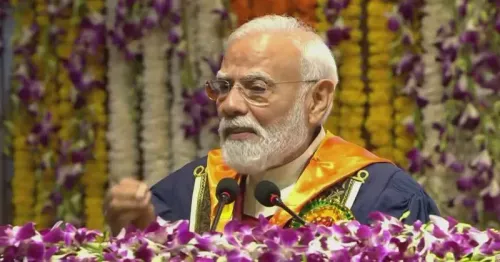
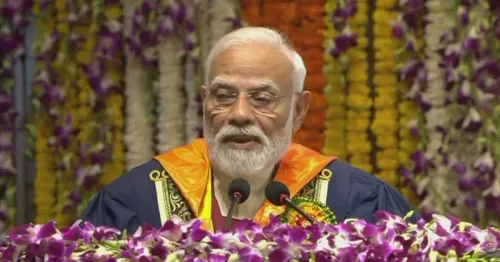
Prime Minister Narendra Modi addressed the 57th Convocation Ceremony of IIT Delhi on August 8, 2026. Union Minister Gajendra Singh Shekhawat shared the live broadcast on X, spotlighting the event for a national audience amid India's push to strengthen its premier technical institutions.
Key Takeaways
PM Narendra Modi addressed the 57th Convocation Ceremony of IIT Delhi on August 8, 2026 .
Union Culture and Tourism Minister Gajendra Singh Shekhawat shared the live stream on X, widening the event's reach.
IIT Delhi is one of India's five original IITs, established in 1961 , and remains the flagship institution in the network.
PM Modi regularly uses IIT convocation addresses to signal national priorities in science, technology, and self-reliance.
The National Education Policy 2020 frames the policy backdrop for such events, with goals around research output and multidisciplinary learning.
India's IIT network has expanded to 23 institutions , reflecting a long-term governmental investment in technical education.
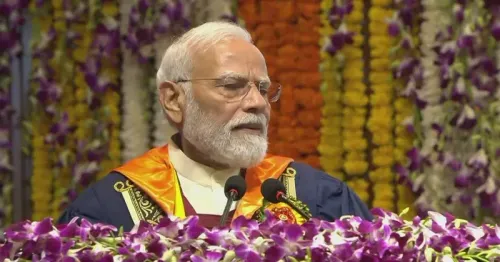
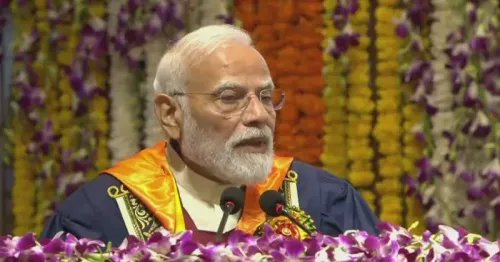
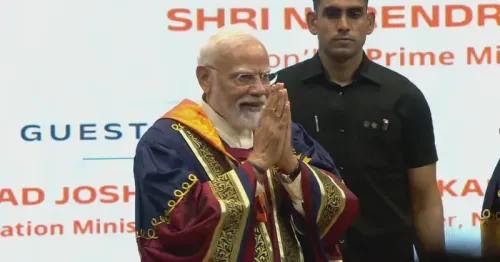
Prime Minister Narendra Modi addressed the 57th Convocation Ceremony of IIT Delhi on Saturday, August 8, 2026, with Union Culture and Tourism Minister Gajendra Singh Shekhawat amplifying the live broadcast to his followers on X.
IIT Delhi's 57th Convocation: A Milestone for India's Premier Tech Institution
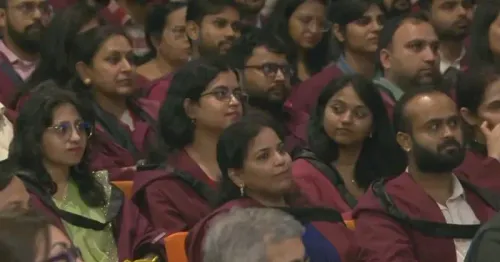
IIT Delhi, one of India's five original Institutes of Technology established in 1961, holds its convocation as one of the most watched events in the country's engineering calendar. Thousands of graduating students, their families, and the broader academic community tune in each year — and a Prime Ministerial address elevates the occasion into a national moment. PM Modi has consistently used such platforms to frame the graduating class as foot soldiers of India's self-reliance and innovation ambitions.
PM Modi at the Podium: A Recurring Ritual With a National Message
Prime Ministerial addresses at IIT convocations are rarely ceremonial in the narrow sense. They tend to carry policy signals — on research, on startups, on India's push to become a global technology hub. The National Education Policy 2020 gave these addresses a sharper edge, with each convocation season becoming an opportunity to benchmark IIT output against NEP goals: multidisciplinary learning, higher research throughput, and deeper industry linkages. What Modi says at the podium often previews what the Ministry of Education will move on next.
Minister Shekhawat's decision to share the live stream underlines how senior BJP leaders use social media to extend the Prime Minister's reach beyond the immediate audience in the auditorium — turning a campus event into a nationwide broadcast moment.
The Broader IIT Expansion Story
India has grown its IIT network aggressively over the past two decades, from the original five to 23 institutions today, reflecting a sustained governmental bet that technical education is the fastest route to economic transformation. IIT Delhi remains the flagship — its graduates populate boardrooms, research labs, and government corridors across the world. A convocation address here carries symbolic weight that newer campuses cannot yet match.
As the graduating batch steps out, the questions the country will be watching are straightforward: Does the address carry any new funding commitment? Any NEP milestone? Any signal on the next phase of IIT expansion? The answers, if they came, landed in that auditorium first.
Point of View
Converting campus events into party-wide broadcast moments. The IIT Delhi convocation is a particularly high-value platform — Modi's addresses there tend to carry policy signals that the Ministry of Education subsequently acts on. Shekhawat's relay reflects how the ruling dispensation uses cultural and institutional prestige events to reinforce its 'Viksit Bharat' narrative. Watch the address closely: any reference to NEP milestones or new IIT funding would be the real news beneath the ceremony.
NationPress
22 Sept 2026
Frequently Asked Questions
When did PM Modi address the IIT Delhi convocation in 2026?
PM Narendra Modi addressed the 57th Convocation Ceremony of IIT Delhi on Saturday, August 8, 2026.
What is the 57th Convocation of IIT Delhi?
It is the 57th annual graduation ceremony of the Indian Institute of Technology Delhi, one of India's oldest and most prestigious technical universities, established in 1961.
Why did Gajendra Singh Shekhawat share the IIT Delhi convocation live stream?
As a senior BJP leader and Union Minister, Shekhawat shared the live stream to amplify PM Modi's address to a wider national audience on social media platform X.
What does PM Modi usually say at IIT convocations?
PM Modi typically uses IIT convocation addresses to highlight national priorities in technology, innovation, and self-reliance, often referencing goals under the National Education Policy 2020.
How many IITs are there in India?
India currently has 23 Indian Institutes of Technology, expanded from the original five institutions established in the 1950s and 1960s.