CM Dhami vows to free Uttarakhand land from illegal encroachments
Synopsis
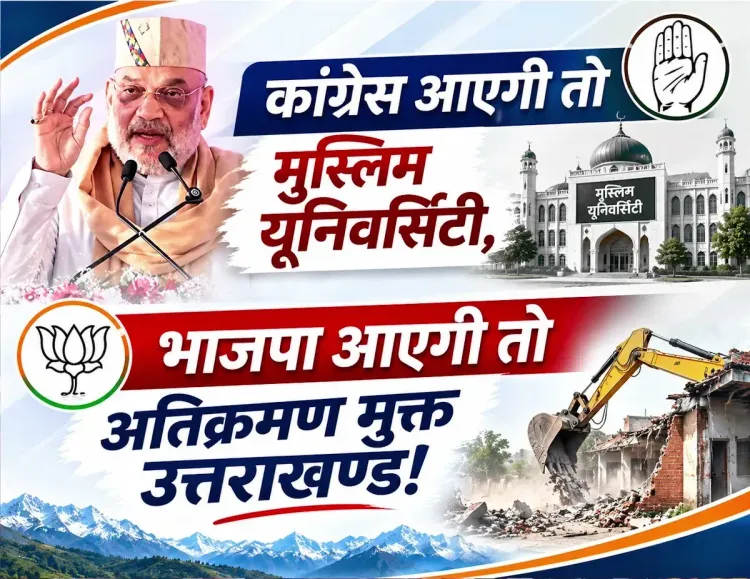
Uttarakhand Chief Minister Pushkar Singh Dhami declared on 6 November 2026 that the state's anti-encroachment campaign will continue 'with full determination,' explicitly targeting illegal occupations shielded by shrines and madrasas, while reaffirming his resolve to make Devbhoomi India's cultural capital.
Key Takeaways
CM Pushkar Singh Dhami posted a governance declaration on 6 November 2026 outlining three state priorities: border security, prosperity, and cultural capital status.
Dhami pledged to continue the campaign to free Uttarakhand's land from illegal encroachment 'with full determination.' He explicitly named mazaaron aur madraon (shrines and madrasas) as sites where illegal occupations will not be tolerated.
Uttarakhand borders both China and Nepal , giving land-use policy in frontier zones strategic significance beyond routine administration.
The Devbhoomi cultural capital ambition has been a recurring theme under Dhami, linked to Char Dham tourism and heritage corridor projects.
No formal proposal for an official 'cultural capital' designation has been announced by either the state or central government.
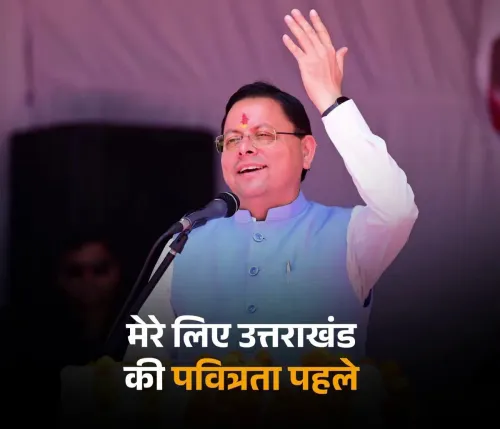
A border state's identity is under siege — and Uttarakhand Chief Minister Pushkar Singh Dhami is making clear he intends to fight back. On Friday, 6 November 2026, Dhami posted a pointed declaration on X, pledging to transform Uttarakhand into a secure frontier state, a prosperous economy, and the country's cultural capital — and to pursue an uncompromising campaign against illegal land occupation.
Translated from Hindi, Dhami's post reads: 'Uttarakhand ko surakshit seemant rajya, samridh rajya aur Devbhoomi ko desh ki sanskritik rajdhani banana hamara sankalp hai' — 'Our resolve is to make Uttarakhand a secure border state, a prosperous state, and to establish Devbhoomi as the cultural capital of the country.' He added that the campaign to free the state's land from encroachment would continue 'with full determination,' and that illegal occupations carried out 'under the cover of shrines and madrasas' would not be tolerated.
Three pillars — security, prosperity, cultural identity
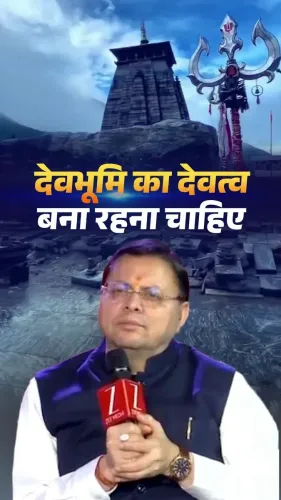
Dhami's statement is built on a deliberate three-part architecture. The first pillar — a secure border state — speaks directly to Uttarakhand's geography: a Himalayan state sharing international boundaries with both China and Nepal, where land ownership and demographic patterns in frontier zones carry strategic weight beyond the administrative. The second pillar, economic prosperity, ties into the state's push to leverage religious tourism and infrastructure investment. The third — designating Devbhoomi (literally 'land of the gods') as India's cultural capital — frames Uttarakhand's dense concentration of pilgrimage sites, ancient temples, and Ganga-origin heritage as a national asset requiring active protection.
The anti-encroachment drive and what 'shrines and madrasas' signals
The sharpest line in the post targets illegal occupations carried out 'under the cover of shrines and madrasas' — a formulation that goes beyond routine land enforcement. The Dhami government has conducted periodic anti-encroachment drives since 2021, targeting unauthorized constructions on government and forest land. Those operations have included religious structures of all types, though the explicit naming of mazaaron aur madraon (shrines and madrasas) in Friday's post signals a pointed political emphasis on illegal Muslim religious structures specifically.
The broader pattern is familiar across BJP-governed northern and western states: land-use enforcement bundled with cultural heritage preservation, often concentrated in areas deemed sensitive on religious or frontier grounds. Critics have argued such drives disproportionately target minority communities; the government frames them as universal rule-of-law action protecting state land from any unauthorized occupation.
Devbhoomi's cultural capital ambition — and what it would take
The aspiration to make Uttarakhand India's 'cultural capital' has circulated in state policy discourse since before Dhami's tenure, but it has gained sharper institutional expression under his administration. Char Dham connectivity, Kedarnath reconstruction, and Haridwar-Rishikesh corridor development have all been framed within this identity project. A formal designation — if pursued — would require central government coordination and likely a dedicated heritage or tourism framework. As yet, no such formal proposal has been announced.
Border communities and local landowners will watch implementation closely. The campaign's credibility will ultimately be measured not in declarations but in ground-level outcomes — how many unauthorized structures are removed, whether the process survives legal challenge, and whether it is applied consistently across communities. That accountability clock is now running.
Point of View
Ensuring the message resonates across both security-conscious border communities and Hindu heritage constituencies simultaneously. The explicit naming of shrines and madrasas as encroachment vectors moves the statement beyond administrative routine into electoral territory, previewing a likely campaign theme. For Uttarakhand — a state whose political geography is shaped by pilgrimage economy, military cantonment towns, and sensitive international borders — this framing is strategically efficient. The real test will be whether the anti-encroachment drive sustains legal scrutiny and delivers verifiable clearances, or remains a declaration that outpaces implementation.
NationPress
6 Nov 2026
Frequently Asked Questions
What did CM Dhami say about encroachments in Uttarakhand?
CM Pushkar Singh Dhami declared on 6 November 2026 that the campaign to free Uttarakhand's land from illegal occupation will continue 'with full determination,' and that illegal encroachments carried out under the cover of shrines and madrasas will not be tolerated.
What does 'Devbhoomi cultural capital' mean?
'Devbhoomi' means 'land of the gods' and is Uttarakhand's official identity rooted in its dense concentration of Hindu pilgrimage sites. Dhami has pledged to formally develop this identity into making Uttarakhand the cultural capital of India, though no official government designation has been announced yet.
Has Uttarakhand conducted anti-encroachment drives before?
Yes. The Dhami government has conducted periodic anti-encroachment drives targeting unauthorized constructions on government and forest land since taking office in 2021, covering religious structures as well as commercial and residential encroachments.
Why is Uttarakhand called a border state?
Uttarakhand shares international boundaries with both China to the north and Nepal to the east, making land ownership and demographic patterns in its frontier zones a matter of both administrative and national security concern.
What is the BJP's approach to encroachment drives in northern India?
BJP-led state governments across northern and western India have pursued combined policies linking land-use enforcement with cultural site protection, often framing unauthorized occupation removal as both a rule-of-law measure and a heritage preservation initiative.