CM Dhami: Uttarakhand Frees 12,000 Acres From Encroachers
Synopsis
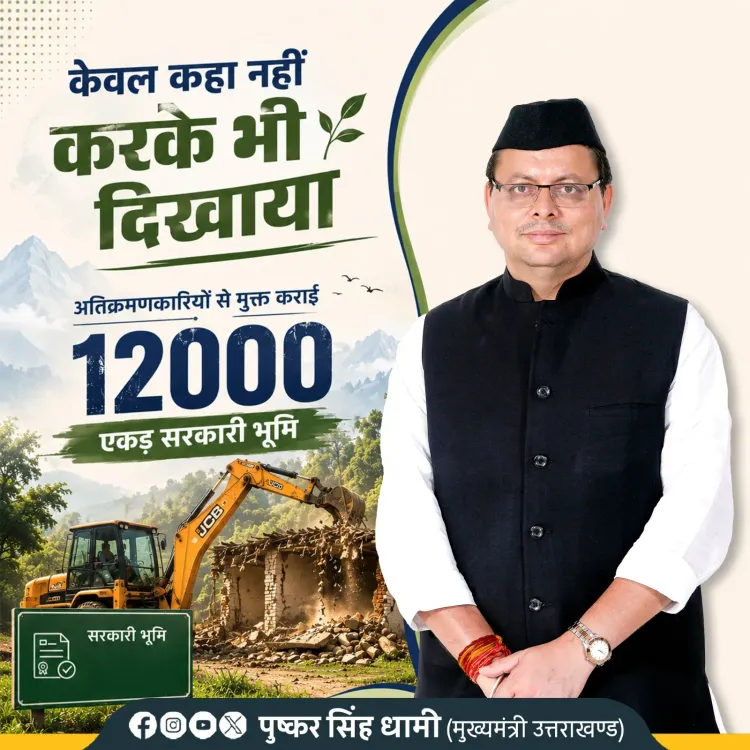
Uttarakhand Chief Minister Pushkar Singh Dhami announced that the state has freed more than 12,000 acres of government land from encroachers, calling the drive a step to protect public assets and establish the rule of law in Devbhoomi, and warning illegal occupants they will not be spared.
Key Takeaways
CM Pushkar Singh Dhami says Uttarakhand has reclaimed over 12,000 acres of government land from encroachers.
The Chief Minister framed the drive as protection of public assets and enforcement of the rule of law in Devbhoomi.
The campaign builds on the BJP government's 2022 commitment to act against land mafias.
Revenue and forest departments, with district magistrates, have led identification and eviction operations.
Next steps include possible linkage with central land-records digitisation and likely legal challenges.
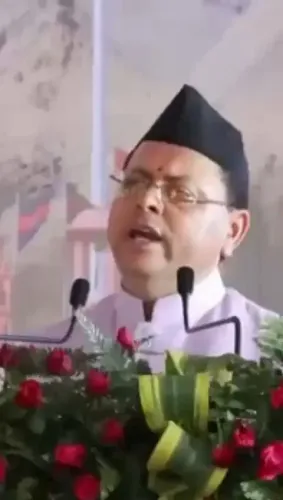
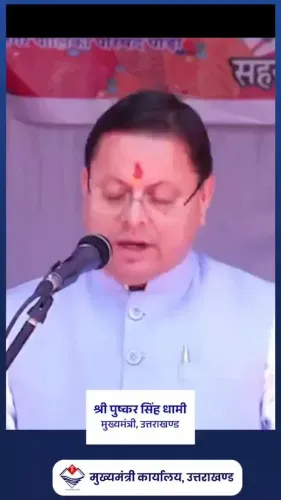
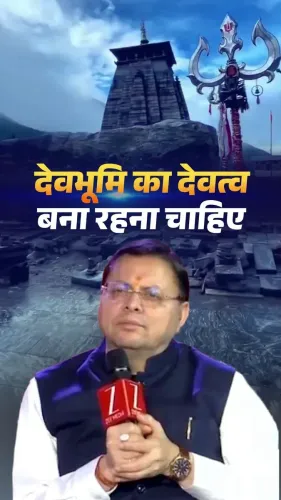
Uttarakhand Chief Minister Pushkar Singh Dhami on 4 June 2026 announced that the state government has reclaimed more than 12,000 acres of government land from encroachers as part of an ongoing anti-encroachment drive across the Himalayan state. In a post on X, Dhami framed the operation as both an administrative exercise and a political commitment to protect public assets in Devbhoomi (the land of the gods).
'Taking strict action against illegal occupations in Devbhoomi, the state government has so far freed more than 12,000 acres of government land from encroachers,' the Chief Minister wrote. He added that the campaign is 'not merely an administrative exercise but a strong step towards protecting government properties and establishing the rule of law,' and warned that 'those who illegally occupy Uttarakhand's land will not be spared.'
Context
The announcement is the latest milestone in a multi-year drive that the Bharatiya Janata Party (BJP) government in Dehradun has pursued since Dhami's return to office in 2022. Removal of land mafias and recovery of encroached government and forest land formed a prominent plank of the party's last assembly election commitments, and successive district administrations have been tasked with surveying and clearing notified plots.
Uttarakhand has long grappled with disputes over revenue, forest and nazul land, particularly in tourist-heavy districts such as Dehradun, Haridwar, Nainital and Udham Singh Nagar, where rapid construction along highways and riverbanks has frequently outpaced regulation. The Chief Minister has previously linked the drive to wider issues of demographic change and unauthorised religious or commercial structures on state land.
Policy backdrop
The eviction campaign sits within a broader pattern across BJP-ruled states of large-scale operations to recover public land, often presented as the fulfilment of electoral promises and as reinforcement of the rule of law. Comparable drives have unfolded in neighbouring hill and plain states facing similar pressures from unplanned construction and contested land records.
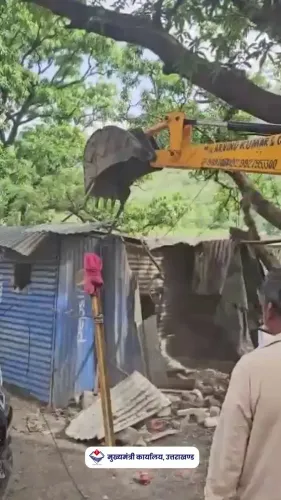
In Uttarakhand, the revenue department, forest department and district magistrates have coordinated identification of plots, issuance of notices and demolition where occupants failed to produce valid documents. The government has paired the drive with efforts to update land records, a process that is expected to feed into central programmes for digitisation of revenue data.
Stakeholders and impact
The immediate stakeholders are the occupants — ranging from individual squatters to commercial establishments and, in some cases, places of worship — whose structures have been removed or marked for removal. For the revenue department, the reclaimed parcels expand the pool of land available for public works, afforestation, tourism infrastructure and resettlement of project-affected families.
Opposition parties and civil-society groups have, in past phases of the drive, raised concerns about due process, the treatment of long-settled residents and the disproportionate impact on poorer households. The state government maintains that action is taken only after documentary verification and that legitimate title-holders are not disturbed.
What's next
Officials are expected to publish district-wise breakdowns of the 12,000 acres reclaimed and outline how the freed land will be repurposed. Possible integration with central land-records digitisation programmes, along with any court petitions challenging specific evictions, will shape the next phase of the campaign.
For Dhami, the headline figure offers a tangible governance metric ahead of upcoming local body contests and consolidates his pitch as an administrator willing to take politically sensitive decisions on land. How the state balances enforcement with rehabilitation and legal scrutiny will determine whether the drive is remembered as a durable reform or a contested chapter in Uttarakhand's land history.
Point of View
000-acre headline is as much political signalling as land administration. Dhami is consolidating an image built on tough enforcement — from the Uniform Civil Code to anti-conversion measures — and slotting land recovery into the same governance frame. The drive aligns with a wider BJP template of using state machinery to reclaim public land as a visible deliverable. The real test lies in transparency of records, treatment of poor occupants and how courts view the procedural rigour of evictions.
NationPress
19 Sept 2026
Frequently Asked Questions
How much government land has Uttarakhand reclaimed from encroachers?
According to Chief Minister Pushkar Singh Dhami, the state government has freed more than 12,000 acres of government land from encroachers so far under its ongoing anti-encroachment drive.
Why is the Uttarakhand government carrying out anti-encroachment action?
The government says the drive is aimed at protecting government properties, establishing the rule of law and fulfilling its commitment to act against illegal occupation of state land in Uttarakhand.
Which departments lead the eviction drive in Uttarakhand?
The revenue department, forest department and district magistrates coordinate the identification of encroached plots, issue notices and carry out demolitions where occupants cannot produce valid documents.
What happens to the land recovered from encroachers?
Reclaimed land is returned to the government pool and can be used for public works, afforestation, tourism infrastructure and resettlement, subject to departmental allocation and district-level planning.
Has the anti-encroachment drive faced any opposition?
Past phases of the drive have drawn concerns from opposition parties and civil-society groups over due process and the impact on poorer households, while the government maintains that action follows documentary verification.