CM Dhami Cites UCC, Anti-Conversion Law in Uttarakhand Push
Synopsis
Chief Minister Pushkar Singh Dhami has reiterated Uttarakhand's twin focus on development and cultural preservation, citing the UCC, anti-conversion law, removal of over 12,000 acres of encroachments, and 34,000 transparent appointments, while officials race to complete Mahakumbh infrastructure in Haridwar.
Key Takeaways
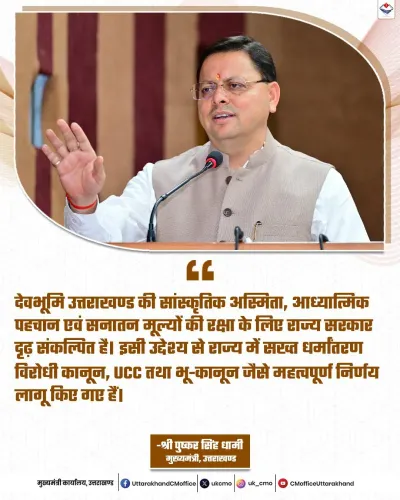
CM Pushkar Singh Dhami reaffirmed the state government's commitment to protecting Uttarakhand's cultural identity as Devbhoomi alongside development.
Key governance measures cited include the Uniform Civil Code , a strict anti-conversion law , an anti-cheating law , and a zero-tolerance anti-corruption policy .
The government claims removal of encroachments from over 12,000 acres of government land and over 34,000 appointments through transparent recruitment.
Meenakshi Sundaram confirmed special efforts are under way to complete all infrastructure projects before the upcoming Mahakumbh .
CM Dhami directed officials to consult stakeholders on Cabinet Minister Satpal Maharaj's proposal to rename an administrative road.
The event drew senior officials including Haridwar DM Mayur Dixit , IG Kumbh Dr.
Yogendra Singh Rawat , and both Haridwar and Roorkee Mayors .
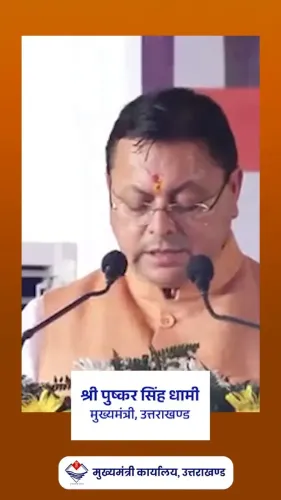
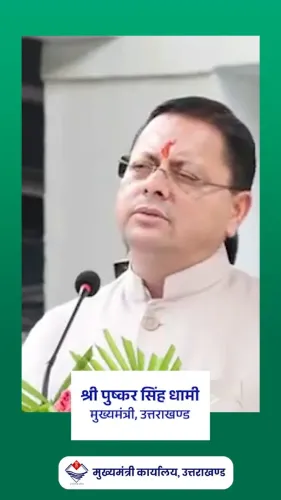
The Chief Minister's Office of Uttarakhand on Tuesday, 21 July 2026, shared remarks by Chief Minister Pushkar Singh Dhami reaffirming the state government's commitment to pairing development with the protection of Uttarakhand's cultural identity and the sanctity of Devbhoomi (the Land of Gods).
Context
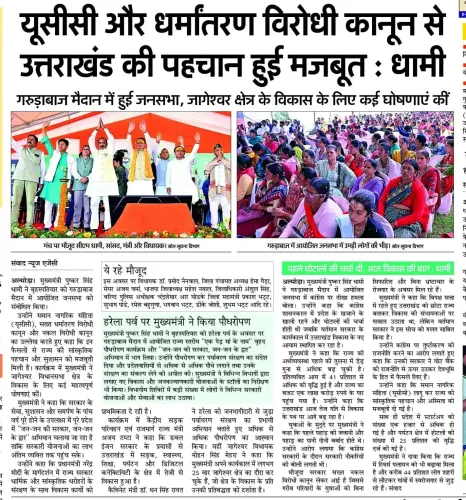
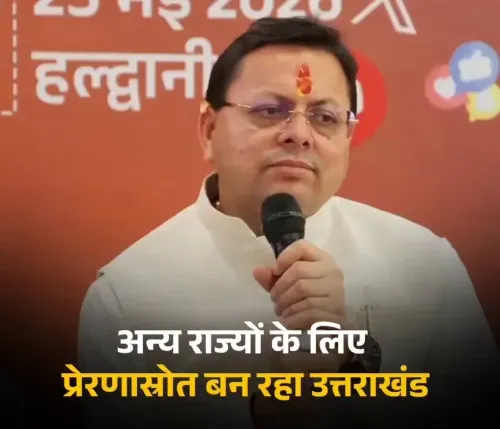
Speaking at an event in the Haridwar region, CM Dhami listed a series of legislative and administrative actions his government has undertaken. He cited the Uniform Civil Code (UCC), a strict anti-conversion law, an anti-cheating law, and a zero-tolerance policy against corruption as pillars of this dual agenda. He also highlighted the removal of encroachments from over 12,000 acres of government land and the filling of more than 34,000 posts through a transparent recruitment process.
The Chief Minister also directed officials to consult relevant stakeholders before taking a decision on a proposal by Cabinet Minister Satpal Maharaj to rename an administrative road — a suggestion that now moves into a formal consultative process.
Policy Backdrop
Uttarakhand became the first Indian state to enact a Uniform Civil Code when it passed the legislation in February 2024, seeking uniform personal laws across religions. The state also strengthened its Freedom of Religion Act with anti-conversion provisions, and introduced an anti-cheating law to safeguard the integrity of public examinations and government recruitment.
These measures are part of a broader legislative arc pursued by the BJP-led government in Uttarakhand, which frames them as essential to preserving the state's identity as Devbhoomi. Similar laws have been debated or replicated in other BJP-governed states, making Uttarakhand's experience a reference point in national policy discussions.
Stakeholders and Impact
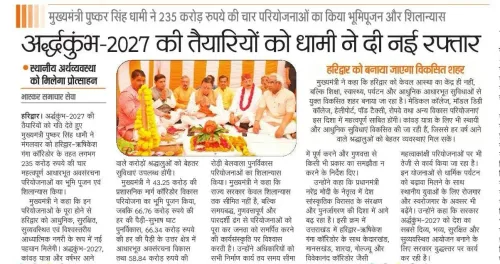
Dr. R. Meenakshi Sundaram, Principal Secretary and Managing Director of UIIDB (Uttarakhand Infrastructure and Industrial Development Board), stated at the event that special efforts are under way to complete all infrastructure projects before the upcoming Mahakumbh. The Haridwar-Roorkee corridor, central to Kumbh pilgrimage logistics, is a key focus of this push.
The event was attended by a wide cross-section of officials and elected representatives, including Cabinet Minister Madan Kaushik, Haridwar Mayor Kiran Jaisal, Roorkee Mayor Anita Agarwal, Haridwar District Magistrate Mayur Dixit, IG Kumbh Dr. Yogendra Singh Rawat, and SSP Navneet Singh Bhullar, among others. The broad attendance signals coordinated administrative mobilisation ahead of the Kumbh.
What's Next
The immediate priority flagged at the event is completing all infrastructure projects in the Haridwar region before the Mahakumbh — a deadline that UIIDB has publicly committed to meeting. The formal consultative process on renaming the road after Satpal Maharaj will now involve relevant stakeholders before any official decision is announced.
Uttarakhand's governance model — combining cultural-identity legislation with measurable administrative targets such as land encroachment removal and transparent hiring — is likely to remain a benchmark as BJP-ruled states calibrate their own policy agendas ahead of upcoming electoral cycles.
Point of View
Anti-conversion law, anti-cheating legislation — at a Haridwar event is a deliberate political signal, reinforcing the BJP's 'Devbhoomi identity' brand ahead of what will be a high-visibility Mahakumbh cycle. The pairing of cultural-identity laws with administrative metrics like encroachment removal and transparent hiring reflects a conscious effort to broaden the government's appeal beyond Hindu-identity politics to governance credibility. Uttarakhand's role as the first UCC state keeps it at the centre of a national BJP policy conversation, and the Kumbh infrastructure deadline adds urgency and accountability to the narrative. The road-renaming consultation, though minor, illustrates how local political gestures are now being routed through formal processes — a sign of administrative caution in a high-scrutiny environment.
NationPress
21 Oct 2026
Frequently Asked Questions
What is the Uniform Civil Code in Uttarakhand?
Uttarakhand became the first Indian state to enact a Uniform Civil Code in February 2024 , which seeks to apply a single set of personal laws — covering marriage, divorce, inheritance and adoption — to all citizens regardless of religion.
What did CM Dhami say about encroachment removal in Uttarakhand?
CM Pushkar Singh Dhami stated that the state government has removed encroachments from more than 12,000 acres of government land as part of its zero-tolerance approach to corruption and illegal occupation.
How many government jobs has Uttarakhand filled under CM Dhami?
According to the Chief Minister's remarks, over 34,000 appointments have been made through a transparent recruitment process under the current state government.
What is UIIDB and what is its role in Mahakumbh preparations?
UIIDB (Uttarakhand Infrastructure and Industrial Development Board) is the state agency overseeing infrastructure projects. Its MD, Dr. R. Meenakshi Sundaram , confirmed that special efforts are being made to complete all projects in the Haridwar region before the upcoming Mahakumbh .
What is the road renaming proposal involving Satpal Maharaj?
Cabinet Minister Satpal Maharaj proposed renaming an administrative road in his name. CM Dhami directed officials to consult all relevant stakeholders before taking a formal decision on the matter.