CM Dhami: Uttarakhand govt working to protect culture, demography
Synopsis
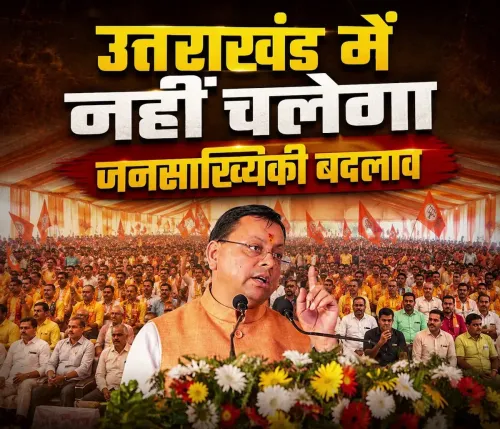
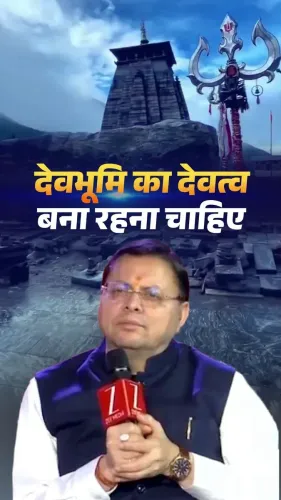
Chief Minister Pushkar Singh Dhami has reaffirmed that the Uttarakhand government is committed to protecting the culture and demography of Devbhoomi, building on landmark policies including the state's Uniform Civil Code and Freedom of Religion Act.
Key Takeaways
CM Pushkar Singh Dhami on 14 July 2026 publicly reaffirmed his government's commitment to protecting Uttarakhand's culture and demography.
Uttarakhand became the first Indian state to pass a Uniform Civil Code in February 2024 , with rules notified in 2024–2025 .
The state enacted the Freedom of Religion Act in 2018 , amended in 2022 , to regulate religious conversions.
Both laws are framed by the Dhami government as instruments for preserving the indigenous social fabric of Devbhoomi .
The 2027 assembly elections are expected to keep cultural and demographic protection at the centre of political discourse in the state.
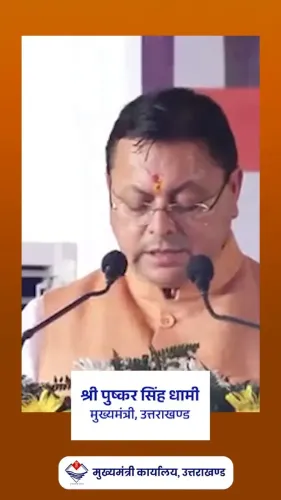
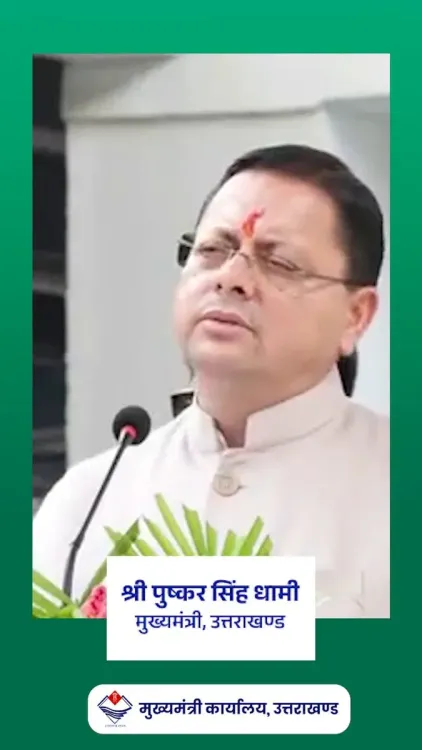
The Chief Minister's Office of Uttarakhand on Tuesday, 14 July 2026, shared a statement by Chief Minister Pushkar Singh Dhami affirming that his government is actively working to protect the culture and demography of Devbhoomi Uttarakhand.
In his statement, CM Dhami said, 'Hamari sarkar Devbhoomi Uttarakhand ki sanskriti aur demography ko sanrakshit karne ke liye kaam kar rahi hai' — 'Our government is working to protect the culture and demography of Devbhoomi Uttarakhand.'
Context
Uttarakhand, officially referred to as Devbhoomi (Land of the Gods), holds deep religious and cultural significance as the seat of several major Hindu pilgrimage sites and ancient traditions. Concerns over demographic change and cultural erosion have been a persistent political theme in the state for over two decades, voiced by local communities and successive governments alike.
CM Dhami, who has been in office since 2021, has consistently positioned cultural and demographic preservation as a central plank of his administration's agenda, appealing to a broad cross-section of the state's electorate.
Policy Backdrop
Uttarakhand enacted the Freedom of Religion Act in 2018, subsequently amended in 2022, to regulate religious conversions — a law framed by its proponents as a safeguard for the state's indigenous population and traditions.
More significantly, the Uttarakhand Uniform Civil Code (UCC) was passed by the state assembly in February 2024, making Uttarakhand the first state in independent India to legislate a UCC. The state government notified the implementing rules in 2024–2025, bringing uniform norms for marriage, inheritance, and adoption into effect for all residents regardless of religion.
Together, these measures represent a legislative architecture that the state government describes as essential to preserving the social and cultural fabric of Devbhoomi.
Stakeholders and Impact
The primary stakeholders are the approximately 11 million residents of Uttarakhand, whose personal laws, land rights, and community practices are directly shaped by these legislative measures. Indigenous communities in the hills, religious institutions, and civil society groups have all engaged — with varying degrees of support and concern — in the public debate around these policies.
The UCC in particular has drawn national attention, with advocates arguing it advances gender equality and legal uniformity, while critics raise questions about its implications for tribal communities and minority religious groups. The Dhami government has maintained that the code is inclusive and constitutionally sound.
What's Next
With the 2027 Uttarakhand assembly elections on the horizon, enforcement outcomes of the UCC and any further legislative steps on land ownership or conversion regulations are likely to remain closely watched. CM Dhami's renewed public emphasis on cultural and demographic protection signals that these themes will continue to anchor the ruling party's political messaging in the run-up to the polls.
Point of View
Signalling to the base that the government views population composition as a policy concern, not merely a sociological observation. How the UCC's enforcement record shapes public opinion over the next year will likely determine whether this messaging remains an asset or becomes a liability for Dhami.
NationPress
12 Oct 2026
Frequently Asked Questions
What did CM Dhami say about Uttarakhand's culture and demography?
CM Pushkar Singh Dhami said his government is actively working to protect the culture and demography of Devbhoomi Uttarakhand, reaffirming a policy stance that underpins major legislation including the state's Uniform Civil Code.
What is the Uttarakhand Uniform Civil Code?
The Uttarakhand Uniform Civil Code, passed in February 2024, makes Uttarakhand the first Indian state to enforce uniform personal laws — covering marriage, inheritance, and adoption — for all residents regardless of religion.
What is the Uttarakhand Freedom of Religion Act?
The Freedom of Religion Act, enacted in 2018 and amended in 2022, regulates religious conversions in Uttarakhand. The state government frames it as a measure to protect indigenous communities and prevent coercive or fraudulent conversions.
Why does Uttarakhand focus on demographic protection?
Uttarakhand, known as Devbhoomi, has seen long-standing local concerns about migration patterns and religious conversion affecting the composition of hill communities. Successive governments have responded with legal and administrative tools addressing these concerns.
What are the next steps for Uttarakhand's cultural policies?
Analysts are watching the enforcement outcomes of the UCC and any potential legislation on land ownership or conversion rules as the state approaches the 2027 assembly elections, when these themes are expected to be central to the political campaign.