CM Dhami: Uttarakhand's decisions now a model for other states
Synopsis
Uttarakhand CM Pushkar Singh Dhami declared on 25 May 2026 that his government's landmark decisions — most notably the first state-level Uniform Civil Code — have become a replicable model, with several Indian states now following Uttarakhand's policy lead.
Key Takeaways
CM Pushkar Singh Dhami stated on 25 May 2026 that Uttarakhand's governance decisions have become a model for other Indian states.
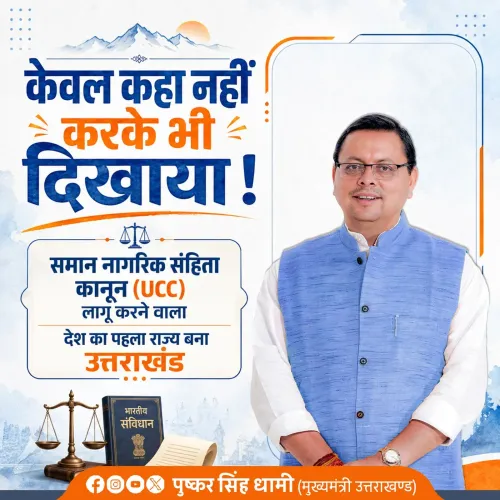
Uttarakhand passed the Uniform Civil Code in February 2024 , making it the first state in independent India to enact common personal laws across religions.
Dhami claimed that 'many states of the country' are now following the policy decisions of his administration.
The post was accompanied by a video, indicating a structured communications push around the governance narrative.
Within the BJP ecosystem, states have a documented pattern of coordinating on and replicating legislation pioneered by one state.
The statement positions Uttarakhand as a national policy laboratory ahead of what is seen as a politically consequential period.
Uttarakhand Chief Minister Pushkar Singh Dhami on Monday, 25 May 2026, asserted that the historic decisions taken by his government for the welfare of Devbhoomi Uttarakhand have become a benchmark for other states across the country, with several states now actively following the policy path charted by his administration.
Context
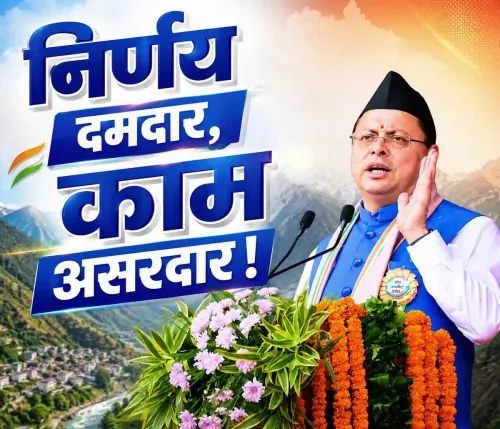
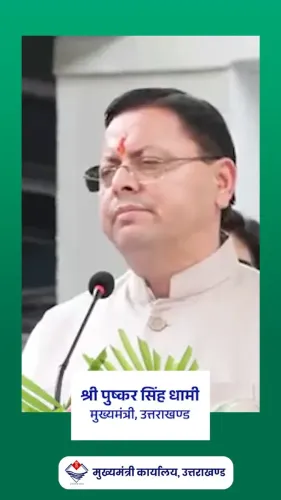
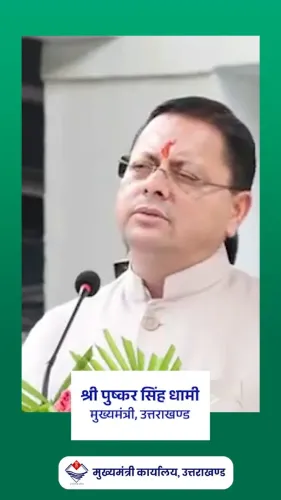
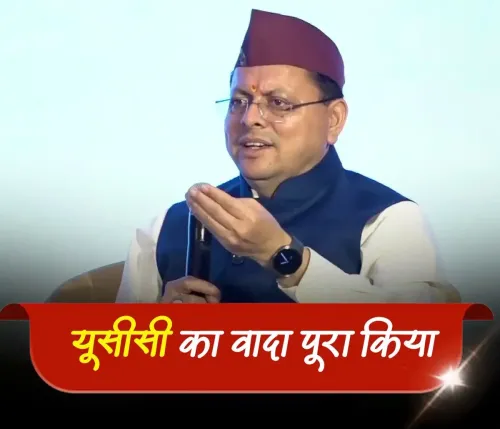
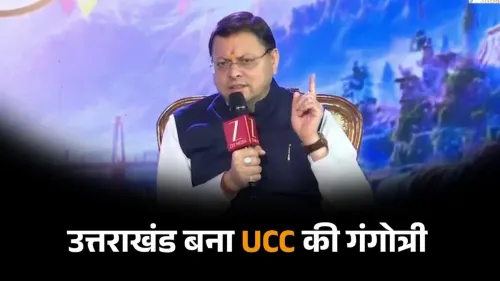
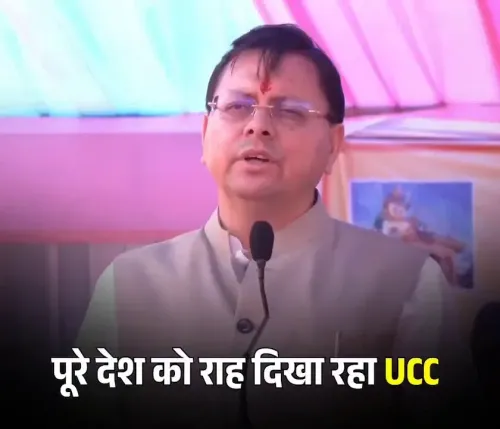
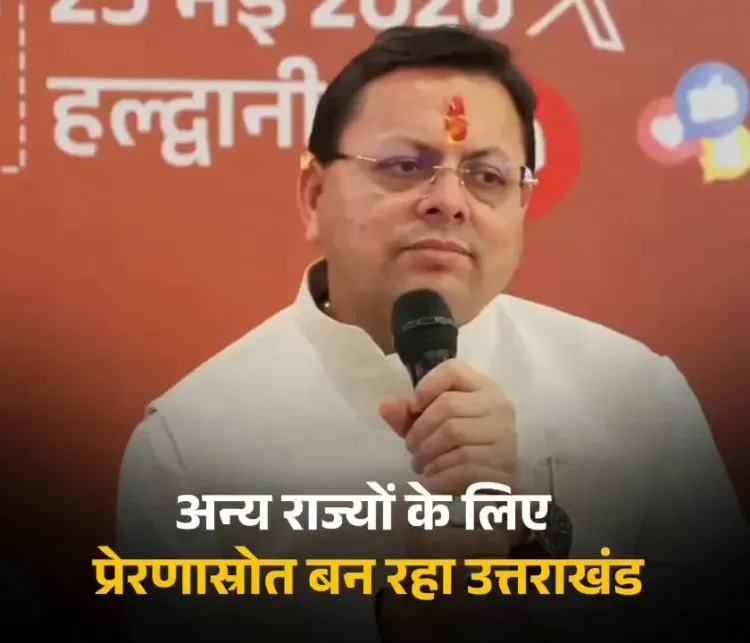
Posting on X, CM Dhami wrote: 'हमारी सरकार द्वारा देवभूमि उत्तराखंड के हित में जो ऐतिहासिक निर्णय लिए गए हैं वह अन्य राज्यों के लिए भी मिसाल बन गए हैं।' ('The historic decisions taken by our government in the interest of Devbhoomi Uttarakhand have become an example for other states as well.') He added that today, many states of the country are following the decisions taken by his government. The statement was accompanied by a video, signalling a deliberate effort to highlight Uttarakhand's governance record ahead of what observers see as a politically significant period.
Policy Backdrop
The most prominent policy milestone cited in this context is the Uniform Civil Code (UCC), passed by the Uttarakhand Legislative Assembly in February 2024 — making it the first state in independent India to enact common personal laws across religious communities. The legislation was a flagship commitment of the Bharatiya Janata Party (BJP) and its passage in Uttarakhand was widely regarded as a political and administrative proof-of-concept for the rest of the country. Beyond the UCC, the Dhami government has pursued a range of state-specific administrative and social reforms, positioning Uttarakhand as a laboratory for policy ideas within the broader BJP ecosystem.
Stakeholders and Impact
The claim of replication carries significance for state governments, policymakers, and citizens across India. Within the BJP-governed states, there is an established pattern of coordinating on social and administrative legislation once one state demonstrates feasibility — a dynamic that accelerates adoption across the country. For Uttarakhand, being positioned as a policy pioneer strengthens the state's standing within the national political conversation and reinforces CM Dhami's governance credentials. Civil society groups and opposition parties in various states continue to debate the implications of measures such as the UCC for pluralism and federal diversity.
What's Next
The key development to watch is whether other state assemblies — particularly those governed by the BJP — formally introduce or advance similar legislation in upcoming sessions, explicitly citing Uttarakhand's experience. CM Dhami's statement, backed by video content, suggests his administration intends to actively promote this narrative of policy leadership. The coming months will test whether the model-state claim translates into concrete legislative action elsewhere, or remains a political positioning exercise ahead of future electoral cycles.
Point of View
Dhami is building a case for the political viability of measures that remain contested nationally. This 'model state' narrative serves a dual purpose — burnishing his own governance record while nudging hesitant BJP-ruled states toward similar legislative action. Analysts will watch whether the claim is substantiated by concrete legislative moves in other assemblies, or whether it functions primarily as electoral positioning.
NationPress
10 Oct 2026
Frequently Asked Questions
What historic decisions is CM Dhami referring to in his post?
CM Dhami did not name specific decisions in this post, but the most prominent landmark of his administration is the Uniform Civil Code , passed by the Uttarakhand Assembly in February 2024 — the first such law enacted by any Indian state after independence. His government has also pursued several other administrative and social reforms.
Which states are following Uttarakhand's policy decisions?
CM Dhami stated that 'many states of the country' are following Uttarakhand's decisions, but did not name specific states in this post. The research background notes that BJP-governed states have a pattern of coordinating on legislation once one state demonstrates feasibility, though specific adoptions after 2023 are unverified.
What is the Uniform Civil Code and why is Uttarakhand significant?
Uttarakhand became the first state in independent India to pass a Uniform Civil Code in February 2024 , establishing common personal laws — governing marriage, divorce, inheritance, and adoption — across all religious communities. It fulfilled a longstanding BJP manifesto commitment and is seen as a template for other states.
Who is Pushkar Singh Dhami?
Pushkar Singh Dhami is the Chief Minister of Uttarakhand and a BJP leader who has held the post since 2021 . He is known for championing state-specific governance reforms and for steering the UCC legislation through the Uttarakhand Assembly in 2024.
Why is Uttarakhand called Devbhoomi?
Devbhoomi , meaning 'Land of the Gods,' is a traditional name for Uttarakhand owing to its large number of Hindu pilgrimage sites, including Kedarnath , Badrinath , Gangotri , and Yamunotri . The name is widely used in official and cultural contexts to reflect the state's religious and cultural significance.