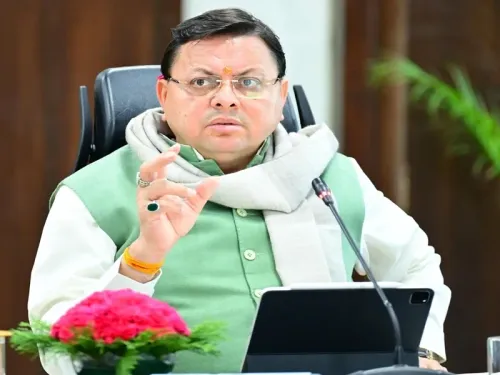
CM Dhami declares Uttarakhand first state to implement UCC
Synopsis
Uttarakhand Chief Minister Pushkar Singh Dhami announced on 13 June 2026 that Uttarakhand has become the first state in independent India to implement the Uniform Civil Code, two years after the Assembly passed the landmark legislation in February 2024.
Key Takeaways
CM Pushkar Singh Dhami declared Uttarakhand the first state in independent India to implement the Uniform Civil Code .
The announcement was made on 13 June 2026 , roughly two years after the Uttarakhand Assembly passed the UCC Bill on 7 February 2024 .
The code replaces religion-specific personal laws on marriage, inheritance, and adoption with a single set of civil rules for all residents.
The legislative effort traces back to an expert committee constituted in 2022 as a fulfilment of a BJP election promise.
Other BJP -ruled states such as Gujarat and Madhya Pradesh may now face increased pressure to introduce parallel legislation.
Judicial scrutiny and community-level implementation challenges are expected as the code moves from statute to ground-level enforcement.
Uttarakhand Chief Minister Pushkar Singh Dhami declared on 13 June 2026 that Uttarakhand has become the first state in independent India to implement the Uniform Civil Code (UCC), marking the culmination of a legislative effort that began with an expert committee constituted in 2022.
Context
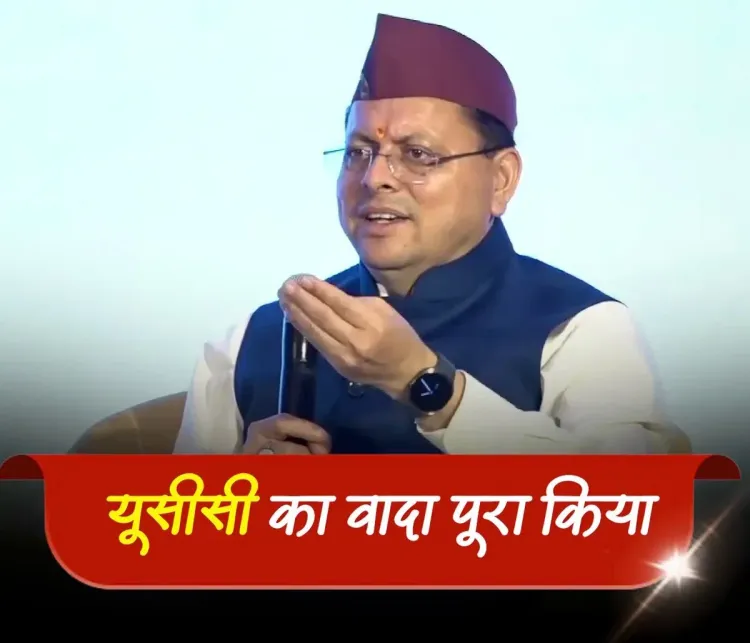
Posting on X, CM Dhami wrote in Hindi: 'Samaan Nagarik Sanhita laagu karne wala pehla rajya Uttarakhand!' ('Uttarakhand — the first state to implement the Uniform Civil Code!'). The post, accompanied by a video, signals that the state has moved beyond legislation into active implementation of the code.
The Uttarakhand Assembly had passed the Uniform Civil Code Bill on 7 February 2024, receiving gubernatorial assent later that month. The June 2026 announcement indicates that the rules, registration mechanisms, and administrative machinery required to operationalise the law are now in place.
Policy Backdrop
Article 44 of the Indian Constitution has since 1950 directed the state to secure a Uniform Civil Code for all citizens — a provision that remained a directive principle rather than an enforceable right for over seven decades. The Bharatiya Janata Party (BJP) has carried a commitment to UCC in successive national manifestos, and the Uttarakhand government constituted an expert committee in 2022 to draft the legislation, fulfilling a key election promise.
The code aims to replace religion-specific personal laws governing marriage, inheritance, and adoption with a single set of civil rules applicable to all residents regardless of faith. Goa is often cited as a partial precedent, having retained a Portuguese-era civil code that applies uniformly across communities since the 19th century, though it predates independence and operates under different constitutional circumstances.
Stakeholders and Impact
The implementation directly affects all residents of Uttarakhand, cutting across religious communities. Matters of personal law — including registration of marriages, rules of succession, and adoption procedures — will now be governed by the unified code rather than community-specific statutes.
Religious groups and civil-society organisations have held differing views on the code since its drafting phase, with supporters arguing it advances constitutional equality and critics raising concerns about cultural autonomy. Legal challenges before higher courts remain a possibility as implementation proceeds.
What's Next
The Uttarakhand model is being closely watched by other BJP-governed states, including Gujarat and Madhya Pradesh, which have discussed parallel legislation. Nationally, the development adds pressure on the central government to advance a countrywide UCC, a debate that the 21st Law Commission had examined in an earlier consultation on feasibility.
With Uttarakhand now claiming the status of the first state to move from legislation to full implementation, the political and legal scrutiny of how the code functions on the ground will intensify — and its outcomes are likely to shape the trajectory of UCC discussions across India.
Point of View
Converting a directive principle dormant since 1950 into enforceable law at the state level. By moving from legislation to implementation, Uttarakhand shifts the debate from legislative intent to administrative reality — a far harder test. The development places the central government in an awkward position: the party's own state has outpaced its national agenda, raising questions about when and whether a central UCC will follow. How Uttarakhand manages community grievances and legal challenges over the next year will determine whether the model is exportable or cautionary.
NationPress
13 Sept 2026
Frequently Asked Questions
Which is the first state to implement Uniform Civil Code in India?
Uttarakhand is the first state in independent India to implement the Uniform Civil Code, as declared by Chief Minister Pushkar Singh Dhami on 13 June 2026.
When did Uttarakhand pass the UCC Bill?
The Uttarakhand Assembly passed the Uniform Civil Code Bill on 7 February 2024, and it received gubernatorial assent later that month.
What does the Uniform Civil Code mean for Uttarakhand residents?
It means that all residents of Uttarakhand, regardless of religion, will be governed by a single set of civil rules covering marriage, inheritance, and adoption, replacing community-specific personal laws.
Is Goa also under a Uniform Civil Code?
Goa operates under a Portuguese-era civil code that predates independence and applies uniformly across communities, but Uttarakhand is the first post-independence state to legislate and implement a UCC under the Indian constitutional framework.
Will other states implement UCC after Uttarakhand?
Other BJP-governed states such as Gujarat and Madhya Pradesh have discussed similar legislation, and Uttarakhand's implementation is expected to intensify political pressure on them as well as on the central government to pursue a nationwide code.