CM Dhami Hails Assam UCC Law as Historic Step
Synopsis
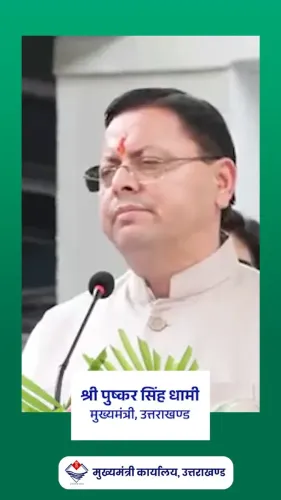
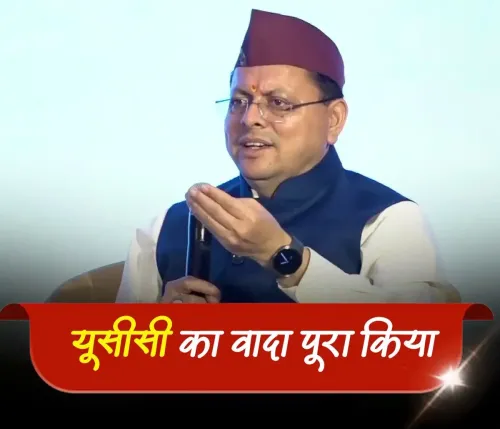
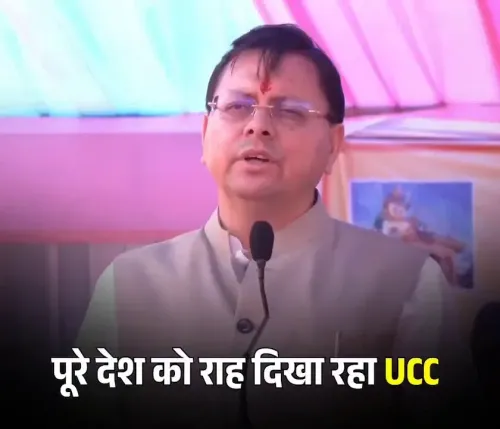
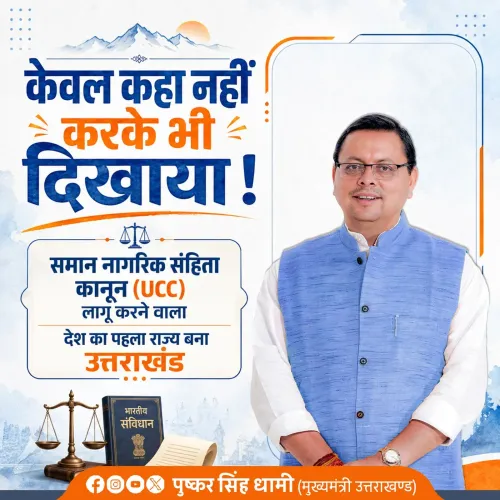
Uttarakhand Chief Minister Pushkar Singh Dhami on 27 May 2026 hailed the Assam Assembly's passage of a Uniform Civil Code bill as historic, calling it a continuation of the momentum that began with Uttarakhand's own UCC law in 2024 under Prime Minister Modi's leadership.
Key Takeaways
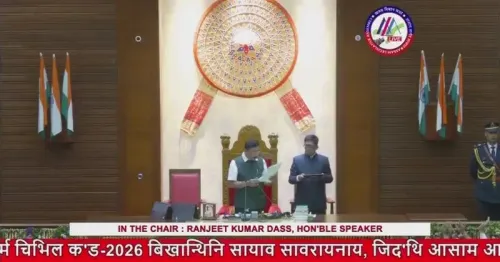
Assam Legislative Assembly passed a Uniform Civil Code bill, making it the second BJP-governed state after Uttarakhand to do so.
Uttarakhand enacted India's first state-level UCC law in February 2024 under CM Pushkar Singh Dhami .
CM Dhami credited Prime Minister Narendra Modi's leadership and linked the UCC to Dr.
Bhimrao Ambedkar's vision of equality and justice.
The UCC aims to replace religion-specific personal laws with a common code on marriage, divorce, inheritance and adoption.
CM Dhami congratulated Assam CM Himanta Biswa Sarma and described the law as a means to protect women's rights and ensure equal justice.
The development may intensify pressure on other BJP -ruled states and revive debate on a national UCC framework.
Uttarakhand Chief Minister Pushkar Singh Dhami on Wednesday, 27 May 2026 congratulated Assam Chief Minister Himanta Biswa Sarma after the Assam Legislative Assembly passed a Uniform Civil Code (UCC) bill, calling it a historic step toward a developed, harmonious and empowered India.
Context
In his post, CM Dhami wrote that 'असम विधानसभा में समान नागरिक संहिता (UCC) कानून का पारित होना विकसित, समरस और सशक्त भारत की दिशा में एक ऐतिहासिक कदम है' — 'The passage of the Uniform Civil Code law in the Assam Assembly is a historic step toward a developed, harmonious and empowered India.' He extended warm congratulations to CM Sarma and his entire team for the decision.
Dhami also framed the development as a continuation of a momentum that originated in Uttarakhand, describing it as a stream that is now flowing across the country under the leadership of Prime Minister Narendra Modi.
Policy Backdrop
Uttarakhand became the first Indian state to pass and enact a Uniform Civil Code law in February 2024, under CM Dhami's tenure — a landmark that the BJP had committed to in its national manifestos of 2014 and 2019. The UCC seeks to replace religion-specific personal laws with a common framework governing marriage, divorce, inheritance and adoption.
Dhami invoked Dr. Bhimrao Ambedkar, Chairman of the Constituent Assembly's drafting committee, noting that the UCC advances Ambedkar's vision of equality and justice for all citizens. Article 44 of the Constitution lists a Uniform Civil Code among the Directive Principles of State Policy, providing its constitutional basis.
In his post, Dhami described the UCC as 'not merely a law, but a powerful means of protecting women's rights, ensuring social harmony, and guaranteeing equal justice for all citizens.'
Stakeholders and Impact
Proponents argue the code would bring legal parity for women across communities, particularly in matters of marriage, divorce and inheritance where personal laws have historically differed. Women's rights groups that have supported the UCC point to protections against practices such as unilateral divorce and unequal inheritance.
Religious communities with distinct personal law traditions have raised concerns about cultural and religious autonomy, making the UCC one of the more contested policy proposals in Indian public life. Assam's passage of the bill adds a second BJP-governed state to the UCC column, increasing political pressure on other states and the central government.
What's Next
With both Uttarakhand and Assam now having passed UCC legislation at the state level, attention will turn to other BJP-ruled states — particularly Gujarat and Madhya Pradesh — where similar moves have been discussed. Any acceleration at the state level could renew parliamentary debate on a national UCC framework. CM Dhami's statement signals that the BJP intends to present state-level UCC enactments as a building block toward that broader national goal.
Point of View
He reinforces his state's identity as the originator of a national BJP policy push. The invocation of Ambedkar is a recurring rhetorical strategy to pre-empt opposition framing and anchor the UCC in constitutional consensus rather than majoritarian politics. With two state-level laws now in place, the BJP appears to be building a federal template that could support a future national UCC push, particularly ahead of electoral cycles. The congratulatory tone also signals intra-party cohesion among BJP chief ministers on a politically sensitive issue.
NationPress
10 Oct 2026
Frequently Asked Questions
What is the Uniform Civil Code and why is it significant?
The Uniform Civil Code is a proposed common set of laws governing personal matters such as marriage, divorce, inheritance and adoption for all citizens regardless of religion. It is significant because it would replace the current system of religion-specific personal laws and is listed as a goal under Article 44 of India's Constitution.
Which was the first Indian state to pass a UCC law?
Uttarakhand was the first Indian state to pass and enact a Uniform Civil Code law, doing so in February 2024 under Chief Minister Pushkar Singh Dhami .
Why did CM Dhami congratulate Assam on the UCC bill?
CM Dhami congratulated Assam CM Himanta Biswa Sarma because the Assam Legislative Assembly passed a Uniform Civil Code bill on 27 May 2026 , which Dhami described as a historic step toward equality and social harmony in India.
What is the connection between Ambedkar and the Uniform Civil Code?
Dr. Bhimrao Ambedkar , as Chairman of the Constituent Assembly's drafting committee, advocated for equality before law and uniform personal laws. Supporters of the UCC, including CM Dhami , cite Ambedkar's vision of equality and justice as a foundational argument for the code.
Will other states also pass a UCC law after Assam?
With Uttarakhand and Assam having passed UCC legislation, other BJP -governed states such as Gujarat and Madhya Pradesh are being watched for similar legislative moves, and the development may also renew discussion on a national UCC framework in Parliament.