Amit Shah Congratulates Assam on Passing UCC Bill

Synopsis
Union Home Minister Amit Shah congratulated Assam on passing the Uniform Civil Code bill on 27 May 2026, praising CM Himanta Biswa Sarma and calling the move a fulfilment of a BJP founding commitment under PM Modi's leadership. Uttarakhand and Gujarat had moved earlier.
Key Takeaways
Amit Shah congratulated Assam on 27 May 2026 after its assembly passed the Uniform Civil Code bill .
Shah described the UCC as a BJP resolve since the party's founding, pursued under PM Narendra Modi's leadership.
Uttarakhand was the first state to pass a UCC bill in February 2024 ; Assam is described as the third state after Uttarakhand and Gujarat.
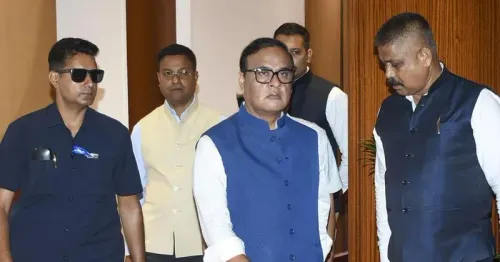
Shah specifically praised Chief Minister Himanta Biswa Sarma and all legislators who supported the bill.
The BJP's stated strategy is to implement equal civil laws across every BJP-governed state, building toward national-level equality before law.
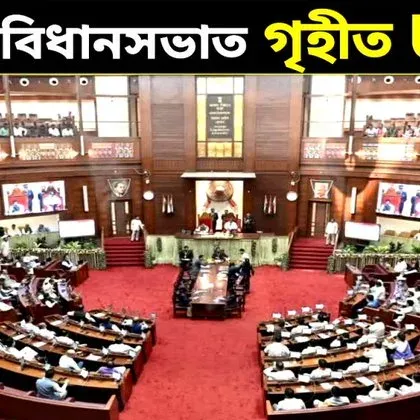
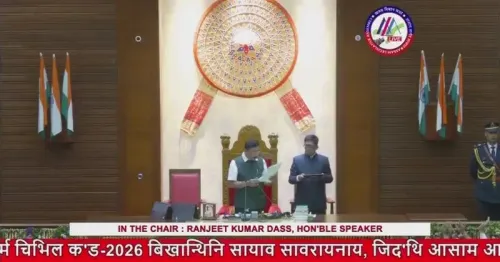
Union Home Minister Amit Shah on Wednesday, 27 May 2026 congratulated the people of Assam after the state assembly passed the Uniform Civil Code (UCC) bill, calling it a fulfilment of a long-standing BJP commitment. Shah hailed the development as a step toward equal laws for every citizen across India, and specifically praised Assam Chief Minister Himanta Biswa Sarma and all legislators who supported the bill.
What Shah Said
Posting in Assamese on X, Shah wrote: 'অসমবাসীলৈ অভিনন্দন' ['Congratulations to the people of Assam']. He stated that the Uniform Civil Code has been a BJP resolve since the party's founding, and that under the leadership of Prime Minister Narendra Modi, BJP-governed state governments have enacted equal laws for every citizen. 'I am extremely pleased that after Uttarakhand and Gujarat, Assam has today also adopted the Uniform Civil Code bill,' he wrote. He added that the party remains 'committed to strengthening the principle of equality before law in every part of the country.'
Context
The Uniform Civil Code seeks to replace religion-specific personal laws — governing matters such as marriage, divorce, inheritance, and adoption — with a single set of laws applicable to all citizens regardless of faith. The BJP has carried the UCC as a core electoral promise in its manifestos since 1998, and the party's 2014 and 2019 national election platforms both explicitly committed to its enactment.
Uttarakhand became the first Indian state to pass a UCC bill in February 2024, setting a legislative precedent for other BJP-ruled states. Shah's post positions Assam's passage as the latest in a deliberate, state-by-state strategy rather than a single central legislative push.
Policy Backdrop
The BJP's approach has been to use state governments as laboratories for the UCC, building political and legal momentum before any potential central legislation. Gujarat had earlier moved toward a UCC through expert committee processes. With Assam now joining the list, the party can point to multiple northeastern and western states as proof of implementation.
Chief Minister Himanta Biswa Sarma has been one of the most vocal proponents of the UCC in the northeast, framing it as an instrument of social equality. Assam's diverse religious and ethnic composition makes the passage of such a bill particularly significant in the region's political context.
Stakeholders and Impact
Women's rights groups have broadly supported the UCC's intent, arguing that uniform personal laws would eliminate discriminatory provisions that exist in some religion-based codes — particularly around marriage age, divorce rights, and inheritance. However, minority community organisations and some civil society groups have historically raised concerns about the erosion of religious and cultural autonomy.
For residents of Assam, the bill's passage means the state government will move toward implementing a common civil framework, though the timeline for rules and enforcement will depend on subsequent executive action.
What's Next
Political observers will now watch whether other BJP-governed states — including Madhya Pradesh and Maharashtra — accelerate their own UCC processes following Assam's move. Shah's framing of the development as part of a national commitment signals that the party intends to keep the issue prominent ahead of future electoral cycles. The central government's position on a nationwide UCC through Parliament remains the larger question that Assam's bill keeps in sharp focus.
Point of View
Greeted by Amit Shah in the state's own language, underscores the BJP's deliberate state-by-state legislative strategy — using regional governments to normalise a policy that has long been politically contentious at the national level. Shah's Assamese-language post is itself a signal: the party is keen to frame the UCC not as a majoritarian imposition but as a grassroots, locally endorsed reform. With Uttarakhand having set the precedent in 2024, each additional state passage strengthens the BJP's hand in arguing that central legislation is a natural next step. The political calculus is clear — accumulate enough state-level mandates to make national UCC legislation appear inevitable rather than controversial.
NationPress
12 Oct 2026
Frequently Asked Questions
What is the Uniform Civil Code and why is Assam passing it significant?
The Uniform Civil Code is a proposed single set of civil laws covering marriage, divorce, inheritance, and adoption that would apply to all citizens regardless of religion, replacing existing religion-based personal laws. Assam's passage is significant because it makes the state one of the first in India — and the first in the northeast — to adopt such a law, following Uttarakhand's pioneering move in 2024.
Which states have passed the Uniform Civil Code so far?
According to Union Home Minister Amit Shah's post on 27 May 2026, Uttarakhand and Gujarat preceded Assam in moving toward a Uniform Civil Code, with Assam now becoming the latest BJP-governed state to pass the bill.
What did Amit Shah say about the Assam UCC bill?
Amit Shah posted in Assamese congratulating the people of Assam, calling the UCC a BJP resolve since the party's founding. He praised Chief Minister Himanta Biswa Sarma and all supporting legislators, and reaffirmed the party's commitment to equal laws across every part of India.
Who is Himanta Biswa Sarma and what is his role in the Assam UCC?
Himanta Biswa Sarma is the Chief Minister of Assam and leads the BJP government in the state. He has been a strong advocate for the Uniform Civil Code in the northeast, and Amit Shah specifically congratulated him for the bill's passage in the Assam assembly.
Will India get a national Uniform Civil Code?
The BJP has promised a national Uniform Civil Code in its election manifestos since 1998, but no central legislation has been enacted as of the latest available information. The party's current approach focuses on state-level enactments, with observers watching whether sufficient state precedents lead to a push for Parliament-level legislation.