Shekhawat Hails Assam UCC Bill as Step Toward National Unity
Synopsis
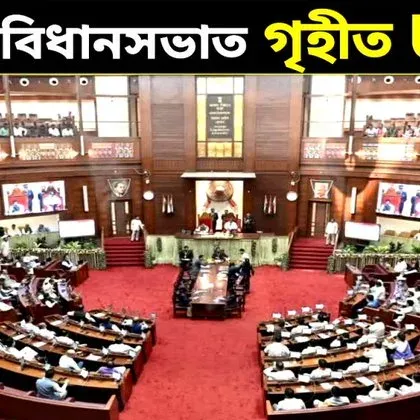
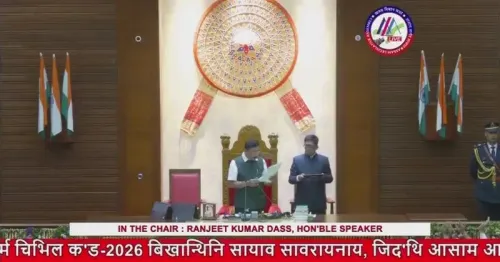
Union Culture and Tourism Minister Gajendra Singh Shekhawat on 27 May 2026 hailed the passage of the Uniform Civil Code bill in the Assam Legislative Assembly, calling it a step toward equality, justice, and social harmony under PM Modi's governance vision.
Key Takeaways
Union Minister Gajendra Singh Shekhawat publicly welcomed the passage of the UCC bill in the Assam Legislative Assembly on 27 May 2026 .
He credited Prime Minister Narendra Modi's leadership and the BJP's 'Sabka Saath, Sabka Vikas, Sabka Vishwas' framework for the legislative development.
Uttarakhand was the first Indian state to pass a UCC law, in February 2024 , setting the precedent Assam has now followed.
The UCC seeks to standardise personal laws on marriage, divorce, inheritance, and adoption across religious communities.
Women are cited as primary beneficiaries, as uniform laws are intended to eliminate gender-discriminatory provisions in religion-specific codes.
Further legal scrutiny, including potential petitions before the Supreme Court of India , is anticipated as more states move on similar legislation.
Union Culture and Tourism Minister Gajendra Singh Shekhawat on Wednesday, 27 May 2026, welcomed the passage of the Uniform Civil Code (UCC) bill in the Assam Legislative Assembly, calling it a decisive step toward equality, justice, and social harmony in India.
Context
Shekhawat posted his remarks on X, writing in Hindi that the bill's passage is 'samanta, nyay aur samajik samarasta ki disha mein ek aur sulajha hua kadam' — 'another well-considered step in the direction of equality, justice, and social harmony.' He credited the leadership of Prime Minister Narendra Modi and invoked the BJP's governing philosophy of 'Sabka Saath, Sabka Vikas, Sabka Vishwas' ('Together with all, development for all, trust of all'). The minister also tagged Assam Chief Minister Himanta Biswa Sarma in the post, signalling broad party solidarity on the legislation.
Policy Backdrop
Uttarakhand became the first state in independent India to pass a state-level UCC law in February 2024, setting a legislative precedent that BJP-governed states have since looked to replicate. The push for a Uniform Civil Code draws directly from Article 44 of the Indian Constitution, which lists it as a Directive Principle of State Policy, and has featured prominently in the BJP's successive national election manifestos. A state-level UCC typically seeks to standardise personal laws — governing marriage, divorce, inheritance, and adoption — across religious communities within the state's jurisdiction.
Shekhawat described the Assam bill as an 'exemplary decision' (anukarniya nirnay) that would promote equal rights, transparency, and national integration within society. His framing aligns with the party's broader argument that uniform personal laws advance gender equality, particularly for women from minority communities who may face disadvantageous provisions under religion-specific personal laws.
Stakeholders and Impact
The legislation, if enacted, would directly affect Assam's diverse population, which includes significant Hindu, Muslim, Christian, and indigenous tribal communities. Women are widely cited as the primary intended beneficiaries, as UCC proponents argue that standardised laws on marriage age, divorce rights, and inheritance would eliminate gender-discriminatory provisions that exist in some religion-specific codes. Civil society groups and religious organisations across the political spectrum have historically held divergent views on the merits of such legislation, with supporters emphasising constitutional equality and critics raising concerns about cultural and religious autonomy.
The passage in Assam adds to a growing list of BJP-governed states that have moved to legislate on civil law reform, reinforcing the party's positioning ahead of future electoral cycles and its long-standing ideological commitment to a common civil framework.
What's Next
Legislative watchers will now track whether other BJP-ruled states introduce similar bills, building further momentum toward the party's stated national goal. Any legal challenges to state-level UCC laws are likely to be heard by the Supreme Court of India, which could eventually rule on the constitutional validity and scope of such legislation. The developments in Assam and Uttarakhand together may also intensify the debate over whether a central, nationwide UCC should be tabled in Parliament.
Point of View
Designed to demonstrate incremental delivery on a flagship ideological promise. By invoking Modi's 'Sabka Saath' doctrine, the party frames UCC not as a majoritarian project but as a universal equity measure — a framing aimed at broadening its appeal beyond its core base. Assam's move, following Uttarakhand's 2024 precedent, suggests a deliberate state-by-state rollout that builds political facts on the ground ahead of any central legislation. The pattern also pre-empts opposition narratives by anchoring the debate in constitutional Article 44 language rather than religious identity politics.
NationPress
11 Oct 2026
Frequently Asked Questions
What is the Uniform Civil Code bill passed in Assam?
The Uniform Civil Code bill passed in the Assam Legislative Assembly seeks to replace religion-specific personal laws with a single, standardised set of civil laws governing marriage, divorce, inheritance, and adoption for all residents of Assam, regardless of religion.
Which was the first Indian state to pass a UCC law?
Uttarakhand was the first state in independent India to pass a Uniform Civil Code law, doing so in February 2024.
What did Gajendra Singh Shekhawat say about the Assam UCC bill?
Union Minister Gajendra Singh Shekhawat called the passage of the Assam UCC bill 'another well-considered step in the direction of equality, justice, and social harmony,' crediting Prime Minister Modi's leadership for the development.
What is Article 44 of the Indian Constitution?
Article 44 is a Directive Principle of State Policy that directs the state to endeavour to secure a Uniform Civil Code for citizens throughout the territory of India, though it is not a justiciable right.
Who is Himanta Biswa Sarma and what is his role in the Assam UCC bill?
Himanta Biswa Sarma is the Chief Minister of Assam and the head of the BJP government that steered the UCC bill through the Assam Legislative Assembly.