Amit Shah hails Assam UCC Bill, third BJP state to pass it
Synopsis
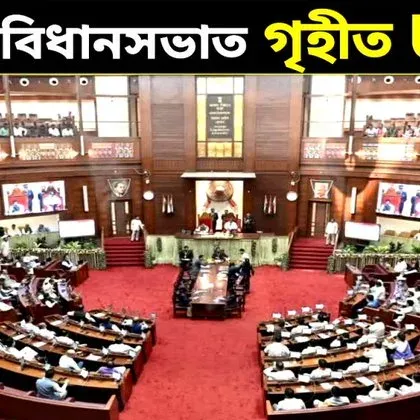
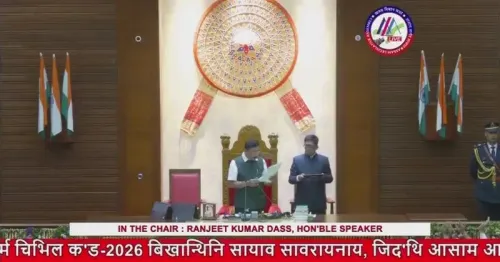
Union Home Minister Amit Shah on 27 May 2026 welcomed Assam's passage of the Uniform Civil Code Bill, calling it fulfilment of a foundational BJP resolve. Assam becomes the third BJP-governed state after Uttarakhand and Gujarat to enact such legislation, with Shah crediting PM Modi's leadership and congratulating CM Himanta Biswa Sarma.
Key Takeaways
Assam passed the Uniform Civil Code (UCC) Bill on 27 May 2026 , becoming the third BJP-ruled state to do so.
Union Home Minister Amit Shah publicly congratulated the people of Assam and Chief Minister Himanta Biswa Sarma on the development.
Uttarakhand was the first state to pass a UCC bill, in February 2024 , establishing the legislative precedent.
The BJP has listed the UCC as a core ideological objective since the party's founding in 1980 , with a formal pledge in its 2014 election manifesto.
The UCC seeks to replace religion-specific personal laws on marriage, divorce, inheritance, and adoption with a single uniform code.
Constitutional challenges and the prospect of further UCC legislation in other BJP-ruled states remain key developments to watch.
Union Home Minister Amit Shah on Wednesday, 27 May 2026 congratulated the people of Assam after the state legislature passed the Uniform Civil Code (UCC) Bill, making it the third BJP-governed state to enact such legislation, following Uttarakhand and Gujarat.
Context
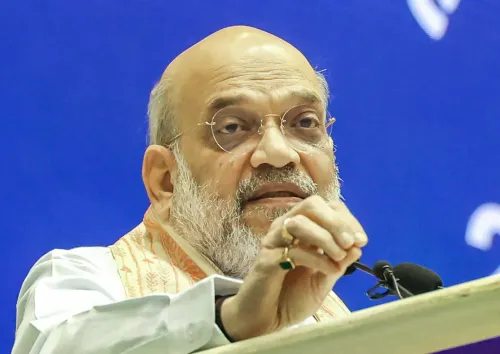
In a post on X, Shah described the UCC as 'BJP's resolve since the day of its foundation' and expressed delight at Assam joining the list of states that have passed the code. He specifically congratulated Chief Minister Himanta Biswa Sarma and 'all the legislators who supported this bill.' The Home Minister framed the development as part of a broader national effort to enshrine 'the principle of equality before the law in every part of the country.'
Shah credited Prime Minister Narendra Modi's leadership as the driving force behind BJP-led state governments moving toward uniform civil laws. The post underscores the party's intent to extend this legislative push beyond the states that have already acted.
Policy Backdrop
The Bharatiya Janata Party, founded in 1980, has listed the implementation of a Uniform Civil Code among its core ideological objectives since inception. The party's 2014 general election manifesto explicitly pledged to enact a UCC in accordance with Article 44 of the Indian Constitution, which places it among the Directive Principles of State Policy.
Uttarakhand became the first Indian state to pass a UCC bill in February 2024, setting a legislative template that subsequent BJP-ruled states have followed. A UCC aims to replace religion-specific personal laws — governing marriage, divorce, inheritance, and adoption — with a single, uniform set of rules applicable to all citizens regardless of faith.
The BJP has consistently presented the UCC as an instrument of constitutional equality and national integration, arguing that personal law pluralism creates unequal rights, particularly for women.
Stakeholders and Impact
The passage of the bill in Assam directly affects the state's diverse population, which includes communities governed by different personal law regimes. Women's rights advocates who have argued that religion-specific laws on marriage and inheritance disadvantage women are among those who have broadly welcomed UCC proposals.
Religious communities and civil society groups that view personal laws as integral to minority rights and cultural identity have historically raised concerns about such legislation. Any state-level UCC is also expected to face scrutiny over its constitutional validity, given that personal laws and their codification involve concurrent legislative competence.
What's Next
With Assam now joining Uttarakhand and Gujarat, attention will turn to whether other BJP-ruled states take similar legislative steps. Constitutional challenges before the judiciary remain a key variable — legal experts and opposition parties have previously indicated they would contest state-level UCC laws in court.
At the national level, the BJP's long-standing manifesto commitment to a central UCC means that Assam's passage will likely intensify political debate ahead of future electoral cycles, with the party pointing to a growing roster of states as proof of implementation momentum.
Point of View
Signalling that the party is systematically building a state-by-state legislative record rather than waiting for a single central law. Shah's post deliberately names three states in sequence — Uttarakhand, Gujarat, Assam — framing a momentum narrative that serves both governance optics and electoral messaging. The move also tests the constitutional boundaries of state-level UCC legislation, since personal law reform has historically been treated as a central subject, meaning judicial scrutiny is inevitable. For the BJP, each new state passage reinforces the party's claim that it delivers on foundational commitments, while critics will argue the rollout bypasses the broader national consensus-building that a central UCC would require.
NationPress
21 Oct 2026
Frequently Asked Questions
Which states have passed the Uniform Civil Code bill in India?
As of 27 May 2026 , three BJP-governed states — Uttarakhand , Gujarat , and Assam — have passed Uniform Civil Code bills. Uttarakhand was the first, enacting its UCC bill in February 2024.
What is the Uniform Civil Code and what does it do?
The Uniform Civil Code (UCC) is a single set of civil laws meant to govern all citizens regardless of religion. It would replace religion-specific personal laws on matters such as marriage, divorce, inheritance, and adoption with uniform rules applicable to everyone.
Why did Amit Shah congratulate Assam on the UCC bill?
Union Home Minister Amit Shah congratulated Assam because its legislature passed the Uniform Civil Code Bill on 27 May 2026 , which he described as the fulfilment of a foundational BJP commitment and a step toward equal legal rights for every citizen.
What is Article 44 of the Indian Constitution?
Article 44 is a Directive Principle of State Policy that directs the state to endeavour to secure a Uniform Civil Code for all citizens throughout India. It is not directly enforceable in court but guides legislative policy.
Will Assam's UCC face a legal challenge?
Legal experts and opposition groups have previously indicated that state-level UCC legislation could face constitutional challenges in court, particularly over questions of legislative competence, since personal law reform has traditionally been treated as a subject for central legislation.