Assam Assembly Passes UCC Bill: CM Himanta's Promise Delivered
Synopsis
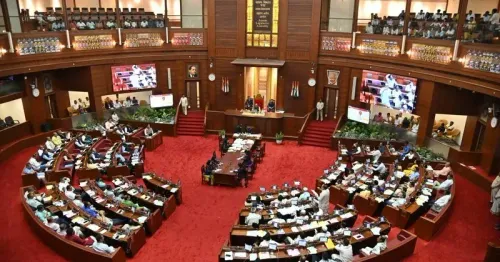
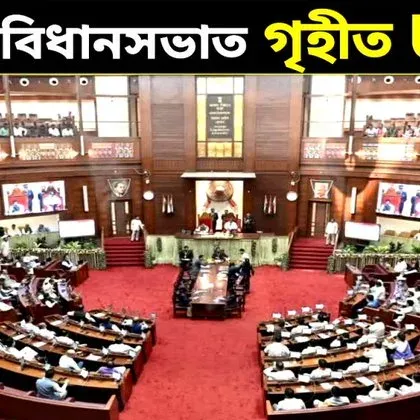
The Assam Legislative Assembly has passed the Uniform Civil Code Bill, with the Chief Minister's Office declaring 'work as promised.' CM Himanta Biswa Sarma's government advances a long-standing BJP commitment, making Assam one of the first states after Uttarakhand to pass such legislation. Governor's assent and legal challenges are expected next.
Key Takeaways
The Assam Legislative Assembly passed the Uniform Civil Code (UCC) Bill on 29 May 2026 .
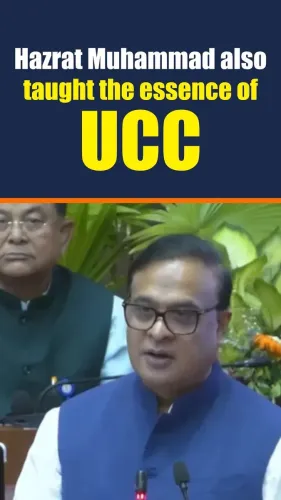
Chief Minister Himanta Biswa Sarma's office declared the move as fulfilment of an electoral promise, posting 'কথামতেই কাম' ('work as promised').
Assam follows Uttarakhand , which passed India's first state-level UCC bill in February 2024 .
The UCC will create a uniform legal framework for marriage, divorce, inheritance, and adoption across communities.
Constitutional protections for tribal customary laws under the Sixth Schedule remain a key area of scrutiny.
The bill now awaits the Governor's assent , with legal challenges before higher courts widely anticipated.
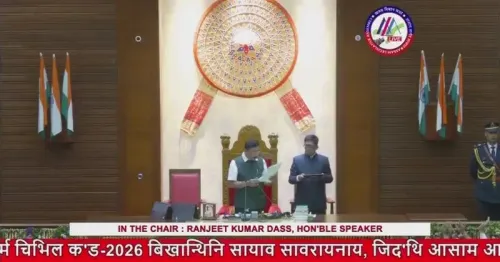
The Chief Minister's Office of Assam announced on Thursday, 29 May 2026 that the Assam Legislative Assembly has passed the Uniform Civil Code (UCC) Bill, marking a significant legislative milestone for the BJP-led state government under Chief Minister Himanta Biswa Sarma.
Context
The official post from the Chief Minister's Office read in Assamese: 'কথামতেই কাম' — meaning 'work as promised' — signalling that the government views the bill's passage as fulfilment of a core electoral commitment. The UCC seeks to replace religion-specific personal laws governing marriage, divorce, inheritance, and adoption with a single, uniform legal framework applicable to all citizens of the state.
Assam becomes one of the earliest states after Uttarakhand — which passed India's first state-level UCC bill in February 2024 — to advance such legislation through its legislature.
Policy Backdrop
The Bharatiya Janata Party has carried the UCC as a plank in its national manifestos since 2014, framing it as a measure to ensure gender justice and legal equality across communities. The Assam government signalled its intent to draft a UCC as early as 2023, following consultations with legal experts and public outreach.
The legislative push in states like Assam and Uttarakhand reflects a broader pattern of BJP-governed states advancing UCC proposals at the state level, even as a national UCC remains a longer-term legislative goal. Proponents argue the code addresses gender disparities — particularly in inheritance and marriage rights — that persist under existing personal laws.
Stakeholders and Impact
Women across communities are among the primary intended beneficiaries, with the code promising uniform rights in matrimonial and inheritance matters regardless of religious affiliation. However, the bill's passage has also raised questions among tribal communities in Assam, whose customary laws enjoy constitutional protections, and among religious minority groups who have historically opposed UCC proposals.
The Indian Constitution under the Sixth Schedule provides special protections for tribal customary practices in northeastern states, and how the Assam UCC navigates these exemptions will be closely watched by legal scholars and affected communities alike.
What's Next
The bill now requires the Governor of Assam's assent before it can become law. Following assent, the government will need to publish draft rules for implementation, a process that typically involves further stakeholder consultation and administrative groundwork.
Legal challenges before the Gauhati High Court or the Supreme Court of India are widely anticipated, particularly on questions of constitutional validity and the scope of tribal exemptions. The passage of the Assam UCC is likely to intensify the national debate on whether a central UCC legislation should follow, with the state now serving as a legislative template alongside Uttarakhand.
Point of View
' the Sarma government is clearly positioning the move as electoral capital ahead of future cycles, while also setting a precedent for other BJP-ruled states. The real test, however, lies ahead: how the legislation handles tribal exemptions under the Sixth Schedule will determine both its constitutional durability and its social acceptance in a state with one of India's most diverse demographic compositions. Assam's UCC, like Uttarakhand's before it, will serve as a legal laboratory whose outcomes will shape the contours of any future national UCC debate.
NationPress
11 Oct 2026
Frequently Asked Questions
What is the Assam UCC Bill passed in 2026?
The Assam Uniform Civil Code Bill is a legislation passed by the Assam Legislative Assembly that seeks to replace religion-specific personal laws on marriage, divorce, inheritance, and adoption with a single, uniform legal framework applicable to all residents of the state.
Which states in India have passed a UCC bill?
As of 2026, Uttarakhand was the first Indian state to pass a UCC bill, doing so in February 2024. Assam has now followed, becoming one of the earliest states to pass such legislation through its assembly.
Will the Assam UCC apply to tribal communities?
This is a key legal question. Tribal communities in Assam enjoy constitutional protections for their customary laws under the Sixth Schedule of the Indian Constitution, and the scope of any exemptions in the Assam UCC bill will be subject to legal scrutiny and potential court challenges.
What happens after the Assam UCC Bill is passed in the assembly?
After passing the assembly, the bill requires the Governor of Assam's assent to become law. The government will then need to draft and publish implementation rules, and legal challenges before the Gauhati High Court or the Supreme Court of India are widely expected.
What did CM Himanta Biswa Sarma say about the UCC Bill?
The Chief Minister's Office posted in Assamese 'কথামতেই কাম,' which translates to 'work as promised,' indicating that the government views the bill's passage as direct fulfilment of its electoral commitment to enact a Uniform Civil Code in Assam.