CM Sarma: UCC to protect women's dignity in Assam

Synopsis
Chief Minister Himanta Biswa Sarma stated in the Assam Legislative Assembly that the Uniform Civil Code aims to protect the dignity and rights of women across all communities, with a specific focus on minority women. The announcement signals Assam's active push toward UCC legislation, following Uttarakhand's 2024 precedent.
Key Takeaways
CM Himanta Biswa Sarma told the Assam Legislative Assembly that the UCC is designed to safeguard women's dignity across all religious communities.
The Chief Minister specifically highlighted protections for women from minority communities as a central rationale for the code.
Article 44 of the Indian Constitution has directed the state to pursue a Uniform Civil Code since 1950 , but implementation has remained incomplete nationally.
Uttarakhand became the first Indian state to pass a UCC bill in February 2024 , providing a legislative model for other states.
Assam under the BJP has been among the states actively advancing UCC discussions, with the government framing it as a gender-justice measure.
A formal UCC bill in the Assam Assembly and subsequent public consultation or judicial review remain the key next steps to watch.
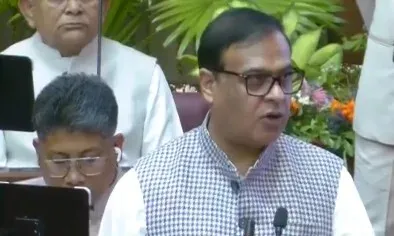
The Chief Minister's Office of Assam stated on Wednesday, 27 May 2026 that the Uniform Civil Code (UCC) is aimed at safeguarding the dignity and rights of women across all communities in the state, including those belonging to minority groups. The announcement follows remarks made by Chief Minister Himanta Biswa Sarma in the Assam Legislative Assembly, where he underlined the UCC's protective intent for women irrespective of religious affiliation.
Context
The post by the Chief Minister's Office reads: 'UCC aims to safeguard the dignity and rights of women across communities in Assam.' CM Sarma made the statement on the floor of the Assam Legislative Assembly, framing the proposed code explicitly as a measure to protect women in minority communities — a framing that seeks to counter concerns that a uniform code could disadvantage religious minorities.
The Uniform Civil Code refers to a common set of civil laws governing marriage, divorce, inheritance, and adoption for all citizens regardless of religion. It is envisioned under Article 44 of the Indian Constitution as a directive principle of state policy.
Policy Backdrop
Article 44 of the Constitution of India (1950) directs the state to endeavour to secure a Uniform Civil Code for all citizens, though it has remained unimplemented at the national level for over seven decades. Uttarakhand became the first Indian state to pass a UCC bill, doing so in February 2024, setting a legislative precedent that BJP-governed states have since referenced.
Assam, led by the BJP since 2021 under CM Himanta Biswa Sarma, has been among the states actively advancing discussions on UCC. The state's approach has notably emphasised gender justice as the primary rationale, particularly foregrounding protections for women in minority communities to address concerns about the code's communal implications.
Stakeholders and Impact
The most directly affected group would be women from minority communities in Assam, who currently live under religion-specific personal laws on matters such as marriage age, divorce rights, and inheritance. Proponents argue a UCC would guarantee them equal legal standing regardless of their community's customary practices.
Critics and civil society groups have historically raised concerns that a uniform code could override community-specific customs and traditions. CM Sarma's framing in the Assembly — centring the code on women's dignity rather than religious uniformity — appears designed to address those objections directly and build broader political consensus within the state.
What's Next
The immediate focus will be on whether Assam moves to introduce a formal UCC bill in the Assam Legislative Assembly, following the template set by Uttarakhand. Any such bill would likely be subject to public consultations and could face judicial scrutiny on questions of federal competence and fundamental rights.
Assam's legislative calendar and the government's stated intent to pursue UCC make this a key policy development to watch in the coming months, with implications for similar efforts in other BJP-governed states across India.
Point of View
CM Sarma is making a calculated political argument that reframes the debate away from religious uniformity toward gender justice, a framing harder for opponents to challenge. This mirrors the BJP's broader national strategy of anchoring UCC advocacy in constitutional equality rather than cultural consolidation. Assam's moves also carry signal value: if the state advances a bill, it would become only the second in India to do so, adding legislative momentum to what remains a politically charged national agenda. The emphasis on minority women is particularly notable, as it attempts to neutralise the most potent criticism that UCC disproportionately targets non-Hindu communities.
NationPress
20 Sept 2026
Frequently Asked Questions
What is the Uniform Civil Code and why is Assam pursuing it?
The Uniform Civil Code is a proposed set of common civil laws covering marriage, divorce, inheritance and adoption that would apply to all citizens regardless of religion. Assam, under CM Himanta Biswa Sarma, is pursuing it primarily to ensure equal legal protections for women across all communities, including minorities.
What did CM Sarma say about UCC in the Assam Assembly?
CM Sarma stated in the Assam Legislative Assembly that the UCC aims to safeguard the dignity and rights of women across communities in Assam, with a specific emphasis on protecting women from minority communities.
Which Indian state first passed a UCC bill?
Uttarakhand became the first Indian state to pass a Uniform Civil Code bill in February 2024, setting a legislative precedent that BJP-governed states including Assam have since referenced.
Does the Indian Constitution mandate a Uniform Civil Code?
Yes. Article 44 of the Indian Constitution, a directive principle of state policy since 1950, directs the state to endeavour to secure a Uniform Civil Code for all citizens, though it has not yet been implemented at the national level.
How will the UCC affect minority women in Assam?
If enacted, the UCC would replace religion-specific personal laws currently governing matters like marriage age, divorce rights and inheritance for minority communities, giving women uniform legal protections regardless of their religious background.