CM Dhami: Uttarakhand First State to Enforce UCC
Synopsis
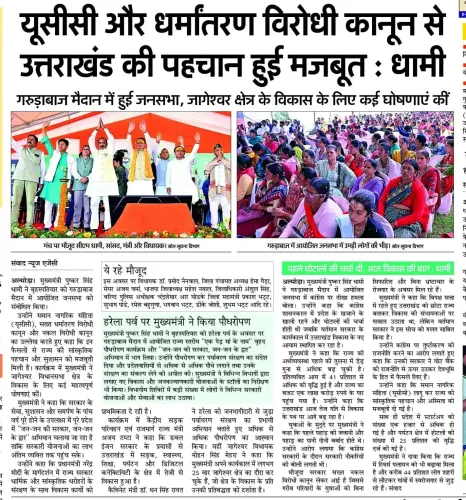
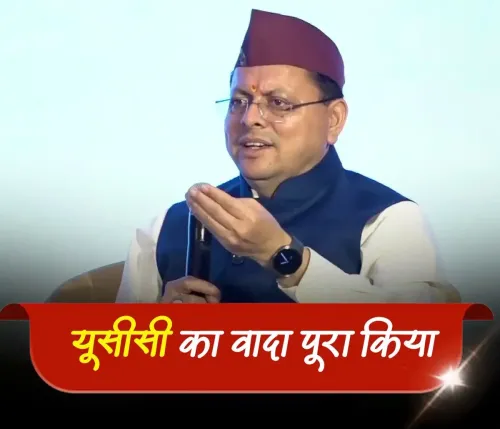
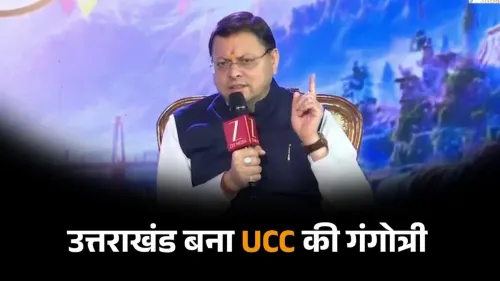
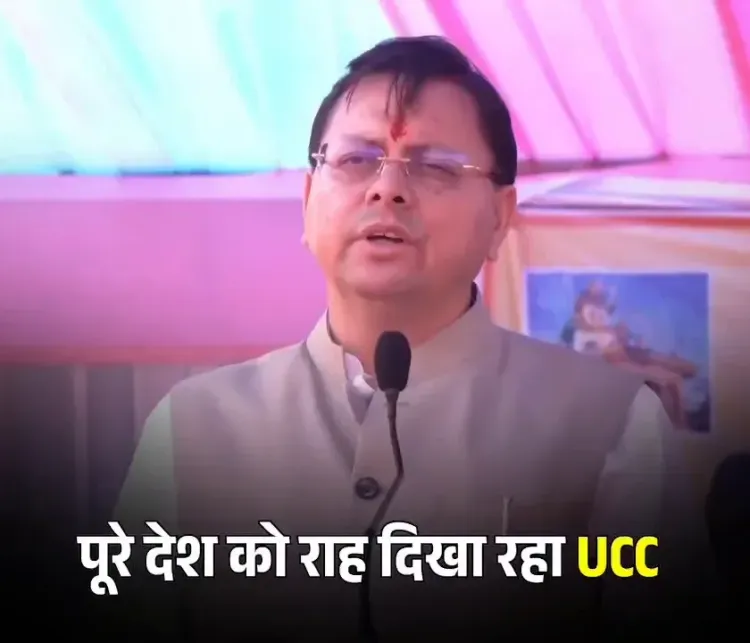
Uttarakhand Chief Minister Pushkar Singh Dhami has declared his state the first in India to implement a Uniform Civil Code, ensuring equal rights and equal justice for all residents, and noted that other states are now moving along the same path.
Key Takeaways
Uttarakhand is the first Indian state to implement a Uniform Civil Code , according to CM Pushkar Singh Dhami .
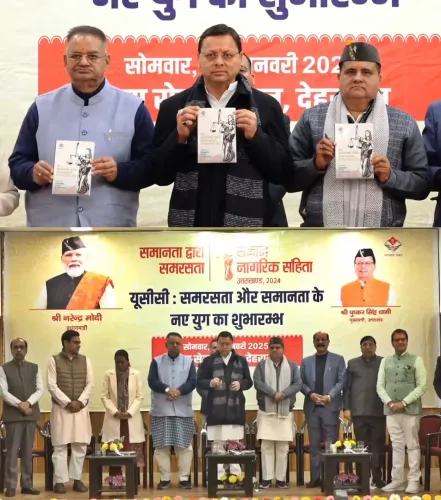
The Uttarakhand UCC Bill was passed by the state assembly in February 2024 and received gubernatorial assent shortly after.
The UCC replaces separate religion-specific personal laws on marriage, divorce, inheritance and adoption with a single common framework.
Article 44 of the Indian Constitution has directed the state to pursue a Uniform Civil Code since 1950 .
CM Dhami stated that other states are now following Uttarakhand's lead on the UCC.
Key stakeholders include women and religious minorities , who stand to be most directly affected by the change in personal law governance.
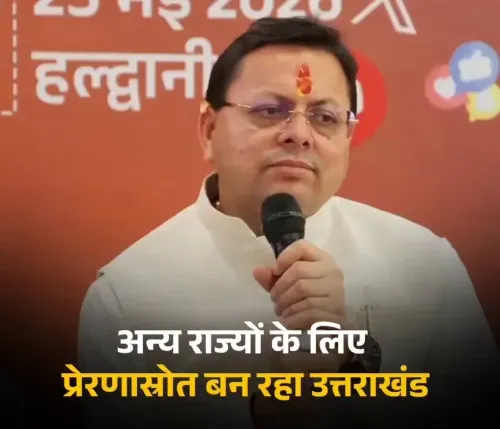
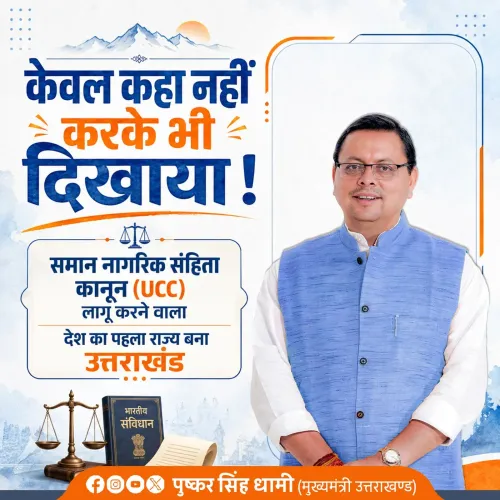
Uttarakhand Chief Minister Pushkar Singh Dhami on Wednesday, 27 May 2026 declared that Uttarakhand has become the first state in India to implement a Uniform Civil Code (UCC), ensuring equal rights and equal justice for all residents, and noted that other states are now following the same path.
Context
Posting in Hindi on X, CM Dhami wrote: 'Devbhoomi Uttarakhand samaan nagarik sanhita laagu kar samaan adhikar aur samaan nyay sunishchit karne wala desh ka pehla rajya bana' — 'By implementing the Uniform Civil Code, Devbhoomi Uttarakhand has become the first state in the country to ensure equal rights and equal justice.' He added that other states across India are now moving forward on the same path.
The remark comes as the UCC continues to be a defining policy marker for BJP-governed states. The Uttarakhand Legislative Assembly had passed the Uniform Civil Code Bill in February 2024, which subsequently received gubernatorial assent, making the state the first in independent India to enact such a law.
Policy Backdrop
Article 44 of the Indian Constitution (1950) lists a Uniform Civil Code as a Directive Principle of State Policy, directing the state to endeavour to secure common civil rules for all citizens. The provision has remained largely aspirational at the national level for over seven decades, with personal matters such as marriage, divorce, inheritance and adoption governed by separate religion-specific laws for Hindus, Muslims, Christians and others.
The BJP has carried the promise of a nationwide UCC in its election manifestos since the 1990s. Uttarakhand's legislation replaced those separate personal laws with a single statutory framework applicable uniformly to all residents of the state, regardless of religion — a move the party has held up as a model for the rest of the country.
Stakeholders and Impact
Proponents of the code argue it delivers substantive equality, particularly for women, by removing provisions in certain personal laws that critics say disadvantage them in matters of divorce, inheritance and guardianship. Religious minority groups have raised concerns about the erosion of community-specific customs and practices protected under personal law traditions.
CM Dhami's post signals that Uttarakhand views its UCC as an achievement ready for replication. Several other BJP-ruled states have publicly signalled intent to examine or draft similar statutes since Uttarakhand's passage of the bill, reviving a national debate that stretches back to the Constituent Assembly deliberations of the late 1940s.
What's Next
Attention now shifts to whether state assemblies such as those in Gujarat and Assam will introduce their own UCC bills, and whether any constitutional challenges to the Uttarakhand law will come before the Supreme Court of India. A cascade of state-level enactments could build political momentum for a future national UCC, which would require parliamentary legislation.
For CM Dhami, the post reinforces Uttarakhand's identity as a trailblazer on a flagship ideological commitment of his party — and frames the state's governance record ahead of any future electoral cycle.
Point of View
Cementing Uttarakhand's place as the ideological vanguard of a cause the BJP has championed for three decades. By framing other states as following Uttarakhand's lead, Dhami is constructing a narrative of momentum — turning a single state enactment into the opening chapter of a national movement. The timing matters: keeping the UCC in public discourse sustains pressure on both the central government and BJP-governed states to accelerate their own legislative timelines. The post also implicitly draws a contrast with opposition-ruled states where no such legislation is on the horizon, sharpening a fault line that is likely to feature prominently in future electoral campaigns.
NationPress
11 Oct 2026
Frequently Asked Questions
Which state was the first to implement the Uniform Civil Code in India?
Uttarakhand is the first state in India to implement the Uniform Civil Code, after the Uttarakhand Legislative Assembly passed the UCC Bill in February 2024 and it received gubernatorial assent.
What does the Uniform Civil Code mean for citizens?
The Uniform Civil Code replaces separate religion-specific personal laws with a single common legal framework covering marriage, divorce, inheritance and adoption, applying equally to all residents regardless of religion.
What did CM Dhami say about the UCC?
CM Pushkar Singh Dhami stated on 27 May 2026 that Uttarakhand became the first state to implement the UCC to ensure equal rights and equal justice, and that other states are now following the same path.
Is the Uniform Civil Code part of the Indian Constitution?
Yes. Article 44 of the Indian Constitution (1950) lists a Uniform Civil Code as a Directive Principle of State Policy, directing the state to endeavour to secure common civil rules for all citizens.
Which other states may implement the Uniform Civil Code?
Several BJP -ruled states, including Gujarat and Assam , have signalled intent to examine or draft similar UCC legislation following Uttarakhand's enactment, though no confirmed bills had been introduced as of early 2024.