CM Dhami: Uttarakhand's UCC Now Guiding Other States
Synopsis
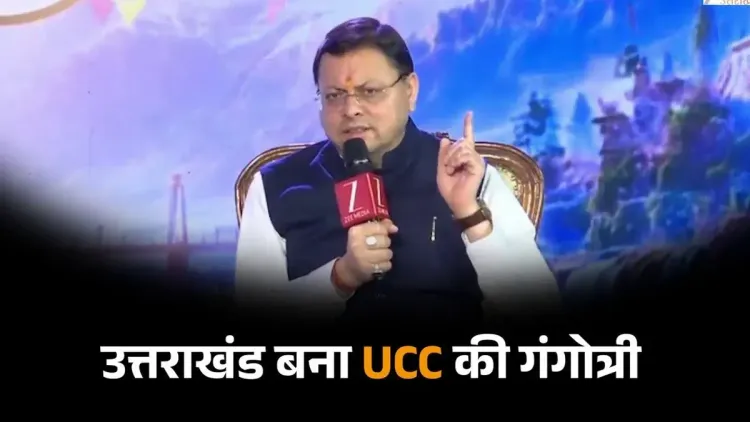
Uttarakhand CM Pushkar Singh Dhami declared on June 7, 2026, that the Uniform Civil Code enacted by his state is now guiding the entire nation, and that momentum for UCC implementation is building across other states — reinforcing Uttarakhand's role as India's first mover on common personal law.
Key Takeaways
CM Pushkar Singh Dhami stated on June 7, 2026 , that Uttarakhand's UCC is guiding the entire country.
Uttarakhand became the first state in independent India to pass a Uniform Civil Code Bill in February 2024 .
The UCC covers marriage, divorce, inheritance, and adoption under a single framework applicable to all residents regardless of religion.
The BJP has committed to a national UCC in successive manifestos, citing Article 44 of the Constitution.
Dhami's post signals active political effort to position Uttarakhand's model as a template for other states.
Goa is the only other state with a historical common civil code, predating the post-independence constitutional framework.
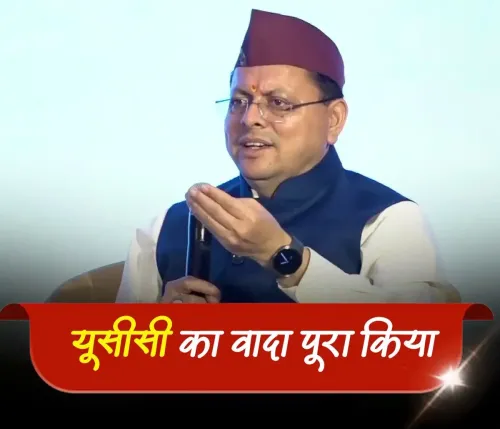
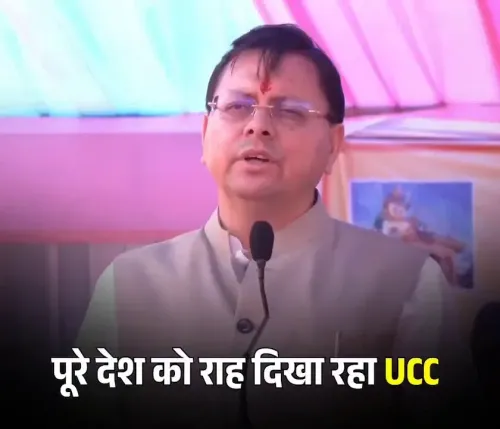
Uttarakhand Chief Minister Pushkar Singh Dhami on Sunday, June 7, 2026, declared that the Uniform Civil Code (UCC) originating from Uttarakhand is now guiding the entire nation, adding that the process of implementing UCC is gaining momentum in other states as well.
Posting in Hindi on X, CM Dhami wrote: 'Uttarakhand se nikli UCC ki dhara aaj poore desh ka margdarshan kar rahi hai' ('The current of UCC that emerged from Uttarakhand is today guiding the entire country'). He further stated that the process of implementing UCC in other states is also moving swiftly.
Context
Uttarakhand made history in February 2024 when its state assembly passed the Uniform Civil Code Bill, becoming the first state in independent India to enact such legislation. The law seeks to provide a common framework governing personal matters — including marriage, divorce, inheritance, and adoption — for all residents regardless of their religion.
CM Dhami, who championed the legislation, has consistently projected Uttarakhand's UCC as a replicable model for other states and, eventually, the nation. Sunday's post reinforces that positioning, framing the state as a pioneer whose example is now being followed.
Policy Backdrop
The Uniform Civil Code is enshrined as a directive principle under Article 44 of the Indian Constitution, which calls upon the state to secure a uniform civil code for citizens. The Bharatiya Janata Party (BJP) has repeatedly committed to its implementation in successive national manifestos, including the 2019 manifesto.
Goa remains the only other state that has historically operated under a common civil code — a legacy of the Portuguese-era civil code that survived its integration into India. Uttarakhand's legislation, however, represents the first democratically enacted UCC in the post-independence constitutional framework, giving it distinct symbolic and legal weight.
The issue sits at the intersection of gender justice and religious autonomy. Proponents argue it ensures equal rights for women across communities; critics contend it encroaches on the religious freedoms of minority communities.
Stakeholders and Impact
Women's rights groups have broadly welcomed the UCC's provisions on equal inheritance and protections against practices such as unilateral divorce, viewing it as a step toward gender parity in personal law. Religious minority organisations, however, have raised concerns about the erosion of community-specific personal laws that have constitutional protection.
For BJP-governed states, Dhami's statement signals that Uttarakhand's framework may serve as a legislative template. The remark about momentum in other states reflects a broader political effort to normalise and expand the UCC beyond its current single-state foothold, though specific state-level processes have not been officially confirmed.
What's Next
Attention will now turn to whether any BJP-ruled states introduce formal UCC bills in their assemblies, and whether the central government moves toward model legislation or opens a parliamentary debate on a national UCC. CM Dhami's framing of Uttarakhand as a guiding light suggests the state will continue to actively advocate for replication of its model.
With the UCC remaining a live electoral and judicial conversation — courts have periodically urged Parliament to act — any legislative movement in additional states would mark a significant escalation in one of India's most consequential constitutional debates.
Point of View
Dhami is building a replication narrative ahead of potential legislative moves in other BJP-governed states. The statement also serves an internal party purpose: reinforcing Uttarakhand's — and by extension Dhami's — standing within a national political project. Whether the momentum he describes translates into concrete legislation elsewhere will be the real test of this claim.
NationPress
26 Oct 2026
Frequently Asked Questions
What is the Uniform Civil Code and why is it significant in India?
The Uniform Civil Code (UCC) is a proposed set of common laws governing personal matters such as marriage, divorce, inheritance, and adoption for all citizens regardless of religion. It is significant because India currently has religion-specific personal laws, and Article 44 of the Constitution directs the state to work toward a uniform code.
Which state first implemented the Uniform Civil Code in India?
Uttarakhand became the first state in independent India to enact a Uniform Civil Code, passing the UCC Bill in February 2024 under Chief Minister Pushkar Singh Dhami.
What did CM Dhami say about UCC on June 7, 2026?
CM Dhami posted on X stating that the UCC that originated from Uttarakhand is now guiding the entire nation, and that the process of implementing UCC is gaining momentum in other states as well.
Is the Uniform Civil Code applicable across India?
As of the latest available information, a national UCC has not been enacted. Uttarakhand is the first state to have passed its own UCC legislation. Goa operates under a historical Portuguese-era common civil code. The BJP has committed to a national UCC in its manifestos.
What are the main arguments for and against the Uniform Civil Code?
Supporters argue the UCC ensures equal rights for all citizens, particularly women, regardless of religion, and promotes national integration. Critics, including some religious minority groups, contend it infringes on constitutionally protected religious freedoms and community-specific personal laws.