Dr. Jitendra Singh marks J&K Accession Day, Oct 26
Synopsis
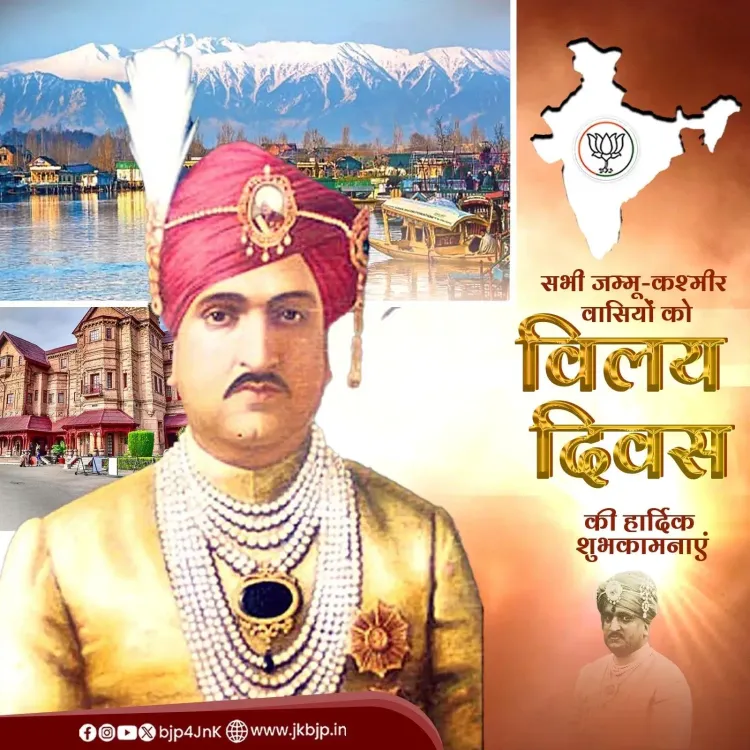
On Accession Day, Union Minister Dr. Jitendra Singh recalled Maharaja Hari Singh's signing of the Instrument of Accession on 26 October 1947, reaffirming that Jammu and Kashmir is an inseparable part of India.
Key Takeaways
Jitendra Singh greeted J&K residents on Accession Day, 26 October 2026 .
Maharaja Hari Singh signed the Instrument of Accession on 26 October 1947 , formally integrating Jammu and Kashmir with India.
The accession handed control of defence, foreign affairs, and communications to New Delhi.
Jammu and Kashmir was reorganised from a state into two Union Territories — J&K and Ladakh — following the 2019 revocation of Article 370 .
Singh represents the Udhampur constituency in Jammu, making the commemoration personally significant.
Annual Accession Day messaging is part of a consistent Central government pattern emphasising J&K's historical integration.
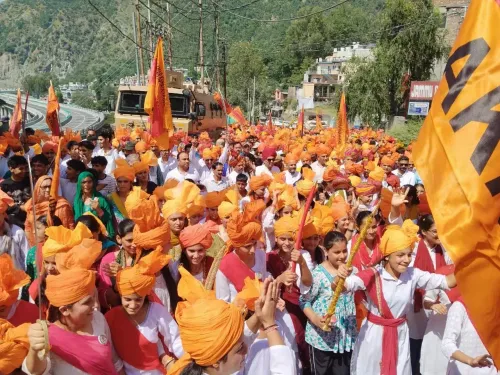
Seventy-nine years after Maharaja Hari Singh put pen to paper on the Instrument of Accession, Union Science and Technology Minister Dr. Jitendra Singh on Monday, 26 October 2026 extended greetings to all residents of Jammu and Kashmir — reaffirming the Centre's consistent position on the region's place within the Indian Union.
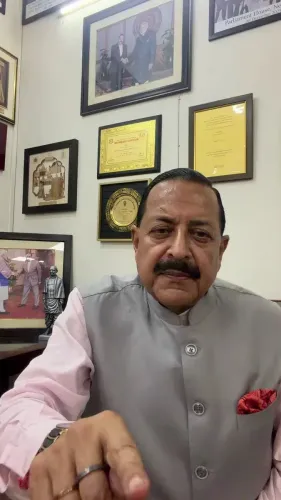
Posting in Hindi on the occasion of Vilayan Divas (Accession Day), Dr. Singh wrote: 'Warm wishes to all residents of Jammu and Kashmir on Accession Day. The historic day of 26 October 1947 witnessed the accession of Jammu and Kashmir with India, when Maharaja Hari Singh signed the Instrument of Accession. This historic decision became the foundation of the unbreakable bond between Jammu and Kashmir and India. Jammu and Kashmir was, is, and will always remain an integral part of India.'The document that sealed an era: the Instrument of Accession, 1947
On 26 October 1947 — with Pakistani tribal militias already pushing into the Kashmir Valley — Maharaja Hari Singh, the last ruling sovereign of the princely state of Jammu and Kashmir, signed the Instrument of Accession, formally joining the Dominion of India. The signing triggered an immediate Indian military airlift to Srinagar and set in motion one of the most consequential chapters in the subcontinent's post-Partition history.
The Instrument of Accession was a standard legal form used by princely states to join either India or Pakistan at Partition. By affixing his signature, Maharaja Hari Singh ceded control over defence, foreign affairs, and communications to New Delhi — a decision that has defined the region's political and legal status ever since.
From princely state to Union Territory: J&K's seven-decade journey
For more than seven decades after accession, Jammu and Kashmir held the unique distinction of being India's only state with its own constitution, guaranteed by Article 370 of the Indian Constitution. That architecture was dismantled in August 2019, when Parliament voted to abrogate Article 370 and bifurcate the state into two Union Territories — Jammu and Kashmir and Ladakh. Since then, the Central government has consistently framed 26 October as a moment of national reaffirmation, with ministers and officials marking the date publicly each year.
Dr. Jitendra Singh, who holds the Udhampur parliamentary constituency in Jammu, has been among the most vocal ministerial voices on J&K's integration. His annual Accession Day messaging carries both political and personal resonance — representing a constituency that sits at the heart of the region whose accession he commemorates.
Jammu and Kashmir continues its political evolution: the region held its first Assembly elections as a Union Territory in late 2024, and its path toward potential restoration of full statehood remains one of the most watched questions in Indian federal politics. Every 26 October is, in that sense, not just a look back — it is a marker of how far that road has yet to run.
Point of View
Deliberate, and delivered on a symbolically loaded date. Since the 2019 abrogation of Article 370, the BJP has systematically elevated 26 October as a counter-narrative to separatist historiography, and ministerial posts like this one are part of that disciplined annual drumbeat. For a minister who holds a Jammu seat and sits in the PMO, the message also doubles as a local-constituency communication. The line 'was, is, and will always remain' is not accidental phrasing — it is a stock formulation the Centre has used to pre-empt any legal or political reopening of the accession's terms.
NationPress
26 Oct 2026
Frequently Asked Questions
When did Jammu and Kashmir accede to India?
Jammu and Kashmir acceded to India on 26 October 1947 , when Maharaja Hari Singh signed the Instrument of Accession, joining the Dominion of India.
What is the Instrument of Accession 1947?
The Instrument of Accession was a legal document used by princely states at Partition to join either India or Pakistan. By signing it, Maharaja Hari Singh ceded control of defence, foreign affairs, and communications to New Delhi.
Why is 26 October celebrated as Accession Day in J&K?
26 October marks the anniversary of Maharaja Hari Singh's signing of the Instrument of Accession in 1947 , making it the date Jammu and Kashmir formally became part of India.
What happened to Jammu and Kashmir after Article 370 was revoked?
In August 2019 , Parliament abrogated Article 370 and bifurcated Jammu and Kashmir into two Union Territories — Jammu and Kashmir and Ladakh — ending its special constitutional status.
Who is Dr. Jitendra Singh and why does he comment on J&K?
Dr. Jitendra Singh is the Union Minister of State (Independent Charge) for Science and Technology and Earth Sciences, and also MoS in the PMO. He represents the Udhampur constituency in Jammu, giving him both political and personal ties to the region.