Rijiju lands in Jeddah to sign Bilateral Haj 2027 Agreement

Synopsis
Union Minister Kiren Rijiju has arrived in Jeddah to attend the 6th Haj Conference and Exhibition 2027 and sign the Bilateral Haj Agreement with Saudi Arabia, formally kicking off India's preparations for Haj 2027 and the welfare of hundreds of thousands of Indian pilgrims.
Key Takeaways
Kiren Rijiju landed in Jeddah, Saudi Arabia on 6 November 2026 for the 6th Haj Conference and Exhibition 2027 .
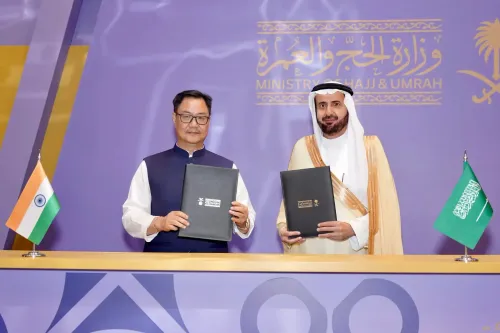
He will sign the Bilateral Haj Agreement between India and Saudi Arabia governing the Haj 2027 pilgrimage season.
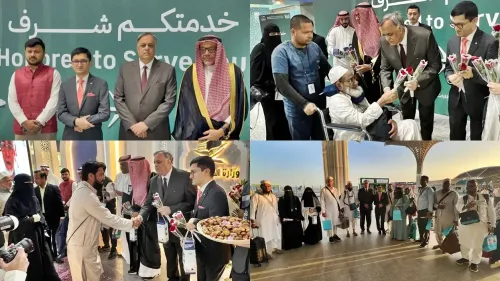
Fahad Suri , Consul General of India in Jeddah, received the minister at the airport.
The agreement sets terms for pilgrim quotas, visas, accommodation, medical facilities, and consular support.
The Haj Committee of India , under the Ministry of Minority Affairs , uses the signed agreement to open pilgrim applications and bookings.
The visit reflects India's structured religious diplomacy with Gulf states ahead of each major pilgrimage cycle.
A minister's flight to Jeddah is never just a trip — it is the opening move in a meticulously choreographed exercise that will, months from now, determine how hundreds of thousands of Indian pilgrims experience the holiest journey of their lives. Union Minister of Parliamentary Affairs and Minority Affairs Kiren Rijiju touched down in Jeddah, Kingdom of Saudi Arabia, on Friday, 6 November 2026, to attend the 6th Haj Conference and Exhibition 2027, sign the Bilateral Haj Agreement with Saudi authorities, and review preparations for Haj 2027.
Rijiju was received at the airport by Fahad Suri, Consul General of India in Jeddah — the official who anchors India's on-ground coordination with Saudi authorities and is typically the first point of contact for every consular challenge that arises during the pilgrimage season.
What the Bilateral Haj Agreement actually governs
The Bilateral Haj Agreement is far more than a ceremonial document. Renewed by India and Saudi Arabia under a framework that has held for decades, it sets the terms for annual pilgrim quotas, visa facilitation, accommodation blocks in Makkah and Madinah, medical infrastructure, and consular support. The Ministry of Minority Affairs, working through the Haj Committee of India — a statutory body that manages pilgrim selection, training, and liaison with Saudi counterparts — publishes binding guidelines each cycle based on what this agreement authorises.
The stakes are considerable. India consistently sends one of the largest national contingents to Haj, and any gap in the agreement — a delayed quota confirmation, an unresolved accommodation dispute, a lapse in medical protocols — cascades directly onto pilgrims who have often waited years for their turn. Getting the agreement signed early gives the Haj Committee of India the runway it needs to open applications, process bookings, and brief health officials.
India's structured religious diplomacy with the Gulf
Rijiju's Jeddah visit is part of a well-worn pattern of high-level ministerial engagement with Gulf states ahead of each pilgrimage cycle. Senior figures from the Ministry of Minority Affairs and the Ministry of External Affairs routinely travel to Saudi Arabia to address logistics, health preparedness, and digital services before the season opens — a form of structured religious diplomacy that reflects how central pilgrim welfare has become to India-Saudi relations.
The minister noted he was 'looking forward to productive engagements focused on ensuring a smooth, safe and comfortable Haj journey for all Indian pilgrims,' naming the three benchmarks — smoothness, safety, comfort — that frame India's ask at every round of talks.
What the Jeddah conference is expected to deliver
The 6th Haj Conference and Exhibition 2027 gathers officials from Haj-sending nations alongside Saudi counterparts to align on shared standards and showcase new logistics solutions. The formal signing of the 2027 Haj Agreement is the centrepiece of Rijiju's visit, and observers will be watching for any announcements on updated pilgrim quotas, expanded digital services, or enhanced medical protocols — all areas where India has pushed for improvements in recent cycles.
With the agreement signing imminent and the minister on the ground, the bureaucratic clock for Haj 2027 preparations has officially started.
Point of View
Not merely a welfare exercise — using ministerial-level presence to anchor India's standing as a major Haj-sending nation with leverage to negotiate better pilgrim terms. The annual signing ritual has incrementally expanded in ambition, with each cycle bringing new asks on digital services and medical infrastructure, suggesting India is pushing for a more tech-enabled pilgrimage experience. For the Ministry of Minority Affairs, early agreement signing is also a political signal domestically — demonstrating responsive governance to a key community ahead of the pilgrim-application season. Watch whether the 2027 agreement introduces any structural changes to quotas or introduces new bilateral service standards.
NationPress
7 Nov 2026
Frequently Asked Questions
Why did Kiren Rijiju go to Jeddah in November 2026?
Rijiju travelled to Jeddah to attend the 6th Haj Conference and Exhibition 2027 and to sign the Bilateral Haj Agreement between India and Saudi Arabia, which governs pilgrim quotas, accommodation, visas, and medical support for Indian Haj pilgrims in 2027.
What is the Bilateral Haj Agreement between India and Saudi Arabia?
The Bilateral Haj Agreement is a periodic pact renewed annually between India and Saudi Arabia that sets the framework for Haj arrangements, including the number of pilgrims permitted, visa processing, housing in Makkah and Madinah, and health and consular services.
What does the Haj Committee of India do?
The Haj Committee of India is a statutory body under the Ministry of Minority Affairs that manages pilgrim selection, training, travel logistics, and liaison with Saudi authorities, using the signed bilateral agreement as its operational mandate each year.
Who received Kiren Rijiju at Jeddah airport?
Fahad Suri, the Consul General of India in Jeddah, received Minister Rijiju at the airport. Suri oversees on-ground coordination with Saudi authorities for Indian pilgrims.
What can Indian Haj pilgrims expect from the 2027 preparations?
Following the signing of the 2027 Bilateral Haj Agreement, the Haj Committee of India will publish pilgrim quotas and open applications. Observers are watching for improvements in digital services, medical protocols, and accommodation arrangements that India has sought in recent cycles.