CM Dhami Vows to Protect Uttarakhand Youth Future and Devbhoomi Identity
Synopsis
Uttarakhand CM Pushkar Singh Dhami on 15 June 2026 reaffirmed that the bright future of the state's youth and the cultural dignity of Devbhoomi are his top priorities, pledging firm government resolve to protect and empower both through ongoing policy action.
Key Takeaways
CM Pushkar Singh Dhami on 15 June 2026 publicly declared the youth future and cultural identity of Devbhoomi as his government's highest priorities.
Uttarakhand became India's first state to enact a Uniform Civil Code in 2024 , framed by the Dhami government as a cultural identity safeguard.
The Mukhya Mantri Yuva Swarozgar Yojana , launched post- 2022 , targets youth unemployment and out-migration from hill districts.
The statement reflects a broader BJP governance pattern of pairing youth welfare delivery with regional cultural identity assertions.
Rollout of youth self-employment schemes and any new cultural-preservation legislation will be key indicators to watch ahead of the next assembly elections.
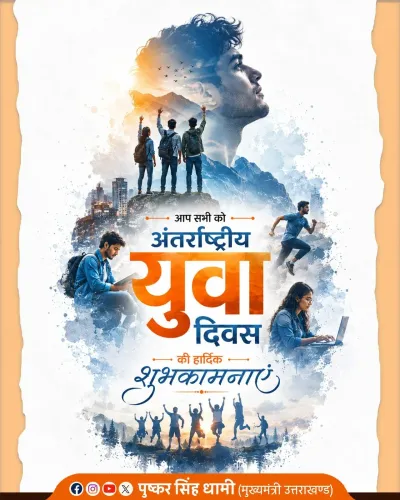
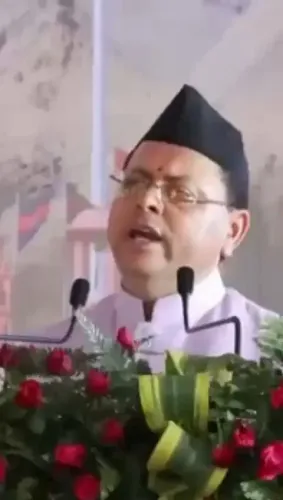
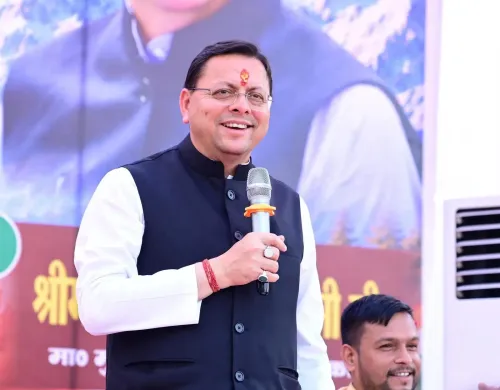
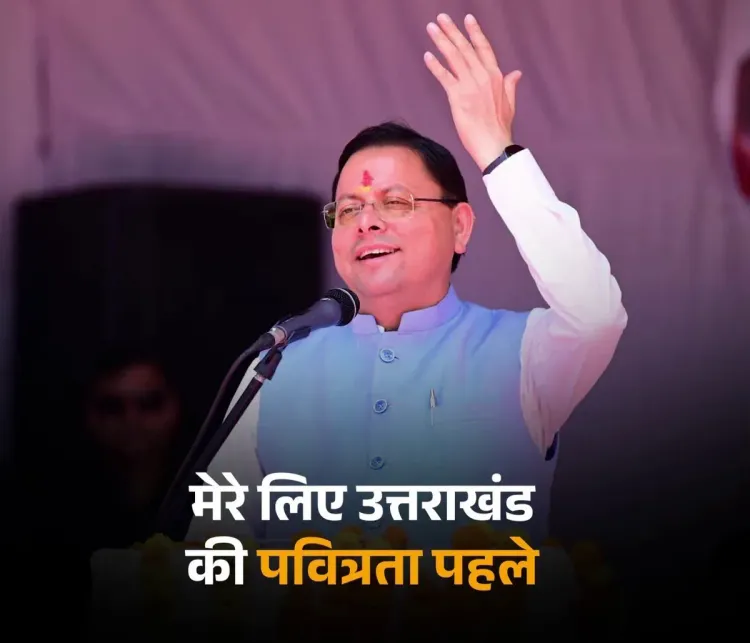
Uttarakhand Chief Minister Pushkar Singh Dhami on Monday, 15 June 2026 reaffirmed his government's commitment to securing the future of the state's youth and protecting the cultural identity of Devbhoomi, stating that both remain his highest priority.
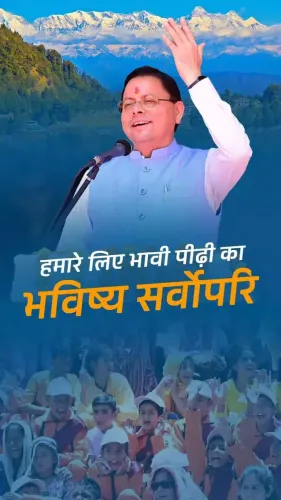
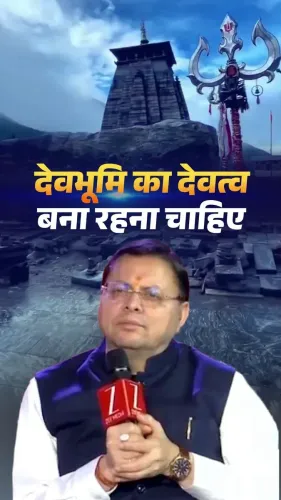
In a post on X, CM Dhami wrote: 'मेरे लिए उत्तराखंड के युवाओं का उज्ज्वल भविष्य और देवभूमि की अस्मिता सर्वोपरि है।' ('For me, the bright future of Uttarakhand's youth and the dignity of Devbhoomi are paramount.') He added that the government is working with 'full commitment and firm resolve' to protect and empower both.
Context
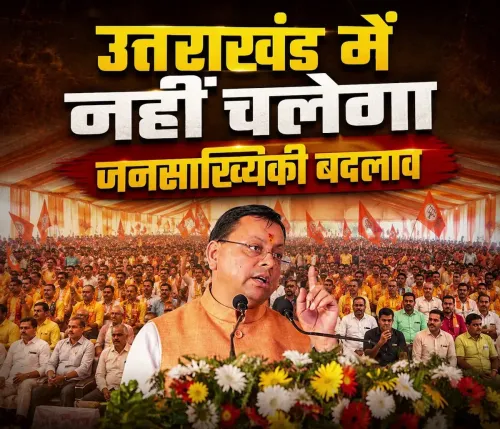
Uttarakhand, the northern Himalayan state officially promoted as Devbhoomi — meaning 'Land of the Gods' — has long grappled with two interconnected challenges: persistent out-migration of young people from hill districts seeking employment, and sustained public debate over demographic and cultural change. CM Dhami's statement directly addresses both concerns in a single framing, pairing economic aspiration with cultural assertion.
The BJP, which governs both the state and the Centre, has consistently presented this dual emphasis — youth welfare and regional identity — as complementary pillars of its governance model in culturally distinct hill states.
Policy Backdrop
Uttarakhand became the first Indian state to enact a Uniform Civil Code (UCC) in 2024, a legislation the Dhami government positioned explicitly as a measure to safeguard social and cultural identity. The move drew national attention and was framed by the ruling party as a fulfilment of a long-standing ideological commitment.
On the economic front, the administration launched the Mukhya Mantri Yuva Swarozgar Yojana and related self-employment programmes after 2022 to address youth unemployment and stem the flow of young people leaving hill districts. These schemes target entrepreneurship and skill development at the grassroots level.
Stakeholders and Impact
The primary beneficiaries of the stated agenda are Uttarakhand's youth, particularly those in remote hill districts where employment opportunities remain limited and out-migration rates are high. For these communities, government self-employment schemes represent a direct economic lifeline.
Hill district communities also have a stake in the cultural dimension of CM Dhami's statement. The concept of Devbhoomi ki asmita — the dignity or identity of the sacred land — resonates deeply with residents who see cultural preservation as inseparable from the state's development trajectory. Broader patterns across BJP-governed states in culturally distinct regions show a similar pairing of welfare delivery with identity politics.
What's Next
Observers will watch for concrete follow-up actions tied to this reaffirmation — including the rollout progress of state youth self-employment schemes and any new legislative or executive measures linked to cultural preservation. With the next assembly elections on the horizon, the pace of scheme implementation and visible on-ground delivery in hill districts will be closely scrutinised.
The statement signals that the Dhami government intends to keep youth empowerment and Devbhoomi identity at the centre of its political and policy messaging in the months ahead.
Point of View
Such statements serve to consolidate the party's base while projecting a governance-first image. The real test will be whether scheme implementation on the ground matches the rhetorical commitment.
NationPress
14 Sept 2026
Frequently Asked Questions
What did Uttarakhand CM Pushkar Singh Dhami say on 15 June 2026?
CM Dhami stated that the bright future of Uttarakhand's youth and the cultural dignity of Devbhoomi are his topmost priorities, and that his government is working with full commitment and firm resolve to protect and empower both.
What is Devbhoomi and why is its identity significant in Uttarakhand politics?
Devbhoomi, meaning 'Land of the Gods,' is the official sobriquet for Uttarakhand, reflecting its dense concentration of Hindu pilgrimage sites. Protecting 'Devbhoomi ki asmita' has become a recurring political theme, often linked to debates over demographic change and cultural preservation in the hill state.
What schemes has the Dhami government launched for Uttarakhand youth?
The Dhami administration launched the Mukhya Mantri Yuva Swarozgar Yojana and related self-employment programmes after 2022 to address youth unemployment and reduce out-migration from hill districts.
What is the Uniform Civil Code in Uttarakhand?
Uttarakhand became the first Indian state to enact a Uniform Civil Code in 2024 under CM Dhami. The government presented it as a measure to safeguard social and cultural identity in the state.
Why is youth out-migration a concern in Uttarakhand?
Hill districts in Uttarakhand have long seen young people leave for plains cities in search of employment, hollowing out local communities. Addressing this out-migration through self-employment and skill schemes is a stated priority of the Dhami government.