Goyal: Modi chose reform over recrimination after 2014
Synopsis
Commerce Minister Piyush Goyal argues that PM Modi chose not to release a White Paper on the weak economy inherited from the UPA in 2014, framing the eventual 2024 White Paper as a deliberate, restrained choice rather than early political recrimination.
Key Takeaways
Piyush Goyal posted on 29 October 2026 highlighting that PM Modi did not issue a White Paper immediately after inheriting a weak economy from the UPA in May 2014 .
The UPA-II government left behind high fiscal and current-account deficits, elevated inflation, and currency volatility when it exited power in 2014.
A formal White Paper on the Economy was eventually tabled in Parliament in February 2024 — a decade after the transition of power.
Goyal frames the delayed White Paper as a mark of political restraint, not reluctance, contrasting it with the opposition's approach.
As Leader of the House in the Rajya Sabha , Goyal is expected to reprise this economic-legacy argument in the upcoming parliamentary winter session.
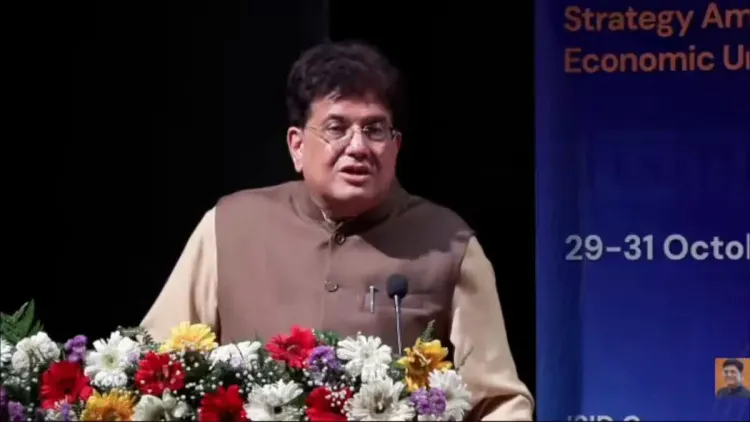
A decade of hindsight, one pointed contrast. On Thursday, 29 October 2026, Union Commerce and Industry Minister Piyush Goyal took to X to draw a sharp distinction between political instinct and political restraint — arguing that Prime Minister Narendra Modi had every justification to immediately blame the UPA government for the economic wreckage of 2014, but chose not to.
Posting in Hindi, Goyal wrote: '2014 mein UPA sarkar se mili kamzor arthvyavastha ke bawajood bhi, Pradhanmantri Modi ji ne White Paper jaari nahin kiya tha...' — 'Despite inheriting a weak economy from the UPA government in 2014, Prime Minister Modi did not release a White Paper...'What Modi inherited in May 2014
The economic terrain Narendra Modi stepped onto in May 2014 was rough by any measure. The outgoing UPA-II government left behind elevated fiscal and current-account deficits, inflation running hot, and a currency that had been rattled by the global taper tantrum. The first Modi budget, presented in July 2014, acknowledged these legacy pressures — but stopped short of formally cataloguing them in a government white paper. The choice, Goyal is now framing, was a deliberate act of statesmanship: get on with governing rather than litigate the past.
The 2024 White Paper — a later, deliberate choice
The White Paper that Goyal's post implicitly references did eventually arrive — in February 2024, a full ten years after the transition of power. Tabled in Parliament, it laid out in structured detail what the government characterised as UPA-era economic mismanagement alongside a decade of NDA reforms. Its release came not as an early act of blame-shifting, but as a retrospective account — a distinction Goyal is now underscoring in his post. The timing of that document, just before the 2024 general elections, was itself a subject of intense political debate.
BJP's long-running economic narrative
Goyal's statement is the latest move in a well-worn but durable partisan argument. The BJP has consistently framed its economic stewardship as a rescue operation — stabilising a governance deficit, building infrastructure, and delivering fiscal consolidation after years of policy drift. The Congress-led opposition contests this account at every turn. What makes this particular post notable is its subtext: that restraint in 2014 was a virtue, and that the eventual White Paper in 2024 was measured rather than vengeful. The implicit corollary — that any current opposition critique of the government echoes the very impulse Modi resisted — is left for the audience to complete.
With Parliament's winter session on the horizon, expect this economic-legacy argument to surface again on the floor of both Houses — where Goyal, as Leader of the House in the Rajya Sabha, will be at the centre of it.
Point of View
He implicitly frames the 2024 White Paper as a measured act of accountability rather than electoral opportunism — a distinction the BJP has a strategic interest in cementing. The timing, with Parliament's winter session approaching, suggests the party is pre-positioning its economic narrative for floor battles. The broader arc here is the BJP's decade-long effort to make 'pre-2014 India' the baseline against which all governance is judged — a frame that sharpens with every passing year as new voters enter the electorate with no direct memory of UPA rule.
NationPress
29 Oct 2026
Frequently Asked Questions
Why did Modi not release a White Paper in 2014 on the economy?
According to Commerce Minister Piyush Goyal, PM Modi chose not to issue a White Paper immediately after taking power in 2014 despite inheriting a weak economy from the UPA, framing the decision as political restraint rather than a lack of grounds.
When was the White Paper on the Indian economy released?
The Indian government tabled a White Paper on the Economy in Parliament in February 2024 , approximately ten years after the BJP-led NDA government came to power in May 2014.
What economic problems did Modi inherit from the UPA in 2014?
The incoming Modi government in May 2014 inherited elevated fiscal and current-account deficits, high inflation, and a currency weakened partly by the global taper tantrum of 2013-14.
What is the UPA and why does it come up in economic debates?
The UPA (United Progressive Alliance) was the Congress-led coalition that governed India from 2004 to 2014. Its final years in power are frequently cited by the BJP as a period of economic mismanagement, and the 2024 White Paper formally documented those claims.
What is Piyush Goyal's role in Parliament?
Piyush Goyal is the Union Minister of Commerce and Industry and also serves as the Leader of the House in the Rajya Sabha, making him one of the BJP's most prominent voices in parliamentary proceedings.