Goyal Highlights Gap Between Congress and NDA Growth Rates
Synopsis
Commerce Minister Piyush Goyal on June 10, 2026, posted a video on X highlighting the difference between what he called the 'Congress growth rate' and the 'NDA growth rate,' reinforcing the BJP's long-running argument that NDA governance has delivered superior economic performance compared to the Congress-led UPA decade.
Key Takeaways
Union Commerce and Industry Minister Piyush Goyal posted on X on June 10, 2026 contrasting 'Congress growth rate' with 'NDA growth rate.' The post included a video , suggesting a data-driven visual comparison of the two periods.
The BJP has consistently benchmarked NDA economic performance since 2014 against the UPA period from 2004 to 2014 in official surveys and political messaging.
The comparison is part of a broader ruling-party strategy deployed in parliamentary debates, election campaigns, and budget documents .
Updated GDP estimates from MoSPI and the forthcoming Economic Survey are expected to provide fresh data that both sides will cite.
Union Commerce and Industry Minister Piyush Goyal on Wednesday, June 10, 2026, posted a pointed comparison on X contrasting what he termed the 'Congress growth rate' with the 'NDA growth rate,' renewing the ruling coalition's long-running argument that economic management under the National Democratic Alliance has significantly outpaced the record of the Indian National Congress-led governments.
Context
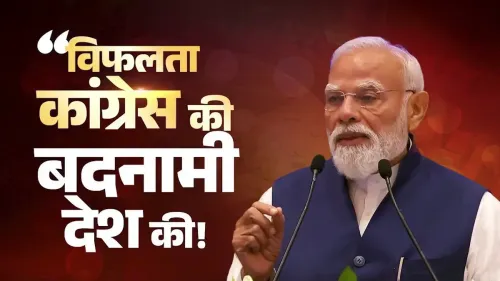
Goyal's post — captioned 'कांग्रेस ग्रोथ रेट' और 'NDA ग्रोथ रेट' में अंतर ('The difference between the Congress growth rate and the NDA growth rate') — was accompanied by a video, suggesting a visual or data-driven breakdown of the two periods. The minister did not cite specific figures in the post text itself, but the framing is consistent with a well-established BJP communication line that benchmarks NDA governance since 2014 against the UPA decade from 2004 to 2014.
As Leader of the House in the Rajya Sabha and a senior BJP strategist, Goyal is among the party's most prominent voices on economic messaging, regularly deploying growth data in parliamentary debates and public forums.
Policy Backdrop
The comparison between UPA-era and NDA-era GDP growth has been a fixture of official economic communication since the Economic Survey 2014-15, which framed the incoming government's agenda partly as a correction of what it described as a slowdown under the previous administration. Subsequent Economic Surveys and Union Budget documents have repeated variations of this contrast.
India's GDP growth trajectory has been a politically charged metric, with the ruling coalition pointing to periods of high growth under NDA and the opposition highlighting episodes of slowdown, demonetisation disruption, and pandemic-era contraction. The Ministry of Statistics and Programme Implementation (MoSPI) periodically revises national accounts data, making headline comparisons a subject of ongoing methodological debate among economists.
Stakeholders and Impact
The post is aimed at a broad audience that includes voters, investors, and policy analysts tracking India's economic narrative ahead of the next Union Budget cycle. For the Congress party, such comparisons represent a persistent political challenge, as the NDA has made economic stewardship a central re-election argument across successive campaigns.
Economists and independent analysts have noted that direct period-on-period growth comparisons require adjustments for base effects, global commodity cycles, and methodological changes in GDP calculation — nuances that political messaging rarely accommodates. The video attached to Goyal's post may contain the specific data points underpinning his claim, though those figures were not reproduced in the post text.
What's Next
The renewed focus on growth-rate comparisons comes ahead of the anticipated release of updated GDP estimates by MoSPI and the preparation of the Economic Survey that precedes the Union Budget. These documents are expected to provide the latest official data on India's growth performance, which both the government and the opposition will use to anchor their economic arguments. Goyal's post signals that the BJP intends to keep the comparative growth narrative prominent in public discourse as the budget season approaches.
Point of View
' the party personalises macroeconomic data into a partisan identity marker, making it easier to deploy in campaign settings than in technical debates. The timing — ahead of fresh MoSPI GDP releases and the Economic Survey — suggests the government is seeding a favourable interpretive frame before the numbers arrive. For the opposition, the challenge remains converting methodological critiques of such comparisons into a politically resonant counter-narrative.
NationPress
26 Oct 2026
Frequently Asked Questions
What did Piyush Goyal post about Congress and NDA growth rates?
On June 10, 2026, Piyush Goyal posted a video on X titled 'The difference between the Congress growth rate and the NDA growth rate,' contrasting economic performance under the Congress-led UPA governments with that under the NDA coalition since 2014.
What is the difference between Congress UPA growth rate and NDA growth rate?
The BJP's long-standing argument, reflected in official Economic Surveys since 2014-15, is that average GDP growth under the NDA has exceeded the UPA-era average; however, independent economists note that such comparisons require adjustments for base effects, global conditions, and changes in GDP methodology.
Why does BJP compare Congress and NDA economic records?
Comparing growth rates between the two periods is a core part of the BJP's political messaging strategy, used in parliamentary debates, election campaigns, and budget communications to argue that NDA governance has delivered superior economic management.
What is India's current GDP growth rate in 2026?
Updated GDP figures for 2026 are expected from the Ministry of Statistics and Programme Implementation (MoSPI); those estimates, along with the forthcoming Economic Survey, will provide the latest official reading on India's growth trajectory.
Who is Piyush Goyal and what is his role in the government?
Piyush Goyal is India's Union Minister of Commerce and Industry, a senior BJP leader, and the Leader of the House in the Rajya Sabha, making him one of the government's most prominent spokespersons on economic policy.