Goyal: India growing at 7.7%, world's fastest major economy

Synopsis
Commerce Minister Piyush Goyal on June 6, 2026, credited PM Narendra Modi's leadership for India sustaining a 7.7% growth rate, calling it the world's fastest-growing major economy. The statement reinforces the government's reform narrative ahead of upcoming official GDP data releases.
Key Takeaways
Commerce Minister Piyush Goyal posted on June 6, 2026 , attributing India's growth to PM Narendra Modi's leadership.
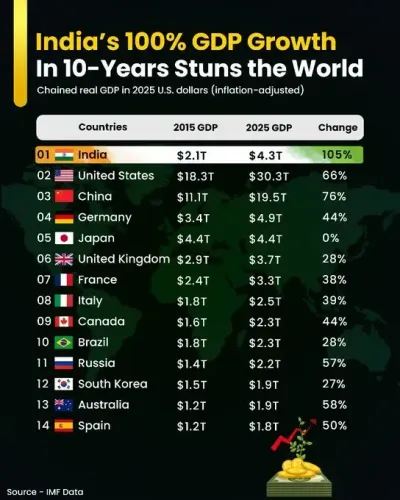
India is cited as growing at 7.7 per cent , described as the fastest rate among major global economies.
The claim aligns with projections by multilateral agencies that have consistently ranked India as the top-growing major economy.
India is currently the fifth-largest economy by nominal GDP.
Official verification will come from the Ministry of Statistics quarterly GDP release and revised IMF/World Bank forecasts.
Key government programmes underpinning the growth narrative include Make in India (2014) and Atmanirbhar Bharat (2020).
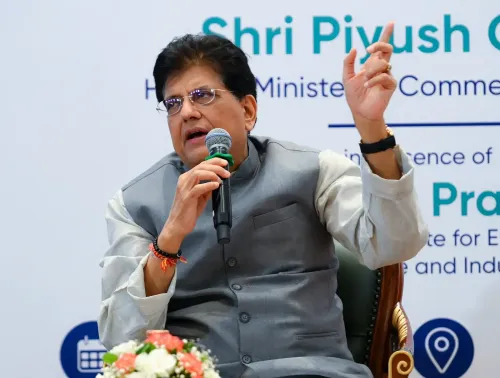
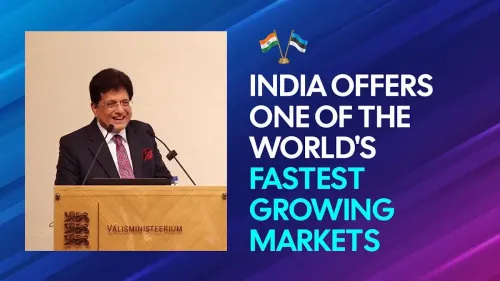
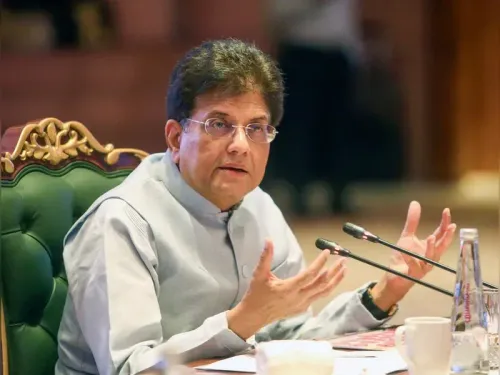
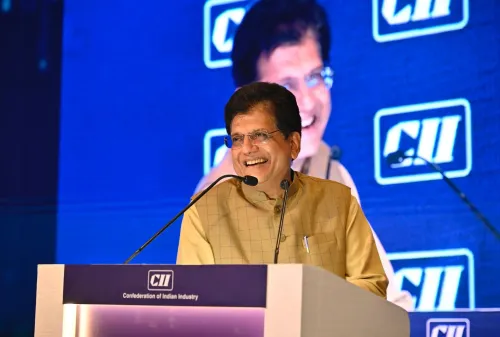
Union Commerce and Industry Minister Piyush Goyal on Saturday, June 6, 2026, attributed India's sustained position as the world's fastest-growing major economy to the leadership of Prime Minister Narendra Modi, citing a growth rate of 7.7 per cent.
Context
In his post, Minister Goyal wrote — 'प्रधानमंत्री @NarendraModi जी के दूरदर्शी एवं ऊर्जावान नेतृत्व के कारण भारत, 7.7% की दर से लगातार विश्व की सबसे तेज गति से बढ़ने वाली अर्थव्यवस्था बना हुआ है।' — which translates as: 'Due to the visionary and energetic leadership of Prime Minister Narendra Modi, India continues to be the fastest-growing economy in the world at a rate of 7.7%.' The post was accompanied by a video, suggesting it may be part of a broader government communication campaign on economic performance.
As Leader of the House in the Rajya Sabha and a senior BJP leader, Goyal regularly amplifies the government's economic narrative on social media, particularly around growth milestones and reform outcomes.
Policy Backdrop
India's growth story under the current government has been anchored in a series of structural initiatives. The Make in India programme, launched in September 2014, sought to raise the share of manufacturing in GDP and attract global supply chains. The Atmanirbhar Bharat package, announced in May 2020, aimed to build self-reliance and supply-chain resilience in the wake of the pandemic.
Multilateral agencies including the IMF and the World Bank have, in successive forecasting cycles, projected India as the fastest-growing major economy globally — a designation the government has consistently highlighted as evidence of the effectiveness of its reform agenda. India is currently the fifth-largest economy by nominal GDP.
Stakeholders and Impact
The messaging carries significance for Indian businesses and foreign investors evaluating long-term exposure to the Indian market. A sustained high-single-digit growth rate, if maintained, positions India as a compelling destination for manufacturing relocation away from East Asia — a trend that government policy has actively sought to accelerate.
For domestic audiences, the claim reinforces the administration's broader argument that structural reforms — spanning taxation, logistics, digital infrastructure, and trade facilitation — have yielded durable macroeconomic dividends. The growth figure, however, will be subject to scrutiny when the Ministry of Statistics releases its next official quarterly GDP estimates.
What's Next
The release of official quarterly GDP data by the Ministry of Statistics and Programme Implementation will be the immediate test of the 7.7 per cent growth claim. Revised forecasts from the IMF and World Bank in the coming months will also determine whether India retains its top ranking among major economies.
With trade negotiations ongoing and global growth remaining uneven, the government is expected to continue leveraging India's relative growth advantage as a diplomatic and investment-attraction tool — particularly as it seeks to deepen trade partnerships and position itself as a manufacturing alternative in global supply chains.
Point of View
' the messaging personalises economic success in a way that serves both domestic political mobilisation and international investor optics. The 7.7% figure, however, will face scrutiny when official data arrives, and any downward revision could blunt the narrative. Longer term, the government's credibility on growth depends on translating headline GDP numbers into visible employment and income gains for ordinary citizens.
NationPress
23 Oct 2026
Frequently Asked Questions
Is India the fastest-growing economy in the world in 2026?
The Indian government, through Minister Piyush Goyal, has claimed India is growing at 7.7% — the fastest rate among major global economies. This claim is consistent with projections from multilateral agencies, though it will be formally confirmed or revised when official quarterly GDP data is published by the Ministry of Statistics.
What is India's GDP growth rate in 2026?
Commerce Minister Piyush Goyal cited a growth rate of 7.7% for India as of June 2026. The official figure will be confirmed by the Ministry of Statistics and Programme Implementation in its next quarterly GDP release.
What did Piyush Goyal say about India's economy?
Goyal posted on X that India continues to be the world's fastest-growing major economy at 7.7%, crediting Prime Minister Narendra Modi's 'visionary and energetic leadership' for this sustained performance.
What policies drove India's economic growth under Modi?
Key initiatives include the Make in India programme launched in September 2014 to boost manufacturing, and the Atmanirbhar Bharat package announced in May 2020 to build supply-chain self-reliance after the pandemic. Broader reforms in taxation, logistics, and digital infrastructure are also cited.
How does India compare to other major economies in growth?
India has been consistently projected by the IMF and World Bank as the fastest-growing major economy globally for several years. At a cited 7.7%, it significantly outpaces most G20 peers, though exact rankings depend on contemporaneous data releases by national statistical offices worldwide.