Piyush Goyal: India is preparing to lead the future economy
Synopsis
Union Commerce Minister Piyush Goyal declared on June 19, 2026, that India is not merely preparing for the future economy but positioning itself to lead it, invoking the PM Viksit Bharat Rozgar Yojana and urging Indian youth to seize the demographic opportunity presented by the global shift toward future technologies.
Key Takeaways
Piyush Goyal stated on June 19, 2026 , that India is preparing to lead the future economy, not just participate in it.
He linked the message directly to #PMViksitBharatRozgarYojana , the government's youth employment and skilling scheme.
The post identifies Indian youth as the primary vehicle for India's global economic leadership ambitions.
The statement reinforces the Viksit Bharat vision — PM Narendra Modi 's goal of a developed India by 2047 .
Policy foundations include the Skill India Mission (2015) and Make in India (2014), now extended toward AI, semiconductors and green energy.
Specific funding details and operational guidelines for the tagged scheme remain awaited from the next Union Budget or NITI Aayog .
Union Commerce and Industry Minister Piyush Goyal on Friday, June 19, 2026, declared that while the world is readying itself for the future economy, India is positioning itself to lead it — anchoring his message to the government's PM Viksit Bharat Rozgar Yojana and the broader demographic opportunity available to Indian youth.
Context
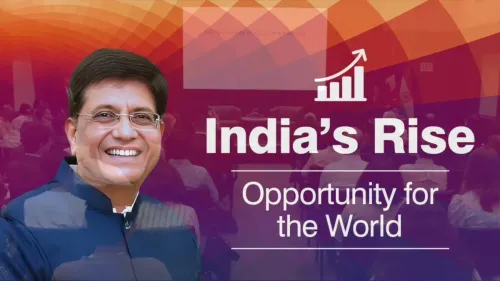
Posting on X, Goyal wrote in Hindi: 'दुनिया भविष्य की अर्थव्यवस्था के लिए तैयार हो रही है और भारत भविष्य की अर्थव्यवस्था का नेतृत्व करने की तैयारी कर रहा है' — 'The world is preparing for the future economy, and India is preparing to lead the future economy.' He added that as the world moves towards future technologies, India is focused on making its youth 'future ready,' calling this the single biggest opportunity for young Indians and urging that it be seized fully.
The post was tagged with #PMViksitBharatRozgarYojana, linking the statement directly to the government's employment and skilling agenda under the Viksit Bharat vision — Prime Minister Narendra Modi's flagship goal of a fully developed India by 2047.
Policy Backdrop
The assertion builds on a long arc of central government policy. The Skill India Mission, launched in 2015, was designed to provide vocational training and improve the employability of millions of young Indians across sectors. Alongside it, the Make in India initiative, announced in 2014, sought to draw investment into domestic manufacturing, including in emerging technology sectors.
More recently, production-linked incentive schemes and digital-infrastructure programmes have been layered on top of these foundations, targeting high-value sectors such as semiconductors, artificial intelligence and green energy. The government has consistently argued that India's large and young population is its most significant structural advantage in the global competition for leadership in these industries.
Stakeholders and Impact
The primary beneficiaries identified in Goyal's framing are Indian youth, who he positions as the central actors in the country's economic rise. The tech and manufacturing sectors — particularly those aligned with future technologies — are the implied arenas of opportunity.
For industry, the signal is one of continued policy commitment to workforce development and technology integration. For young Indians entering the labour market, the statement reinforces the government's narrative that skilling and future-readiness programmes are being scaled to meet global demand shifts.
What's Next
Attention will now turn to the operational details and budgetary support for the PM Viksit Bharat Rozgar Yojana, with stakeholders watching for specific allocations in the next Union Budget or guidance from NITI Aayog. Outcomes from ongoing skilling programmes in AI, semiconductors and renewable energy will serve as early indicators of whether the ambition translates into measurable employment gains.
As India seeks a larger role in global supply chains, the alignment of youth skilling with emerging technology sectors will be a defining test of the Viksit Bharat vision's practical reach.
Point of View
Framing India's demographic scale not as a challenge to be managed but as a strategic asset in the global race for technology leadership. By tagging PM Viksit Bharat Rozgar Yojana, he ties aspirational rhetoric to a specific policy instrument — signalling that the government wants the scheme associated with high-growth, future-oriented sectors rather than routine employment programmes. This continues a pattern where senior BJP ministers use social media to build a narrative architecture around the 2047 Viksit Bharat goal ahead of budget cycles and election windows. The real test will be whether skilling outcomes in AI, semiconductors and green energy can substantiate the leadership claim in measurable terms.
NationPress
19 Sept 2026
Frequently Asked Questions
What is PM Viksit Bharat Rozgar Yojana?
PM Viksit Bharat Rozgar Yojana is a central government employment and skilling scheme linked to the Viksit Bharat vision of making India a developed nation by 2047. Specific operational and funding details are yet to be fully detailed in official public documents.
What did Piyush Goyal say about India's economy on June 19, 2026?
Piyush Goyal said that while the world is preparing for the future economy, India is preparing to lead it, and that making Indian youth future-ready is the biggest opportunity the country has right now.
What is the Viksit Bharat vision?
Viksit Bharat is Prime Minister Narendra Modi's goal of transforming India into a fully developed nation by 2047, the centenary of independence, covering economic growth, technology adoption and human capital development.
How is India preparing youth for future technology jobs?
India has been running the Skill India Mission since 2015 and Make in India since 2014, and has more recently introduced production-linked incentive schemes targeting sectors like semiconductors, artificial intelligence and renewable energy to align youth skilling with future-oriented industries.
Why is India's young population considered an economic advantage?
India has one of the world's largest and youngest workforces, which successive governments have argued gives the country a structural edge in staffing high-growth technology and manufacturing sectors as global supply chains reorganise around future technologies.