Goyal Champions PM Viksit Bharat Rozgar Yojana for Youth Jobs
Synopsis
Commerce Minister Piyush Goyal on June 19, 2026, invoked PM Viksit Bharat Rozgar Yojana as the cornerstone of a new India, urging government, youth and industry to jointly accelerate formal job creation as a national mission.
Key Takeaways
Piyush Goyal publicly championed the PM Viksit Bharat Rozgar Yojana on June 19, 2026 , framing it as central to India's employment agenda.
The minister called for a three-way partnership between government, youth and industry to multiply the pace of job creation.
The scheme is positioned under the Viksit Bharat vision of transforming India into a developed economy by 2047 .
The post builds on a policy lineage that includes Make in India (2014) , Skill India (2015) , and Atmanirbhar Bharat production-linked incentive schemes.
As Leader of the House in the Rajya Sabha , Goyal's messaging signals employment will feature prominently in upcoming parliamentary and budget debates .
Union Commerce and Industry Minister Piyush Goyal on Friday, June 19, 2026, invoked the PM Viksit Bharat Rozgar Yojana as a defining symbol of a new India, calling for a unified push by government, youth and industry to multiply the pace of employment creation.
Context
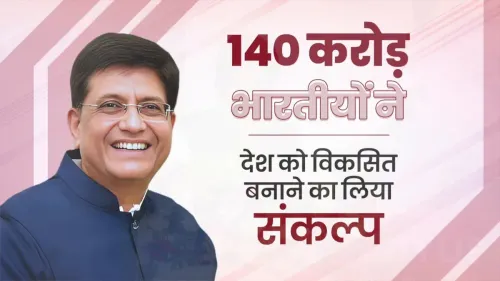
Posting in Hindi on X, Goyal wrote: 'जब सरकार, युवा और उद्योग एक साथ आगे बढ़ते हैं, तो रोजगार निर्माण की गति कई गुना बढ़ जाती है' — 'When government, youth and industry move forward together, the pace of job creation multiplies manifold.' He positioned the PM Viksit Bharat Rozgar Yojana as the institutional embodiment of this three-way partnership, describing it as the identity of a 'new India' where youth get opportunity, industry gets encouragement, and employment creation becomes a national campaign.
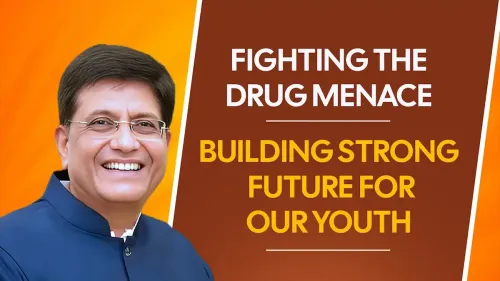
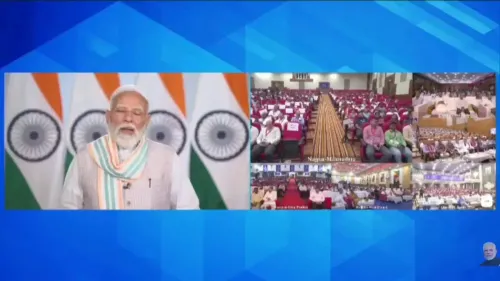
The post carries the hashtag #PMViksitBharatRozgarYojana, signalling an active government communications push around the scheme. It was accompanied by a video, suggesting a promotional or event-linked rollout.
Policy Backdrop
The statement sits within a long arc of employment-linked industrial policy. The Make in India initiative, launched in 2014, sought to attract manufacturing investment and generate large-scale jobs, while the Skill India Mission, launched in 2015, aimed to provide vocational training and improve youth employability. Both programmes were later folded into the broader Atmanirbhar Bharat framework and reinforced through production-linked incentive schemes across sectors ranging from electronics to pharmaceuticals.
The Viksit Bharat vision — India's long-term roadmap to become a developed economy by 2047 — has increasingly served as the overarching narrative umbrella under which individual schemes are branded and communicated. The PM Viksit Bharat Rozgar Yojana appears to be the latest scheme to be anchored to this vision, framing job creation as a patriotic, whole-of-society mission rather than a purely administrative target.
Stakeholders and Impact
India's youth — the country's demographic dividend — remain the primary intended beneficiaries. With a large share of the population under 35, successive governments have treated formal employment generation as both an economic imperative and a political priority. Industry bodies and private employers are cast as co-creators in this framework, receiving incentives in exchange for committing to job creation targets.
As Leader of the House in the Rajya Sabha, Goyal is also a key legislative voice for economic policy. His public amplification of the scheme signals that employment generation will remain a central theme in parliamentary debates and budget discussions in the period ahead.
What's Next
Attention will now turn to the operational details of the PM Viksit Bharat Rozgar Yojana — including eligibility criteria, sector focus, and the financial architecture linking government incentives to private-sector hiring. Parliamentary scrutiny of labour codes and any fresh allocations in the next Union Budget will be closely watched as indicators of how robustly the scheme is backed by public resources. The government's ability to translate the 'national campaign' rhetoric into measurable formal job numbers will ultimately determine the programme's legacy within the Viksit Bharat framework.
Point of View
Lending them ideological weight beyond their administrative scope. By explicitly naming government, youth and industry as co-equal actors, the messaging attempts to distribute both credit and responsibility — insulating the scheme from being judged solely on state delivery. For a minister who holds both the Commerce portfolio and the Rajya Sabha leadership, the public amplification also doubles as a signal to industry lobbies that employment commitments will be a condition of continued policy support. The real test, however, will come when scheme implementation data and formal job numbers are placed before Parliament.
NationPress
19 Sept 2026
Frequently Asked Questions
What is PM Viksit Bharat Rozgar Yojana?
PM Viksit Bharat Rozgar Yojana is a government employment scheme positioned under India's Viksit Bharat 2047 vision, aimed at accelerating formal job creation by linking government incentives with private-sector hiring and youth skilling.
What did Piyush Goyal say about employment on June 19 2026?
Piyush Goyal stated that when government, youth and industry move forward together, the pace of job creation multiplies manifold, and called PM Viksit Bharat Rozgar Yojana the identity of a new India.
How does PM Viksit Bharat Rozgar Yojana relate to Make in India and Skill India?
The scheme builds on earlier employment-linked initiatives including Make in India (2014) and Skill India (2015), continuing the approach of pairing industrial incentives with youth training to generate formal employment.
What is the Viksit Bharat vision?
Viksit Bharat is the Indian government's long-term national vision to transform India into a fully developed economy by 2047, with a focus on inclusive growth, manufacturing, and job creation.
What is Piyush Goyal's role in the government?
Piyush Goyal is the Union Minister of Commerce and Industry, a senior BJP leader, and the Leader of the House in the Rajya Sabha, making him a key voice on trade, industry and economic legislation.