Goyal Hails India's Youth as Nation Marks 12 Years of Yuva Shakti
Synopsis
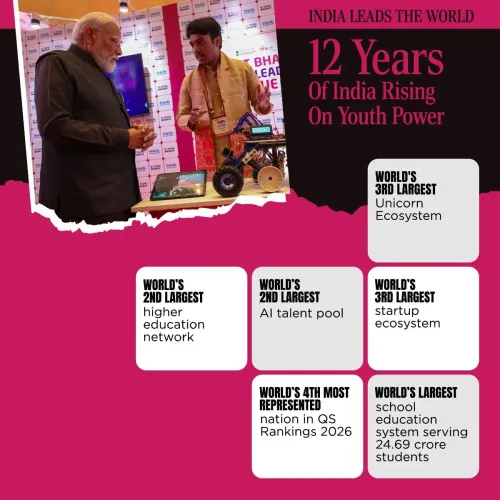
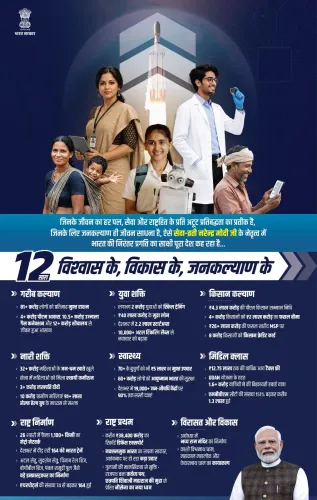
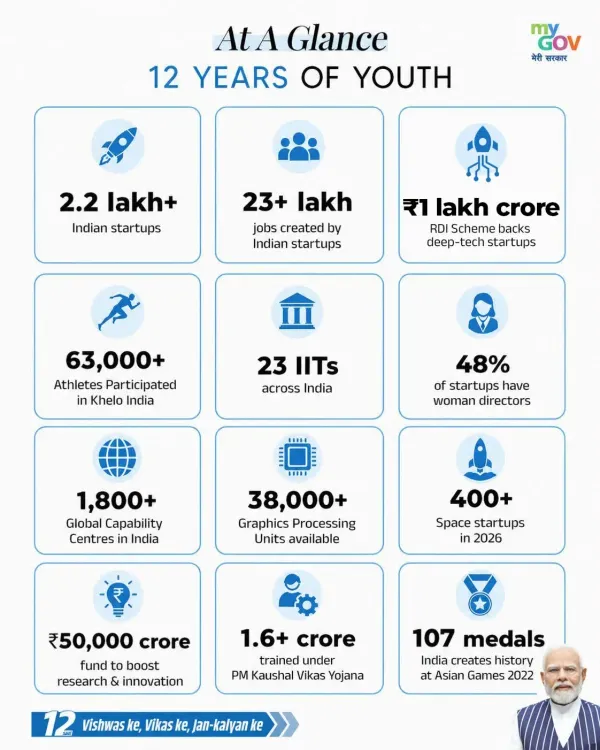
Commerce Minister Piyush Goyal marked #12YearsOfYuvaShakti on June 13, calling India's youth its 'superpower' and highlighting the Modi government's skilling, opportunity-creation, and ecosystem-building efforts as central to the nation's growth ambitions.
Key Takeaways
Union Commerce and Industry Minister Piyush Goyal posted on June 13, 2026 , marking #12YearsOfYuvaShakti and calling India's youth the country's 'superpower'.
He credited PM Narendra Modi 's government with equipping youth with skills, opportunities, and an enabling ecosystem for nation-building.
The Skill India Mission , launched in 2015 , remains the flagship central scheme for vocational training and certification of India's young workforce.
The National Youth Policy 2014 and Make in India campaign together anchor the government's multi-pronged approach to converting demographic youth into economic dividend.
India's demographic advantage — with a median age of around 28 years — is projected to last through the 2040s , making near-term skilling investments critical.
Upcoming fiscal announcements on skill centre funding and NEP vocational modules will be key indicators of policy momentum.
Union Commerce and Industry Minister Piyush Goyal on Saturday, June 13, 2026, invoked India's demographic dividend as a defining national strength, saying the country's youth are playing a 'pivotal role in shaping the nation's growth trajectory and aspirations' under Prime Minister Narendra Modi's leadership.
Context
Posting on X under the hashtag #12YearsOfYuvaShakti, Minister Goyal described India's young population as its 'superpower' and credited the Modi government with equipping youth with 'skills, opportunities and an enabling ecosystem' needed to realise their potential. The post marks what appears to be a milestone anniversary celebration of youth-focused governance initiatives that the Bharatiya Janata Party-led administration has championed since coming to power in 2014.
India's median age hovers around 28 years, making it one of the youngest large economies in the world — a structural advantage that economists and policymakers have long argued must be converted into productive employment and skill formation before the demographic window closes.
Policy Backdrop
The Skill India Mission, launched in 2015, has been the centrepiece of the government's effort to provide vocational training and industry-relevant certification to millions of Indians. The mission operates through a network of Industrial Training Institutes (ITIs), Pradhan Mantri Kaushal Kendras, and short-term training partners spread across the country.
Alongside skilling, the National Youth Policy 2014 laid out objectives spanning education, employment, and entrepreneurship for the 15–29 age cohort, while the Make in India campaign, also launched in 2014, aimed to generate manufacturing jobs suited to a young, trainable workforce. Production-linked incentive schemes and labour-code reforms introduced in subsequent years have been presented by the government as complementary levers to formalise employment at scale.
The National Education Policy (NEP) 2020 further integrated vocational education into mainstream schooling and higher education, signalling a long-term structural bet on human capital formation as an engine of growth.
Stakeholders and Impact
India's youth — broadly defined as the 15–29 age group — number in the hundreds of millions and represent the primary constituency for these initiatives. Their successful absorption into the formal economy is seen as critical not only for individual welfare but for sustaining India's growth rate ambitions over the next two decades.
Employers in manufacturing, technology, logistics, and services sectors have a direct stake in the quality of skilling pipelines, as do state governments that co-implement central schemes through their own training infrastructure. Civil society organisations working on youth entrepreneurship and first-generation learners also sit within this ecosystem.
What's Next
Observers will watch for fresh budgetary allocations for skill centres and updated vocational modules under the NEP framework in upcoming fiscal announcements. As India approaches the peak of its demographic dividend window — estimated by planners to last through the 2040s — the pressure on policymakers to demonstrate measurable employment and skilling outcomes will only intensify. Minister Goyal's post signals that youth empowerment will remain a prominent political and policy theme for the ruling dispensation heading into the next phase of governance.
Point of View
Using the #12YearsOfYuvaShakti hashtag to frame a decade-plus of BJP governance as a sustained investment in human capital rather than a series of discrete schemes. It positions the demographic dividend narrative — long a staple of economic planning documents — squarely within the ruling party's political identity ahead of future electoral cycles. The emphasis on an 'enabling ecosystem' rather than specific targets is notable: it allows the government to claim broad ownership of youth aspiration without being pinned to verifiable skilling numbers. Taken alongside NEP implementation and PLI-driven job creation rhetoric, the post reinforces a consistent arc in which India's youth are simultaneously the government's largest constituency and its most cited development rationale.
NationPress
29 Jul 2026
Frequently Asked Questions
What is #12YearsOfYuvaShakti about?
#12YearsOfYuvaShakti is a hashtag used to mark approximately twelve years of the Modi government's youth-focused governance initiatives, including the Skill India Mission, Make in India, and the National Youth Policy, which together aim to convert India's young population into an economic asset.
What is the Skill India Mission?
The Skill India Mission is a flagship central government scheme launched in 2015 to provide vocational training and industry-relevant certification to millions of Indians through ITIs, Pradhan Mantri Kaushal Kendras, and short-term training partners.
Why does India talk about a demographic dividend?
India's median age is around 28 years, making it one of the world's youngest large economies. Economists argue this young workforce is a structural advantage — a 'demographic dividend' — that can drive high growth if workers are adequately skilled and employed before the population ages.
What did Piyush Goyal say about India's youth?
Minister Piyush Goyal said India's youth is its 'superpower' and that the country's demographic dividend is among its greatest strengths, adding that the Modi government is equipping youth with skills, opportunities, and an enabling ecosystem to contribute to nation-building.
What comes next for India's youth skilling policy?
Analysts are watching for fresh budgetary allocations for skill centres and updated vocational education modules under the National Education Policy framework in upcoming fiscal announcements, as the government looks to demonstrate measurable outcomes from its skilling investments.