Yadav Hails 12 Years of Youth Empowerment Under Modi Govt
Synopsis
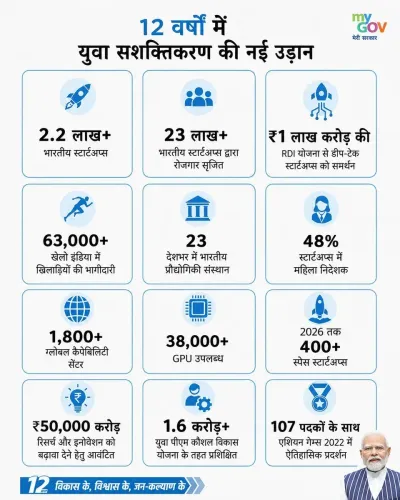
Union Environment Minister Bhupender Yadav marked twelve years of the Modi government's youth-focused schemes on June 13, 2026, crediting Skill India, Startup India, Digital India, and Khelo India with making India's 'Amrit Peedhi' more confident and future-ready.
Key Takeaways
Bhupender Yadav posted on June 13, 2026 under #12YearsOfYuvaShakti , marking a dozen years of BJP youth governance.
Skill India (2015) and Digital India (2015) form the foundational pillars of the government's youth empowerment push.
Startup India (2016) targeted young entrepreneurs through tax incentives and regulatory easing.
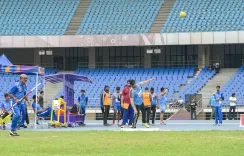
Khelo India (2017) was launched to build grassroots sports culture and surface talent from smaller towns.
The term Amrit Peedhi links youth development to the Viksit Bharat 2047 vision of a developed India at its independence centenary.
No new policy announcement was made; the post is part of a broader BJP communication campaign marking the milestone.
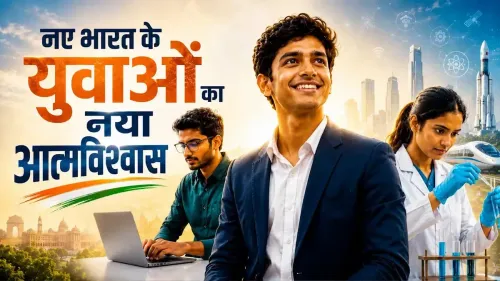
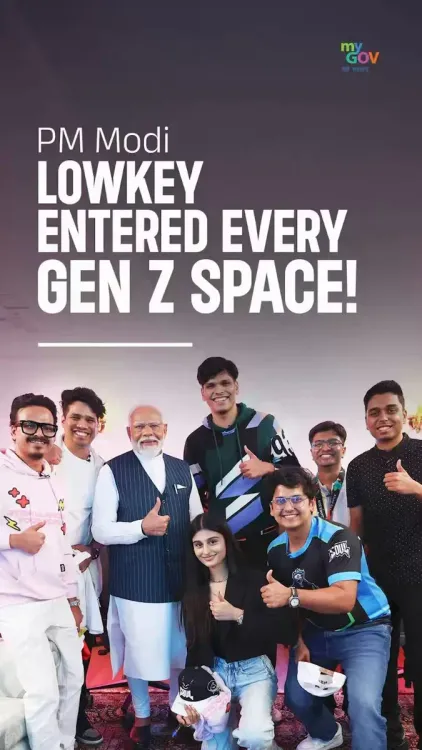
Union Environment Minister Bhupender Yadav on Saturday, June 13, 2026, marked twelve years of the Narendra Modi government's youth-focused initiatives, saying India's young generation has grown more confident, capable, and future-ready through programmes spanning skill development, entrepreneurship, digital empowerment, and sports.
Context
Posting under the hashtag #12YearsOfYuvaShakti (12 Years of Youth Power), Yadav wrote: 'A nation's greatest strength is its youth.' He credited a dozen years of targeted government action for transforming India's Amrit Peedhi — a term meaning the 'nectar generation', referring to youth who will witness India's centenary of independence in 2047 — into a workforce and innovator class equipped for the future.
The post accompanied a video, signalling a coordinated communication push by the Bharatiya Janata Party to mark what it frames as a milestone in youth governance.
Policy Backdrop
The twelve-year arc Yadav references spans several flagship schemes. Skill India, launched in 2015, set out to provide vocational training and improve employability across sectors. That same year, Digital India began rolling out infrastructure and literacy programmes to bring citizens into the digital economy.
Startup India, introduced in 2016, created a framework of tax incentives, regulatory easing, and funding access aimed squarely at young founders and innovators. Khelo India, launched in 2017, sought to build a grassroots sports culture and surface athletic talent from smaller towns and rural areas. Together, these initiatives form the policy spine that BJP leaders invoke when speaking of youth empowerment since 2014.
Stakeholders and Impact
India's demographic profile gives the messaging particular weight: the country has one of the world's largest youth populations, and successive governments have identified harnessing that demographic dividend as central to economic growth. Young entrepreneurs, first-generation digital users, vocational trainees, and aspiring athletes are the constituencies these schemes address.
The framing of the Amrit Peedhi ties youth development explicitly to Viksit Bharat 2047 — the government's vision of a developed India by the centenary of independence — positioning current investments in skills and innovation as long-term national strategy rather than short-term electoral outreach.
What's Next
With the #12YearsOfYuvaShakti campaign active, further communications from BJP leaders and government ministries on youth scheme outcomes are expected in the coming days. Analysts will watch for any accompanying policy announcements — particularly around integrating artificial intelligence into skill development curricula or expanding employment-linked incentives flagged in recent budget discussions.
Parliamentary scrutiny of budget allocations for youth schemes and independent assessments of scheme reach will be the key metrics against which the government's twelve-year record is likely to be measured in the near term.
Point of View
The messaging deliberately bridges current scheme outcomes with the long-horizon Viksit Bharat 2047 goal, making it harder to evaluate on short-term metrics alone. The choice of an Environment Minister — rather than the Skills or Education ministry — to anchor this message signals a party-wide amplification effort rather than a departmental announcement. Scrutiny will inevitably follow on whether scheme reach and quality match the confidence of the messaging.
NationPress
22 Sept 2026
Frequently Asked Questions
What is #12YearsOfYuvaShakti about?
#12YearsOfYuvaShakti is a BJP communication campaign marking twelve years of the Modi government's youth-focused schemes, including Skill India, Startup India, Digital India, and Khelo India, since the party came to power in 2014.
What is Amrit Peedhi?
Amrit Peedhi, meaning 'nectar generation,' is a term used by the Modi government to describe India's youth who will be alive when India celebrates 100 years of independence in 2047, framing them as central to the Viksit Bharat vision.
What are the main youth schemes launched by the Modi government?
The main youth-focused schemes include Skill India (2015) for vocational training, Digital India (2015) for digital empowerment, Startup India (2016) for entrepreneurship support, and Khelo India (2017) for grassroots sports development.
What did Bhupender Yadav say about India's youth?
Bhupender Yadav said 'A nation's greatest strength is its youth' and credited twelve years of government initiatives in skill development, innovation, entrepreneurship, digital empowerment, and sports for making India's youth more confident, capable, and future-ready.
When was Skill India launched?
Skill India was launched in 2015 as a national mission to provide vocational training and improve employability among India's workforce, particularly targeting young people entering the job market.