Goyal: 140 Crore Indians Pledge to Build Viksit Bharat
Synopsis
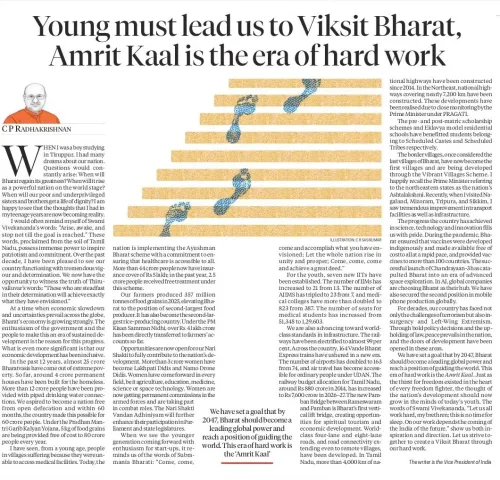
Commerce Minister Piyush Goyal on June 6, 2026 posted that 140 crore Indians have pledged to make India a developed nation, reinforcing the Viksit Bharat 2047 vision backed by a decade of Make in India and Atmanirbhar Bharat policies.
Key Takeaways
Piyush Goyal , Union Commerce and Industry Minister, posted on June 6, 2026 that 140 crore Indians have pledged to build a developed India.
The post reinforces the Viksit Bharat 2047 vision, which targets developed-economy status by India's centenary of independence.
The messaging continues a policy arc that includes Make in India (2014) , Atmanirbhar Bharat (2020) , and the Viksit Bharat Sankalp Yatra (2023) .
The MSME sector and Indian citizens are the primary stakeholders framed as active participants in the development goal.
As Leader of the House in the Rajya Sabha , Goyal's statement carries institutional weight beyond routine political communication.
The Union Budget 2026-27 is the next key policy moment where this rhetoric may be backed by concrete manufacturing and export measures.
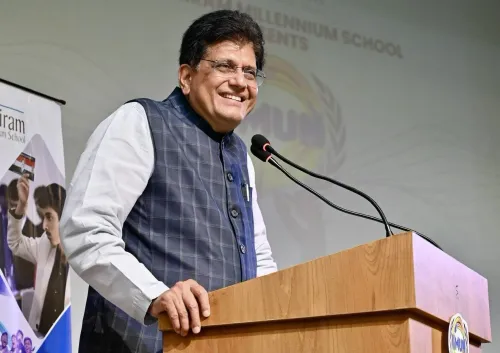
Union Commerce and Industry Minister Piyush Goyal on Saturday, June 6, 2026, invoked the resolve of 140 crore Indians to transform the country into a developed nation, reaffirming the government's Viksit Bharat 2047 vision in a post on X.
Context
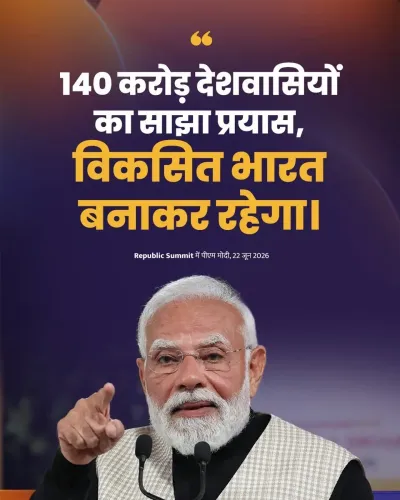
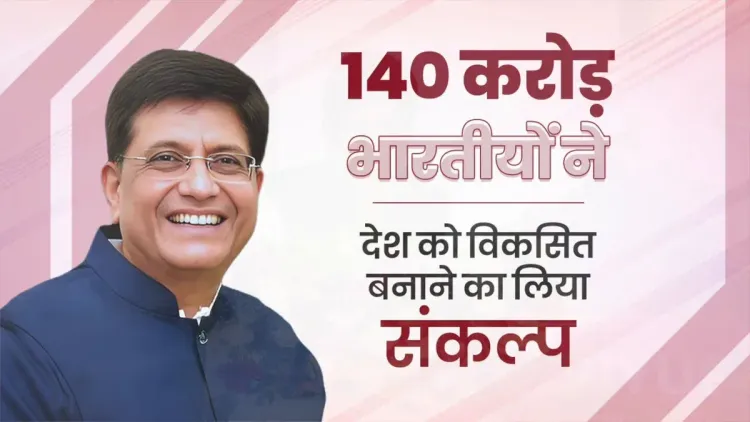
Goyal's post — '140 करोड़ भारतीयों ने देश को विकसित बनाने का लिया संकल्प' ('140 crore Indians have taken a pledge to make the country developed') — frames national development as a collective citizen commitment rather than a purely governmental undertaking. The message aligns with a recurring BJP communication strategy that positions every Indian as a stakeholder in the country's economic rise.
The Viksit Bharat goal targets India becoming a fully developed economy by 2047, the centenary of independence. Prime Minister Narendra Modi has articulated this vision consistently in public addresses, making it a central plank of the ruling party's long-term governance narrative.
Policy Backdrop
The current messaging sits at the end of a decade-long policy arc. The Make in India initiative, launched in 2014, sought to accelerate manufacturing and raise India's share in global supply chains. It was followed in 2020 by the Atmanirbhar Bharat campaign, which emphasised domestic production and reduced import dependence.
In 2023, the government launched the Viksit Bharat Sankalp Yatra, a district-level outreach drive to build public awareness of welfare schemes tied to the 2047 development target. Together, these initiatives form a layered policy framework within which Goyal's statement sits as the latest public reinforcement.
As Leader of the House in the Rajya Sabha, Goyal is among the government's most prominent voices on economic legislation and trade policy, lending institutional weight to the post beyond routine social-media activity.
Stakeholders and Impact
The primary audiences for this messaging are Indian citizens at large and the MSME sector, which the government has repeatedly identified as the backbone of employment and export growth. The framing of 140 crore Indians as active participants — rather than passive beneficiaries — is a deliberate rhetorical choice that has featured in government communication since the Make in India era.
For businesses, particularly small and medium enterprises, such signals from a senior commerce minister are read as continuity of the policy environment: predictable support for domestic manufacturing, eased trade regulations, and sustained export incentives. The post, accompanied by a video, suggests a structured communication push rather than an impromptu remark.
What's Next
Attention will now turn to parliamentary proceedings and the forthcoming Union Budget for 2026-27, where concrete announcements on manufacturing incentives, export targets, and ease-of-doing-business reforms are expected. Whether the 'sankalp' rhetoric translates into fresh policy measures — or reinforces existing schemes — will be the test that industry bodies and opposition benches alike will scrutinise closely.
As India continues to position itself in multilateral economic forums, statements from the Commerce Ministry carry signalling value for trade partners and investors watching the country's policy trajectory into the second half of the decade.
Point of View
One that has been deployed consistently since 2014 to build popular ownership of economic targets that are structurally driven by policy. By invoking '140 crore Indians' rather than the government alone, the framing deflects technocratic critique and broadens political accountability for the 2047 goal. With the Union Budget cycle approaching, the timing suggests the Commerce Ministry is priming public and business sentiment ahead of potential announcements on manufacturing and trade. The post also reinforces Goyal's personal brand as the government's most visible economic communicator in the upper house.
NationPress
21 Oct 2026
Frequently Asked Questions
What is Viksit Bharat and when is its target year?
Viksit Bharat is India's national vision to become a fully developed economy by 2047, the centenary of the country's independence. Prime Minister Narendra Modi has outlined the goal in multiple public addresses since 2014.
What did Piyush Goyal post about 140 crore Indians?
On June 6, 2026, Commerce Minister Piyush Goyal posted on X that 140 crore Indians have taken a pledge to make India a developed nation, echoing the Viksit Bharat 2047 vision.
What is the Viksit Bharat Sankalp Yatra?
The Viksit Bharat Sankalp Yatra was a district-level outreach campaign launched in 2023 to raise public awareness of government welfare schemes linked to the 2047 developed-nation target.
How does Make in India relate to Viksit Bharat?
Make in India, launched in 2014, was an early pillar of the same long-term development strategy. It focused on accelerating manufacturing and boosting India's role in global supply chains, feeding into the broader Viksit Bharat framework.
What policy announcements are expected next on India's development goals?
The Union Budget for 2026-27 is the next major policy milestone where fresh announcements on manufacturing incentives, export targets, and ease-of-doing-business reforms are anticipated.