CM Bhajan Lal Reviews JDA Projects, Sets World-Class Jaipur Goal
Synopsis
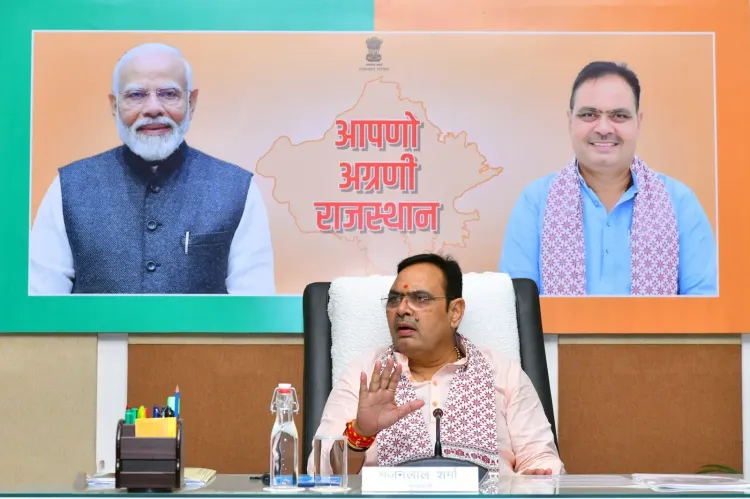
Rajasthan Chief Minister Bhajan Lal Sharma reviewed Jaipur Development Authority projects on 6 November 2026, directing officers to clear pending works and meet deadlines as he pursues a world-class urban development model for the state capital.
Key Takeaways
CM Bhajan Lal Sharma chaired a JDA review meeting on 6 November 2026 in Jaipur.
The meeting covered progress on key development projects , clearance of pending works, and expansion of basic infrastructure.
Sharma directed all officers to complete work within stipulated timelines and to quality standards.
The stated goal is to make Jaipur an outstanding model of modern urban development with world-class facilities.
Jaipur has been part of the national Smart Cities Mission since 2015 , giving the city over a decade of phased urban renewal mandates.
JDA project progress reports and upcoming Rajasthan state budget allocations are the near-term indicators to watch.
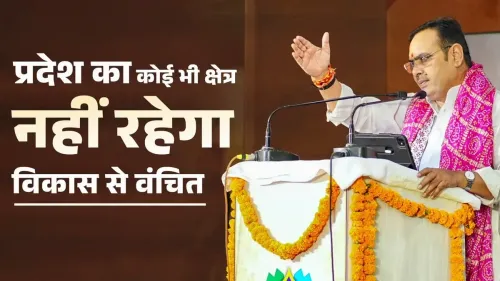
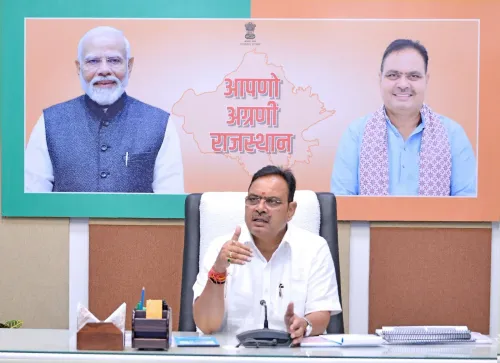
Jaipur's future as a world-class city moved from aspiration to accountability on Friday, 6 November 2026, when Rajasthan Chief Minister Bhajan Lal Sharma chaired a comprehensive review of the Jaipur Development Authority (JDA) — pressing officials to deliver every pending project on time and to quality.
Sharma posted on X: 'जयपुर को आधुनिक, सुव्यवस्थित एवं विश्वस्तरीय शहरी सुविधाओं से युक्त बनाने के संकल्प के साथ आज जयपुर विकास प्राधिकरण (JDA) के कार्यों की समीक्षा की' — 'With the resolve to make Jaipur modern, well-organised and equipped with world-class urban facilities, I reviewed the works of the Jaipur Development Authority today.' He directed officers to complete all tasks 'within stipulated timelines and in a quality manner', with every development initiative centred on public convenience and public expectations.
What the JDA Review Put on the Table
The meeting covered the progress of key development projects, clearance of pending works, and the expansion of basic infrastructure across the Jaipur metropolitan region. The JDA — the statutory body responsible for planning, land development, and civic upgrades in the capital — operates a wide portfolio spanning roads, housing, and public amenities. Sharma's instruction was unambiguous: no slippage on deadlines, no compromise on quality.
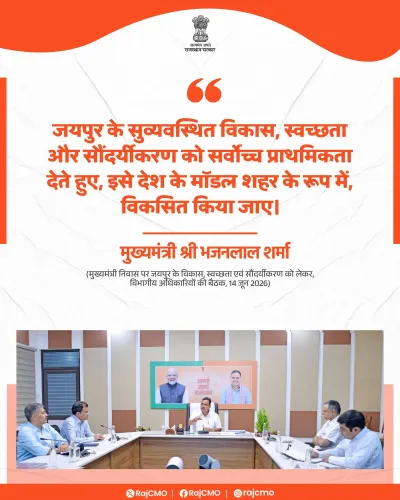
The Chief Minister framed the ambition clearly: 'जयपुर आधुनिक शहरी विकास का उत्कृष्ट मॉडल बने' — 'Jaipur should become an outstanding model of modern urban development.' That is a high bar, and the review was designed to close the gap between the vision and ground reality.
Jaipur's Long Road to Smart-City Status
Jaipur was selected under the national Smart Cities Mission in 2015 for integrated urban renewal and technology-enabled infrastructure upgrades — a process that has spanned more than a decade of phased implementation. The city's rapid population growth and tourism footprint have only sharpened the pressure on roads, drainage, housing, and civic services.
Periodic JDA reviews by state leadership are a standard governance tool for BJP-ruled Rajasthan, but the frequency and tone signal political urgency: Sharma, who assumed office in December 2023, has consistently anchored his administration's identity to capital-city transformation. A well-delivered Jaipur is both a governance deliverable and a visible proof point ahead of future electoral cycles.
What Jaipur Residents Can Watch For
The clearest near-term signal will be the release of JDA project progress reports and any infrastructure allocations in the next Rajasthan state budget or assembly session. If the review produces tangible deadlines — specific corridors, housing clusters, or utility expansions — those will be the metrics by which the Chief Minister's directive will be measured.
For the millions who live and work in Jaipur, the promise of a world-class city is not abstract. It shows up — or fails to — in the last-mile road outside the neighbourhood, the drainage that holds in monsoon, and the speed at which a building permit clears the JDA counter. Sharma has now put his office's weight behind that delivery chain. The clock is running.
Point of View
Projecting accountability without requiring legislative action. For Sharma, who took office in December 2023, Jaipur's visible modernisation is becoming a core narrative asset — a tangible counter to any charge of slow delivery. The invocation of a 'world-class model' raises the stakes beyond routine administration; it sets a benchmark the opposition and citizens alike can hold the government to. With a state budget session on the horizon, this review may also be laying the groundwork for fresh JDA allocations.
NationPress
6 Nov 2026
Frequently Asked Questions
What did CM Bhajan Lal Sharma review at the JDA meeting?
CM Bhajan Lal Sharma reviewed the progress of key development projects, clearance of pending works, and expansion of basic infrastructure across the Jaipur metropolitan region at the JDA meeting on 6 November 2026.
What is the Jaipur Development Authority (JDA)?
The Jaipur Development Authority is a statutory body responsible for planning, land development, and infrastructure projects across the Jaipur metropolitan region, including roads, housing, and civic amenities.
What instructions did CM Sharma give to JDA officers?
Sharma directed all officers to complete every project within stipulated timelines and in a quality manner, with all development initiatives centred on public convenience and public expectations.
Is Jaipur part of the Smart Cities Mission?
Yes. Jaipur was selected under the national Smart Cities Mission in 2015 for integrated urban renewal and technology-enabled infrastructure upgrades, a programme that has been implemented in phases over more than a decade.
When did Bhajan Lal Sharma become Chief Minister of Rajasthan?
Bhajan Lal Sharma assumed office as Chief Minister of Rajasthan in December 2023 as a BJP leader, with urban and infrastructure development among his administration's stated priorities.