Jaishankar at G20 Atlanta: Diplomacy must prevail, military solutions won't work
Synopsis
At the G20 Foreign Ministers' Meeting in Atlanta, EAM Jaishankar made three pointed arguments in a single plenary: military force cannot resolve global crises, the Global South is absorbing the economic shock of shipping attacks, and developing nations are being denied the right to industrialise. The India-Liberia seafarers' initiative announced on the sidelines adds a rare concrete deliverable to multilateral rhetoric.
Key Takeaways
Jaishankar addressed the first plenary of the G20 Foreign Ministers' Meeting in Atlanta on 30 October 2026 .
He argued that military solutions 'will not work' and called for diplomacy to be given a chance.
India and Liberia have launched a joint initiative to safeguard seafarers amid rising attacks on civilian shipping.
Jaishankar accused unnamed parties of denying developing nations the 'right to industrialise' through market flooding and supply chain weaponisation.
He warned that tactical tolerance of terrorism is 'a high-risk activity which has come back to bite even the practitioners.' Jaishankar is also expected to attend a Quad Foreign Ministers' meeting and hold bilateral talks on the sidelines before the meeting ends on 31 October .
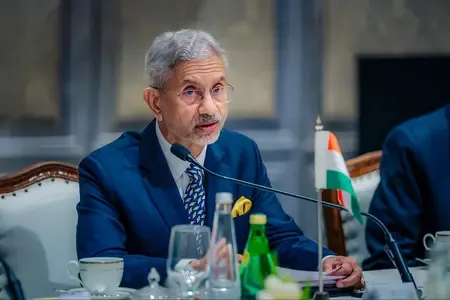
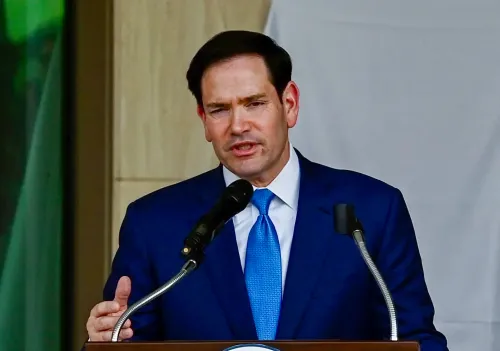
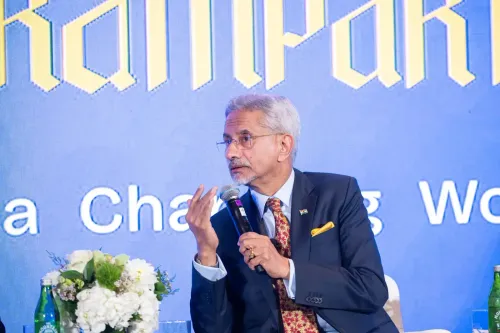
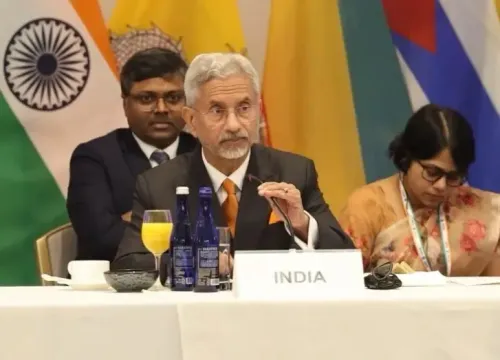
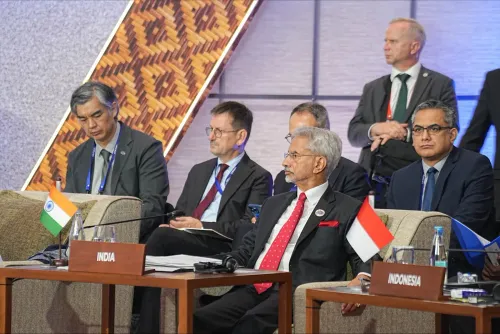
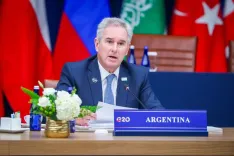
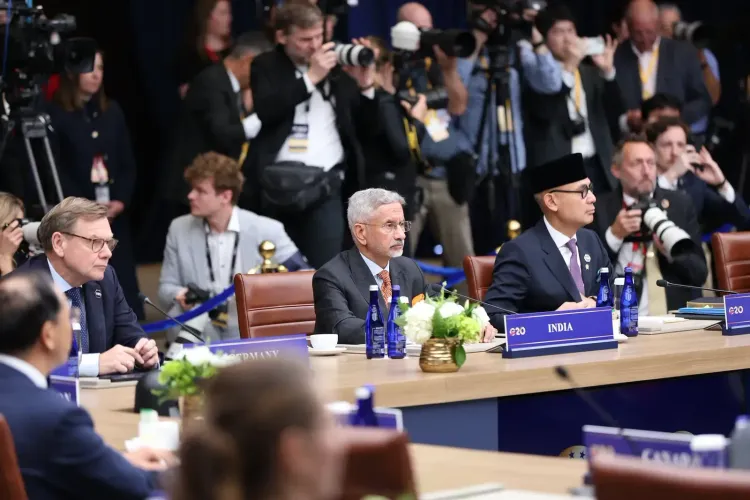
External Affairs Minister S. Jaishankar on Friday, 30 October 2026, told the first plenary session of the G20 Foreign Ministers' Meeting in Atlanta that military approaches cannot resolve global challenges and that diplomacy must be given a genuine chance. Speaking at a session hosted by US Secretary of State Marco Rubio, Jaishankar also issued a stark warning that the Global South was bearing a disproportionate burden from ongoing attacks on civilian shipping.
Key Statements from the Plenary
In a post on X following the session, Jaishankar said he had 'emphasised that in the face of global challenges, military solutions will not work and diplomacy must be given a chance.' He flagged that the Global South is 'disproportionately bearing the consequences of attacks on civilian shipping and seafarers, jeopardising the availability and cost of fuel, food and fertilisers.'
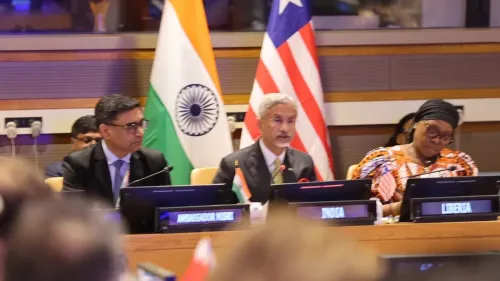
Jaishankar called for an 'urgent need to preserve the freedom of navigation and ensure cessation of attacks within the framework of international law, especially UNCLOS.' Notably, he announced that 'India and Liberia have launched a joint initiative to safeguard seafarers' — a concrete bilateral step emerging directly from the multilateral forum.
India's Stand on Trade and Industrialisation
On economic matters, Jaishankar made a pointed intervention on behalf of developing nations, arguing that the 'right to industrialise is being denied through the flooding of markets, weaponising supply chains, constricting market access and encouraging market distortions.' He added that 'this must cease,' and stressed the importance of building 'resilient and alternate connectivity, as the world de-risks and diversifies.'
This comes amid persistent concern among emerging economies that global trade frameworks disproportionately benefit advanced industrialised nations, a theme that has recurred at multilateral forums from WTO ministerials to G20 summits.
Terrorism Warning Without Naming Names
Jaishankar also raised the spectre of terrorism, warning that 'tactical calculations should not lead to overlooking the dangers of terrorism. It is a high-risk activity which has come back to bite even the practitioners.' He did not name any specific country in his social media post, though the remarks were widely noted given ongoing geopolitical tensions across multiple regions.
Rubio's Position and the Session Agenda
US Secretary of State Marco Rubio, who hosted the plenary, said afterwards on X that he had 'made clear that maritime and food security drive economic security.' According to a preliminary transcript of his opening remarks, Rubio told ministers the plenary would cover 'freedom of navigation and food security' — themes that aligned closely with Jaishankar's stated priorities.
What Comes Next
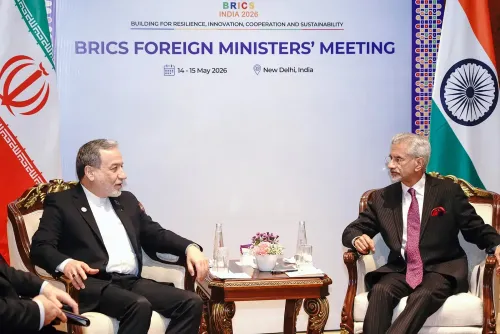
The two-day meeting is scheduled to conclude on Saturday, 31 October. On the sidelines, Jaishankar is expected to participate in a Quad Foreign Ministers' meeting and hold several bilateral meetings, as confirmed by Ministry of External Affairs spokesperson Randhir Jaiswal. The India-Liberia seafarers' initiative and India's trade equity arguments are likely to be elaborated further in those engagements.
Point of View
Wrap security concerns in international law language, and leave the harder geopolitical edges unnamed. The terrorism warning without attribution is a studied ambiguity — pointed enough to register, vague enough to avoid bilateral blowback. What is genuinely new is the India-Liberia seafarers' initiative, which signals India is willing to put institutional skin in the game on maritime security rather than merely endorse UNCLOS principles. The trade-industrialisation argument, however, risks being read as both a critique of China's market flooding and a rebuff to Western carbon-border mechanisms — a dual message that Delhi has not yet fully resolved.
NationPress
31 Oct 2026
Frequently Asked Questions
What did EAM Jaishankar say at the G20 Foreign Ministers' Meeting in Atlanta?
Jaishankar told the first plenary session on 30 October 2026 that military solutions cannot resolve global challenges and diplomacy must be prioritised. He also warned that the Global South is disproportionately affected by attacks on civilian shipping and called for protecting freedom of navigation under UNCLOS.
What is the India-Liberia joint seafarers' initiative?
India and Liberia have jointly launched an initiative to safeguard seafarers amid rising attacks on civilian shipping. The initiative was announced by Jaishankar at the G20 Foreign Ministers' Meeting in Atlanta, though specific operational details were not disclosed in his public statement.
Why did Jaishankar raise trade and industrialisation at a foreign ministers' meeting?
Jaishankar argued that developing nations are being denied the right to industrialise through market flooding, weaponised supply chains, and restricted market access — issues that increasingly intersect with geopolitics and foreign policy. India has consistently sought to link trade equity with broader diplomatic and security discussions at multilateral forums.
What did US Secretary of State Marco Rubio say at the G20 plenary?
Rubio, who hosted the plenary session, said he made clear that maritime and food security are central to economic security. His preliminary opening remarks indicated the session would cover freedom of navigation and food security — themes that overlapped with Jaishankar's stated priorities.
What other meetings is Jaishankar expected to attend in Atlanta?
On the sidelines of the two-day G20 Foreign Ministers' Meeting, Jaishankar is expected to participate in a Quad Foreign Ministers' meeting and hold several bilateral meetings. This was confirmed by Ministry of External Affairs spokesperson Randhir Jaiswal. The G20 meeting concludes on 31 October 2026.