Pralhad Joshi: India leads world in Green Hydrogen contracts
Synopsis
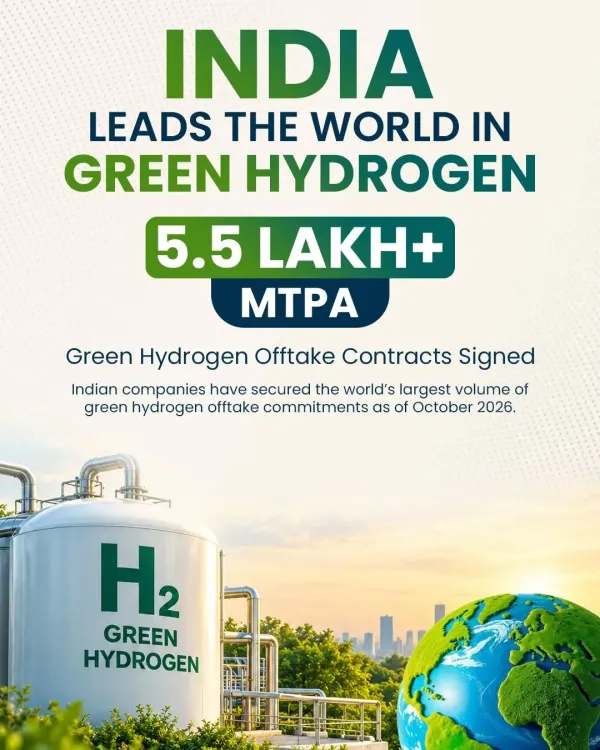
Union Minister Pralhad Joshi says India leads the world in green hydrogen after developers secured 23 contracts totalling over 5.5 lakh MTPA under the National Green Hydrogen Mission, with over 70% for exports and ₹90,000 crore in investments unlocked.
Key Takeaways
23 major contracts secured by Indian developers under the National Green Hydrogen Mission as of October 2026.
Supply commitments exceed 5.5 lakh MTPA , with over 70% dedicated to global exports.
The milestone is reported to have unlocked ₹90,000 crore in clean-energy investments.
The NGHM was approved in January 2023 with a ₹19,744 crore outlay and a target of 5 MTPA production capacity by 2030.
India's green hydrogen push is anchored in its Panchamrit climate commitments, including net-zero by 2070 and 500 GW non-fossil capacity by 2030.
Execution timelines and commissioning dates for the reported contracts remain the key metric to watch.
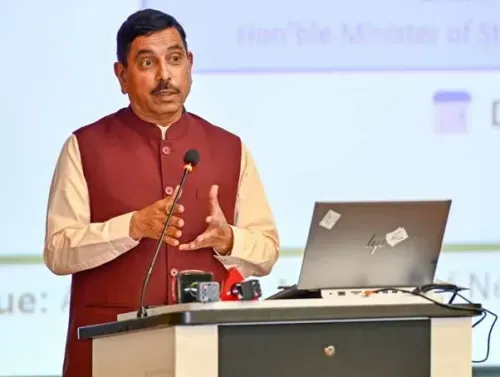
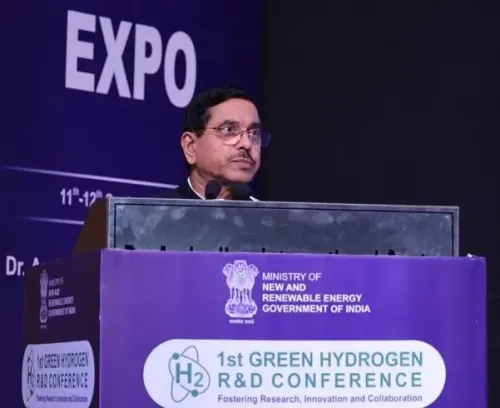
India has staked its claim at the top of the global green hydrogen race. Union Minister of New and Renewable Energy Pralhad Joshi announced on Thursday, 29 October 2026, that Indian developers have secured 23 major contracts under the National Green Hydrogen Mission (NGHM), accumulating supply commitments of over 5.5 lakh metric tonnes per annum (MTPA) — a scale the Minister says makes India the world leader in green hydrogen.
₹90,000 Crore riding on the hydrogen wave
The numbers Joshi cited are staggering in their ambition. More than 70 per cent of the committed supply is earmarked for global exports, positioning India not merely as a domestic clean-energy reformer but as a supplier to the hard-to-abate industries of Europe and East Asia — markets hungry for low-carbon fuel alternatives. The minister pegged total clean-energy investments unlocked by this milestone at ₹90,000 crore.
The backdrop is a mission launched with serious intent. The Union Cabinet approved the National Green Hydrogen Mission in January 2023 with an outlay of ₹19,744 crore, setting a target of 5 million tonnes per annum production capacity by 2030. The reported 5.5 lakh MTPA in supply commitments represents a concrete step — albeit still a fraction of the full-decade target — on that long climb.
Where NGHM fits India's Panchamrit climate architecture
Green hydrogen did not emerge in isolation. Prime Minister Narendra Modi laid the foundation at COP26 in Glasgow in 2021, committing India to what he called Panchamrit — five climate pledges, including 500 GW of non-fossil fuel energy capacity by 2030 and net-zero emissions by 2070. Green hydrogen, produced by splitting water using renewable electricity, is the critical bridge between that surplus renewable power and sectors — steel, shipping, chemicals — that cannot simply plug into a socket.
The NGHM sits inside a broader policy stack: production-linked incentives for solar manufacturing, state-level renewable purchase obligations, and viability gap funding designed to close the cost gap between green and grey hydrogen. The export orientation in the contracts Joshi cited directly mirrors the demand signals that Indian policymakers have tracked from the European Union's push to source 10 million tonnes of green hydrogen imports annually by 2030.
The jobs and net-zero dividend Joshi underlines
Beyond the balance-of-trade logic, the minister framed the milestone in two other registers: green job creation and global net-zero leadership. Green hydrogen supply chains — electrolysers, storage, compression, shipping logistics — are labour-intensive at scale, and India's renewable manufacturing base is already gearing for that supply chain. Whether the job numbers materialise at the pace the mission envisions will depend on how quickly these contracted projects move from commitment to commissioning.
The 23 contracts represent developer intent; execution timelines and actual first-delivery dates will be the harder metric to watch. Policy levers — incentive structures, viability gap funding tranches, port infrastructure for liquid hydrogen or ammonia exports — will determine whether India's headline lead in contracted volume translates into delivered molecules on global markets.
India began this decade as a solar-power underdog that outran nearly every forecast. If the NGHM execution matches the contracting momentum Joshi announced today, the country is not just chasing the clean-energy future — it is writing the supply contracts for it.
Point of View
Not merely a domestic decarbonisation tool — the 70-plus per cent export orientation signals that India is actively competing to be the low-carbon fuel supplier of choice for Europe and East Asia. This framing aligns with a broader BJP government strategy of converting India's renewable surplus into export leverage, mirroring the solar manufacturing push. The critical question the data does not yet answer is whether contracted volume will translate into commissioned capacity within the mission's 2030 horizon, given India's historically uneven record on mega-project execution timelines. If it does, the NGHM could redefine India's position in global energy diplomacy as decisively as the solar programme reshaped its domestic power mix.
NationPress
29 Oct 2026
Frequently Asked Questions
What is India's National Green Hydrogen Mission?
The National Green Hydrogen Mission is a central government scheme approved in January 2023 with an outlay of ₹19,744 crore, aimed at building 5 million tonnes per annum of green hydrogen production capacity in India by 2030.
What did Pralhad Joshi announce about green hydrogen in October 2026?
Union Minister Pralhad Joshi announced that Indian developers have secured 23 major contracts under the NGHM, accumulating over 5.5 lakh MTPA in supply commitments and unlocking ₹90,000 crore in clean-energy investments, with over 70% of supply earmarked for exports.
How much of India's green hydrogen production is meant for export?
According to the minister's announcement, over 70 per cent of the green hydrogen supply commitments secured under the NGHM are dedicated to global exports, targeting markets in Europe and East Asia.
What is India's net-zero target and how does green hydrogen fit in?
India has committed to achieving net-zero emissions by 2070, a pledge made at COP26 in Glasgow in 2021. Green hydrogen is central to this goal as it enables decarbonisation of hard-to-abate sectors like steel, shipping, and chemicals that cannot run directly on electricity.
What is the budget and target of the National Green Hydrogen Mission?
The NGHM has an approved outlay of ₹19,744 crore and targets production capacity of 5 million tonnes per annum of green hydrogen by 2030, alongside the creation of green jobs and a reduction in fossil fuel imports.