India among world's fastest clean energy growers, says Minister Pralhad Joshi
Synopsis
India launched the Green Hydrogen Certification Portal of India on 17 June, as Minister Pralhad Joshi revealed that 15 companies have been incentivised to build 3,000 MW of annual electrolyser capacity and refineries have committed to buying 30,000 MTPA of green hydrogen — the most concrete commercial deployment signals yet under the ₹19,744 crore National Green Hydrogen Mission.
Key Takeaways
Union Minister Pralhad Joshi declared India one of the world's fastest-growing clean energy economies on 17 June at a national workshop in New Delhi .
The National Green Hydrogen Mission , launched in 2023 , carries a financial outlay of ₹19,744 crore .
MNRE launched the Green Hydrogen Certification Portal of India (GHCI) to enable transparent certification and regulatory compliance.
Financial incentives awarded to 15 companies to establish 3,000 MW per year of indigenous electrolyser manufacturing capacity.
Contracts signed for 30,000 MTPA of green hydrogen supply to IOCL , BPCL , HPCL , and NRL .
Six states have notified dedicated Green Hydrogen Policies; four more are finalising their frameworks.
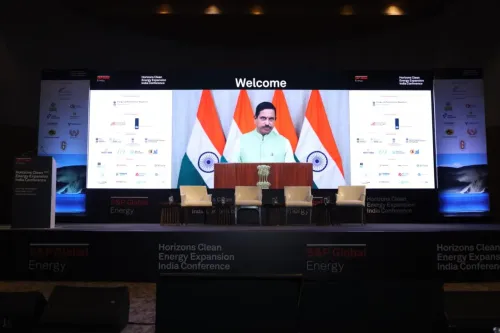
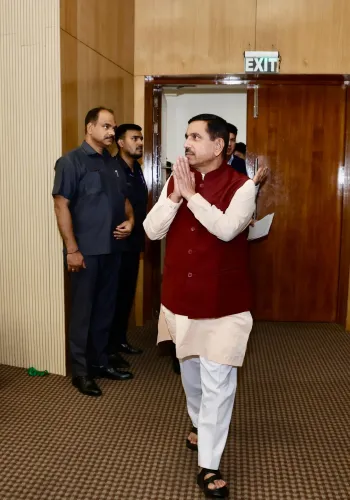
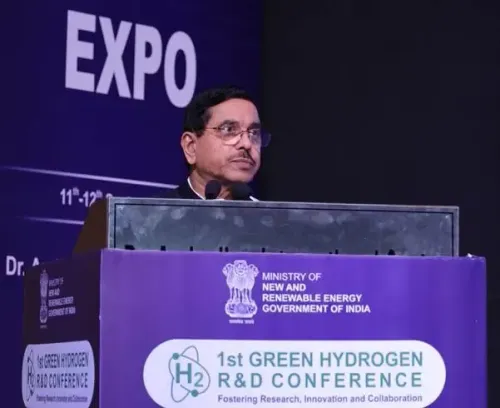
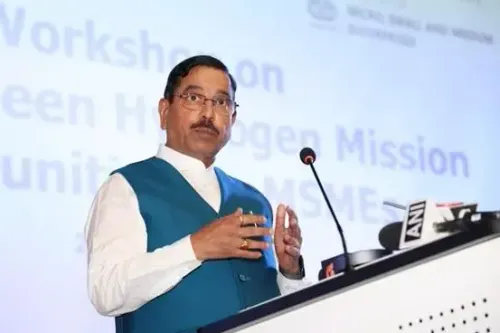
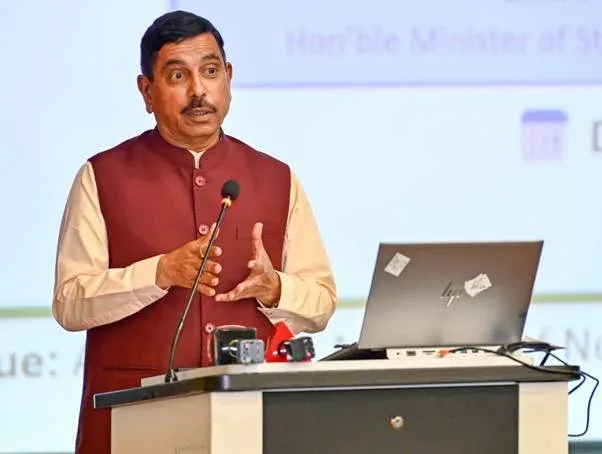
Union Minister for New and Renewable Energy Pralhad Joshi on Wednesday, 17 June declared that India has emerged as one of the world's fastest-growing clean energy economies over the past 12 years, crediting the leadership of Prime Minister Narendra Modi for the transformation. Speaking at a national workshop in New Delhi, Joshi said the National Green Hydrogen Mission is central to the country's push toward a sustainable, self-reliant energy future.
National Workshop Sets the Stage
The remarks came at the National Workshop on 'Strengthening the National Green Hydrogen Mission: Through State Policies, Hubs and Infrastructure', organised by the Ministry of New and Renewable Energy (MNRE). The event brought together state representatives, industry stakeholders, and policymakers to accelerate India's green hydrogen agenda.
During the workshop, Joshi launched the Green Hydrogen Certification Portal of India (GHCI), developed by MNRE to enable transparent certification and regulatory compliance under the Green Hydrogen Certification Scheme. The portal is expected to strengthen accountability and establish a robust framework for India's emerging green hydrogen ecosystem.
Mission Scale and Financial Outlay
The National Green Hydrogen Mission, launched in 2023 with a financial outlay of ₹19,744 crore, aims to position India as a global hub for the production, utilisation, and export of green hydrogen, according to the Minister. Joshi described the mission as a pivotal driver of industrial decarbonisation and long-term energy security.
Notably, financial incentives have been awarded to 15 companies to build indigenous electrolyser manufacturing capacity of 3,000 MW per year — a move aimed at reducing dependence on imported supply chains and deepening domestic manufacturing capabilities.
State Participation and Policy Progress
Joshi called on states to take a more proactive role, noting that six states have already notified dedicated Green Hydrogen Policies, while seven others have incorporated hydrogen-related provisions within their broader industrial and renewable energy policies. A further four states are currently finalising their frameworks.
This comes amid growing recognition that state-level policy coherence is critical to the mission's success — federal targets can only be met if state governments align procurement, land, and grid infrastructure decisions accordingly.
Refinery Sector Contracts Awarded
In a significant step toward mainstreaming green hydrogen in the industrial sector, contracts have been awarded for the supply of 30,000 metric tonnes per annum (MTPA) of green hydrogen to Indian Oil Corporation Limited (IOCL), Bharat Petroleum Corporation Limited (BPCL), Hindustan Petroleum Corporation Limited (HPCL), and Numaligarh Refinery Limited (NRL). The move marks one of the first large-scale commercial deployment commitments under the mission.
What Comes Next
With the certification portal now live and state policies taking shape, the mission enters a critical execution phase. Industry observers note that electrolyser cost trajectories, green power availability, and offtake certainty will determine whether India can meet its green hydrogen targets on schedule. The government's next steps on demand creation and export frameworks are being closely watched by both domestic manufacturers and international partners.
Point of View
000 MTPA refinery contracts are the most tangible execution signals the National Green Hydrogen Mission has produced since its 2023 announcement — but the harder test lies ahead. Electrolyser costs in India remain well above global targets, and green power availability at competitive tariffs is still patchy. The fact that only six states have notified dedicated policies two years into a ₹19,744 crore mission points to a familiar federal coordination gap. Without demand-side certainty beyond public-sector refinery contracts, private capital will stay cautious — and India's ambition to become a green hydrogen export hub will remain a headline rather than a supply chain.
NationPress
27 Sept 2026
Frequently Asked Questions
What is the National Green Hydrogen Mission?
The National Green Hydrogen Mission is a Government of India initiative launched in 2023 with a financial outlay of ₹19,744 crore, aimed at positioning India as a global hub for the production, utilisation, and export of green hydrogen. It covers electrolyser manufacturing incentives, pilot projects, and demand creation in sectors such as refining and fertilisers.
What is the Green Hydrogen Certification Portal of India (GHCI)?
The GHCI is a digital portal developed by the Ministry of New and Renewable Energy to facilitate transparent certification and regulatory compliance under India's Green Hydrogen Certification Scheme. It was formally launched by Minister Pralhad Joshi on 17 June at the national workshop in New Delhi.
Which companies received green hydrogen supply contracts?
Contracts for the supply of 30,000 metric tonnes per annum of green hydrogen have been awarded to Indian Oil Corporation Limited (IOCL), Bharat Petroleum Corporation Limited (BPCL), Hindustan Petroleum Corporation Limited (HPCL), and Numaligarh Refinery Limited (NRL), marking one of the first large-scale commercial commitments under the mission.
How many states have green hydrogen policies in place?
As of 17 June, six states have notified dedicated Green Hydrogen Policies, seven others have incorporated hydrogen-related provisions into their industrial or renewable energy policies, and four more states are currently finalising their frameworks.
What is India's electrolyser manufacturing target under the mission?
Financial incentives have been awarded to 15 companies to establish indigenous electrolyser manufacturing capacity of 3,000 MW per year. The goal is to reduce India's reliance on imported electrolysers and build a self-sufficient domestic supply chain for green hydrogen production.