Is India Ready for a Major Energy Transformation with Green Hydrogen?
Synopsis
India is on the verge of a monumental energy transformation with its ambitious Green Hydrogen plan targeting 900 KTPA by 2030. This initiative promises not only cleaner industries and low-carbon supply chains but also the creation of new job opportunities, marking a significant step towards a sustainable future under Prime Minister Modi's leadership.
Key Takeaways
India plans to produce 900 KTPA of Green Hydrogen by 2030.
Public Sector Undertakings are critical in achieving this target.
The Green Hydrogen Certification Scheme ensures authenticity in production.
The initiative aims to reduce fossil fuel dependency and imports.
India's installed non-fossil energy capacity is nearing 260 GW.
New Delhi, Dec 14 (NationPress) The Minister of Petroleum and Natural Gas, Hardeep Singh Puri, announced on Sunday that India's "next significant energy transformation has arrived" with a plan to develop 900 KTPA (kilo tonnes per annum) of Green Hydrogen by 2030. This initiative aims to pave the way for cleaner industries, low-carbon supply chains, and new-age employment opportunities in the future.
In a post shared on X, the minister referred to this initiative as "a daring move towards a more sustainable economy under the guidance of Prime Minister Narendra Modi."
Public Sector Undertakings (PSUs) in India's oil sector, such as Indian Oil, Bharat Petroleum, Hindustan Petroleum, and the upstream giant ONGC, are actively working on a substantial portion of the country's green hydrogen capacity to meet this ambitious target, all part of the broader National Green Hydrogen Mission. This mission is designed to reduce dependency on fossil fuels, minimize imports, and establish India as a leader in clean energy, aided by various incentive schemes and domestic manufacturing.
This endeavor aligns with the overarching goals of the National Green Hydrogen Mission, which sets a target of producing 5 MMT (Million Metric Tonnes) by 2030 and provides incentives for electrolyser manufacturing and green hydrogen production.
The National Green Hydrogen Mission is a strategic initiative from the government aimed at positioning India as a global hub for green hydrogen, attracting significant investments and generating employment.
The Petroleum Minister further emphasized the advancements made under the Green Hydrogen Certification Scheme (GHCI), indicating that state energy companies are projected to save the nation Rs 1 lakh crore in imports.
"India is cultivating trust in every molecule of hydrogen. The Green Hydrogen Certification Scheme (GHCI), introduced in April 2025, guarantees that hydrogen is authentically green—produced using renewable energy with emissions lower than 2 kg of carbon dioxide per kg," Puri previously stated.
This initiative positions India to achieve its climate objectives while fostering a new clean energy economy, with PSUs playing a pivotal role in enhancing domestic production capabilities.
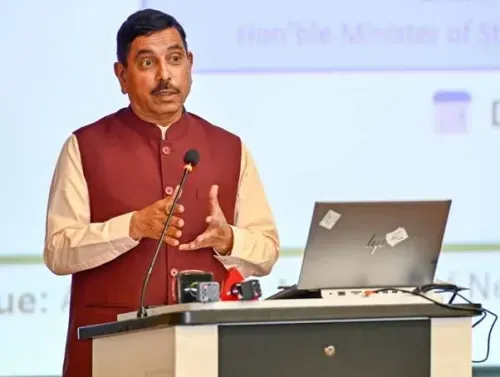
Union Minister Shripad Y. Naik mentioned last month that India is steadily progressing towards a target of 500 GW of non-fossil capacity by 2030 and aims for net-zero emissions by 2070.
The minister underscored the transition of the National Green Hydrogen Mission from planning to execution, with incentive schemes valued at Rs 17,000 crore and projects allocated for 3,000 MW per annum of domestic electrolyser manufacturing and 862,000 tonnes per annum of green hydrogen production.
He also noted that India's installed capacity for non-fossil fuel-based power generation has nearly reached 260 GW, primarily driven by solar and wind energy.
Point of View
I assert that India's commitment to Green Hydrogen development aligns with global sustainability goals. This initiative, supported by significant government policies, is a crucial step towards reducing carbon emissions and fostering economic growth. With the involvement of PSUs, India is poised to emerge as a leader in the clean energy sector, ensuring energy security and job creation for the nation.
NationPress
3 Oct 2026
Frequently Asked Questions
What is the target for Green Hydrogen production in India?
India aims to produce 900 KTPA of Green Hydrogen by 2030.
How does the Green Hydrogen Certification Scheme work?
The GHCI ensures that hydrogen is produced using renewable energy with emissions below 2 kg of CO2 per kg.
What role do PSUs play in this initiative?
Public Sector Undertakings are key players in developing India's green hydrogen capacity.
What is the broader goal of the National Green Hydrogen Mission?
The mission aims to establish India as a global hub for green hydrogen and reduce fossil fuel dependence.
How much is India investing in this initiative?
The initiative includes incentive schemes worth Rs 17,000 crore.