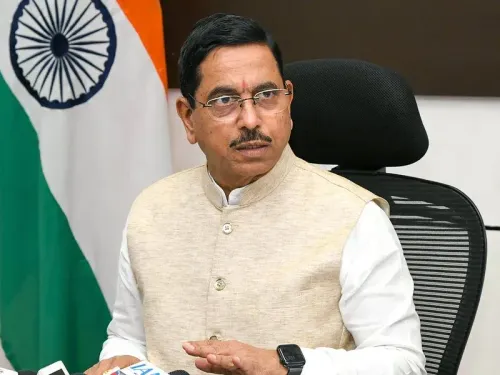
Joshi: India ranks 3rd globally in green hydrogen contracts
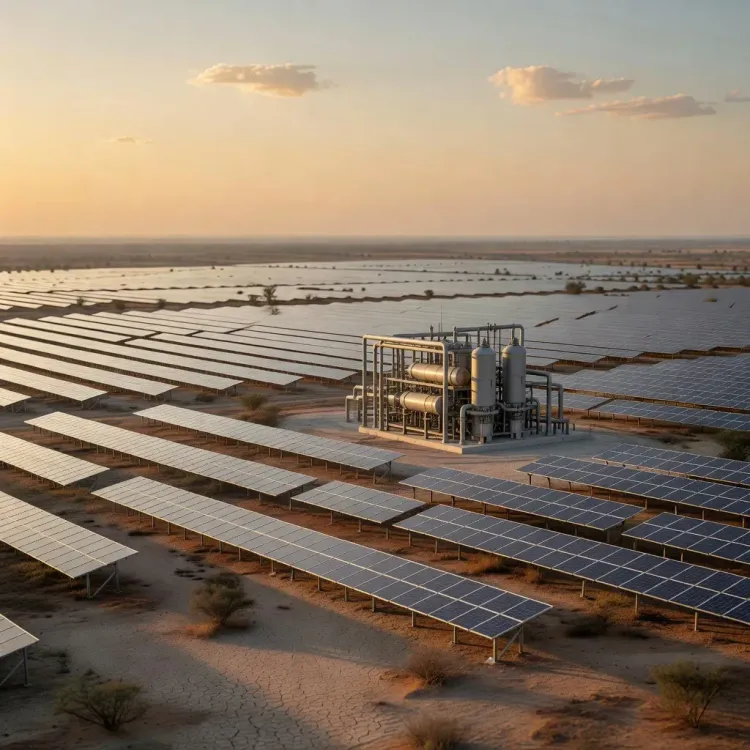
Synopsis
India has ranked third globally in cumulative contracted clean hydrogen volumes, with 0.3 MTPA secured through binding contracts and over 1 MTPA via green ammonia export deals, according to BloombergNEF data cited by Minister Pralhad Joshi on October 16, 2026.
Key Takeaways
India ranks 3rd globally in cumulative contracted clean hydrogen volumes, per BloombergNEF's India Transition Factbook 2026.
0.3 million tonnes per annum of clean hydrogen has been secured through binding contracts.
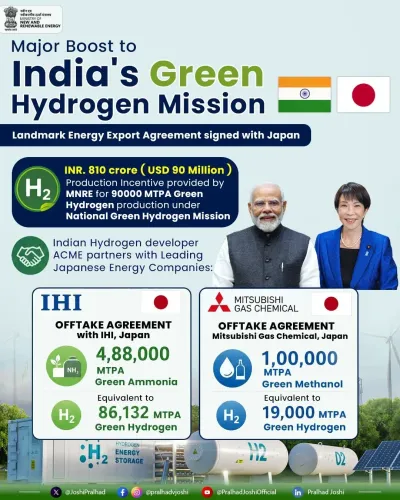
Over 1 million tonnes per annum is covered by major green ammonia export agreements.
The National Green Hydrogen Mission (approved January 2023) targets 5 MTPA of green hydrogen production by 2030.
India's strategy — binding offtake contracts plus ammonia export focus — mirrors approaches by Australia and Chile , established hydrogen-export leaders.
Pilot projects and new export-oriented ammonia facilities are the immediate next milestones under the mission.
India has claimed the third spot on the global clean hydrogen leaderboard — and the numbers behind that ranking are striking. Union Consumer Affairs and New and Renewable Energy Minister Pralhad Joshi shared data from BloombergNEF's India Transition Factbook 2026 on Friday, October 16, citing 0.3 million tonnes per annum of clean hydrogen secured through binding contracts and over 1 million tonnes per annum covered by major green ammonia export agreements.
What the BloombergNEF Factbook 2026 says about India's position
According to the BloombergNEF data referenced by Joshi, India ranks third globally in cumulative contracted clean hydrogen volumes. That places it alongside countries like Australia and Chile — nations that have spent years positioning themselves as hydrogen-export powerhouses. For India, a country that still imports the bulk of its oil needs, a binding offtake pipeline of this scale represents a meaningful structural shift rather than aspirational language.
The green ammonia export agreements are particularly significant. Ammonia — which stores and transports hydrogen in a chemically stable form — is increasingly the preferred vehicle for cross-border clean-hydrogen trade, especially to energy-hungry markets in Japan, South Korea, and Europe. India's early lock-in of over a million tonnes per annum in such agreements mirrors a playbook already running in the southern hemisphere.
The National Green Hydrogen Mission behind the momentum
The policy spine of this progress is the National Green Hydrogen Mission, approved in January 2023, which set a target of 5 million tonnes of annual green hydrogen production by 2030 along with incentives for domestic electrolyser manufacturing. That mission created the regulatory and financial architecture — production-linked incentive schemes, strategic hydrogen hubs — that made commercial contracting possible at scale.
India's trajectory mirrors its approach to solar power a decade ago: set an audacious national target, build enabling policy, then let competitive markets drive the contracting. The hydrogen mission explicitly ties into India's updated Nationally Determined Contributions under the Paris Agreement and its pledge to reach net-zero emissions by 2070.
What the third-place ranking means for India's energy security calculus
Green hydrogen is not just a climate play — it is an energy-security play. India spends hundreds of billions of dollars annually on fossil fuel imports. A domestic green hydrogen industry fed by abundant solar and wind resources could displace imported natural gas in fertilizer production, imported coking coal in steel, and diesel in heavy transport. The renewable energy developers and fertilizer and steel industries watching this space have the most immediate stake in whether the contracted volumes actually translate into operational plants.
Pilot projects under the National Green Hydrogen Mission and the finalisation of additional export-oriented ammonia facilities are the next milestones to watch. The contracts are signed; the infrastructure race is now on.
India's clean hydrogen story has moved from a government target on paper to a ranked global position backed by binding commercial agreements — and the country is only midway through its 2030 timeline.
Point of View
Lending the milestone external credibility at a time when India is actively courting long-term energy partnerships with Japan, South Korea, and the EU. The green ammonia emphasis also signals that India's hydrogen strategy is as much about export revenue and geopolitical positioning as domestic decarbonisation. The harder test — whether contracted volumes materialise as operational plants before 2030 — will determine whether this ranking is a launchpad or a high-water mark.
NationPress
16 Oct 2026
Frequently Asked Questions
What is India's rank in global green hydrogen production?
According to BloombergNEF's India Transition Factbook 2026, India ranks 3rd globally in cumulative contracted clean hydrogen volumes, with 0.3 million tonnes per annum secured through binding contracts.
What is India's National Green Hydrogen Mission?
The National Green Hydrogen Mission was approved in January 2023. It targets 5 million tonnes of annual green hydrogen production by 2030 and includes incentives for domestic electrolyser manufacturing.
What are India's green ammonia export agreements?
India has secured over 1 million tonnes per annum in green ammonia export agreements, according to the BloombergNEF data cited by Minister Pralhad Joshi. Green ammonia is a key carrier for transporting hydrogen to international markets.
Who is Pralhad Joshi and what ministry does he head?
Pralhad Joshi is a senior BJP leader from Karnataka who serves as Union Minister of Consumer Affairs, Food and Public Distribution, and Minister of New and Renewable Energy in the Government of India.
Which countries are ahead of India in clean hydrogen contracts?
The BloombergNEF ranking places India third globally; nations like Australia and Chile are among the countries that have been established hydrogen-export leaders, though the specific top-two countries from the 2026 report have not been independently confirmed.