Joshi hails WEF Energy Transition Index 2026 ranking for India

Synopsis
The World Economic Forum's Energy Transition Index 2026 has ranked India among the world's top clean energy performers. Union Minister Pralhad Joshi credited PM Modi's leadership, linking the recognition to India's 500 GW non-fossil fuel target, green job creation, and the Viksit Bharat vision.
Key Takeaways
The World Economic Forum's Energy Transition Index 2026 has recognised India as one of the world's strongest performers in clean energy transition.
Union Minister Pralhad Joshi announced the recognition on 27 June 2026 , attributing it to PM Narendra Modi 's leadership.
India's clean energy targets include 500 GW of non-fossil fuel capacity by 2030 and net-zero emissions by 2070 , as pledged under the Panchamrit strategy at COP26 .
India co-founded the International Solar Alliance in 2015 and ranks among the world's top five renewable energy producers .
Minister Joshi highlighted green job creation and energy self-reliance as key pillars of India's clean energy push under the Viksit Bharat vision.
The recognition is expected to strengthen India's position in multilateral climate forums ahead of COP30 .
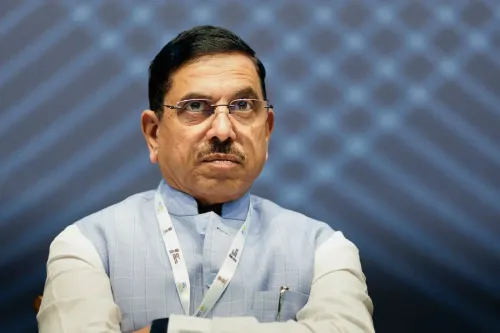
Union Minister of New and Renewable Energy Pralhad Joshi on Saturday, 27 June 2026, credited Prime Minister Narendra Modi's leadership after the World Economic Forum's Energy Transition Index 2026 recognised India as one of the world's strongest performers in clean energy transition.
Context
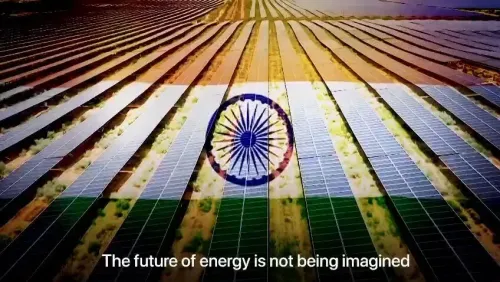
Posting on X, Minister Joshi wrote that 'India's clean energy journey continues to set global benchmarks,' pointing to the WEF Energy Transition Index 2026 as an external affirmation of the country's renewable energy trajectory. He framed the recognition as validation of India's ambition to lead the global clean energy movement, adding that the country is 'creating green jobs and advancing towards a resilient, self-reliant and Viksit Bharat [Developed India].'
The post accompanied a video and was tagged with #EnergyTransition, #RenewableEnergy, and #CleanEnergy, signalling an effort to amplify the index's findings to a domestic and international audience simultaneously.
Policy backdrop
India's renewable energy ambitions have been codified through a series of escalating targets. At COP26 in Glasgow in 2021, India announced its Panchamrit strategy, which includes achieving 500 GW of non-fossil fuel capacity by 2030 and reaching net-zero emissions by 2070. These commitments form the spine of India's Nationally Determined Contributions under the Paris Agreement.
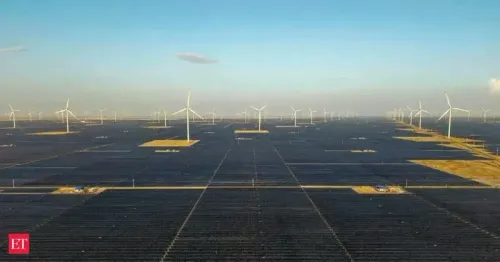
India co-founded the International Solar Alliance in 2015 to accelerate solar deployment across developing nations, and the National Solar Mission, launched in 2010, set early targets of 175 GW of renewable capacity by 2022. Successive expansions of these targets have helped India rank among the world's top five renewable energy producers.
The current administration has linked clean energy growth to the broader Atmanirbhar Bharat (self-reliant India) framework, arguing that domestic renewable manufacturing and deployment reduce dependence on fossil fuel imports and strengthen energy security.
Stakeholders and impact
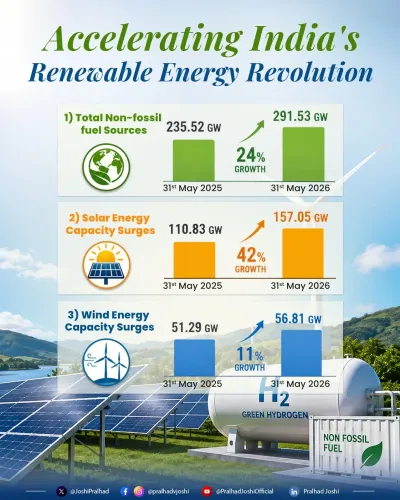
The renewable energy industry stands to benefit most directly from sustained policy momentum, particularly as the government pushes domestic solar panel manufacturing, wind turbine production, and green hydrogen development. A high ranking on a globally watched index such as the WEF's Energy Transition Index can attract foreign investment and multilateral financing into India's clean energy sector.
Green job creation — explicitly cited by Minister Joshi — is an increasingly prominent political argument, linking climate policy to employment generation for a young and growing workforce. India's positioning in multilateral forums such as the G20 and the International Solar Alliance also benefits from credible third-party assessments of its energy transition progress.
What's next
Attention will now turn to India's next renewable capacity milestone reports and any revised targets the government may announce ahead of COP30. Parliamentary debates on green energy financing and grid integration legislation are also expected to intensify as India races toward its 2030 non-fossil fuel capacity goal.
The WEF recognition, if sustained in subsequent editions of the index, could strengthen India's hand in negotiations over climate finance and technology transfer at future multilateral summits, reinforcing the government's narrative of India as a responsible and ambitious clean energy leader.
Point of View
The BJP-led government reinforces a narrative that India is not merely a developing nation seeking climate concessions but an active leader shaping the global energy transition. The green jobs framing is equally strategic, connecting climate policy to a domestic economic argument that has broad electoral resonance. This positions renewable energy not just as an environmental commitment but as a pillar of the Viksit Bharat development agenda — a linkage the government has been cultivating consistently since the 2021 Panchamrit announcements.
NationPress
25 Sept 2026
Frequently Asked Questions
What is the WEF Energy Transition Index 2026 and India's ranking?
The World Economic Forum's Energy Transition Index evaluates countries on energy security, access, and sustainability. The 2026 edition recognised India as one of the world's strongest performers in clean energy transition, according to Union Minister Pralhad Joshi's post on 27 June 2026.
What is India's renewable energy target by 2030?
India has committed to achieving 500 GW of non-fossil fuel electricity capacity by 2030 as part of its Panchamrit strategy announced at COP26 in Glasgow in 2021, alongside a long-term net-zero target of 2070.
What is Viksit Bharat and how does it relate to clean energy?
Viksit Bharat is the Indian government's official vision to transform India into a developed nation by 2047. Clean energy, energy self-reliance, and green job creation are explicitly embedded in this framework as drivers of sustainable economic growth.
What is India's role in the International Solar Alliance?
India co-founded the International Solar Alliance in 2015 alongside France to accelerate solar energy deployment among member countries, particularly developing nations. It is one of India's flagship multilateral initiatives in the clean energy space.
How does India rank globally in renewable energy production?
India ranks among the world's top five renewable energy producers, having steadily scaled solar and wind capacity over the past decade while balancing rapid economic growth with its Paris Agreement climate obligations.