How is India Leading the Charge in Clean Energy Growth and Affordability?
Synopsis
Discover how India is leading the global clean energy transition through innovative solutions and strong international collaboration at the World Economic Forum 2026. Union Minister Pralhad Joshi emphasizes affordability, sustainability, and the role of AI in transforming the energy landscape for the Global South.
Key Takeaways
India is a leader in promoting affordable and inclusive energy transitions.
Collaborative discussions at the World Economic Forum emphasize the need for global cooperation.
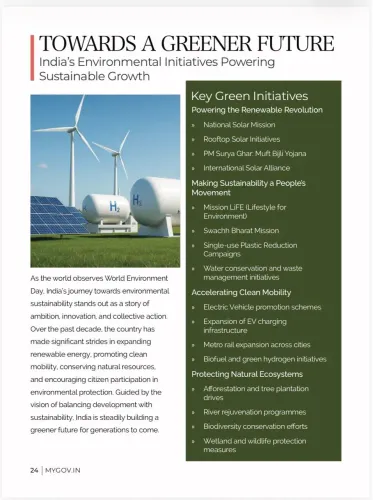
Flagship initiatives like PM Surya Ghar Muft Bijli Yojana and PM-KUSUM are expanding access to clean energy.
The role of AI in enhancing energy forecasting and grid reliability is pivotal.
India's experience offers valuable lessons for the Global South .
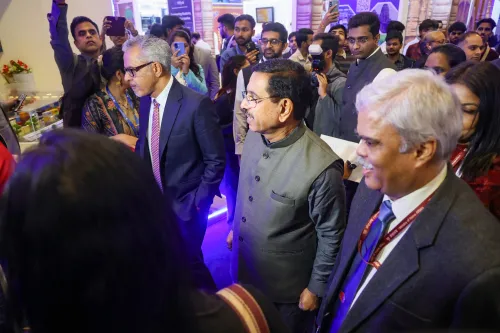
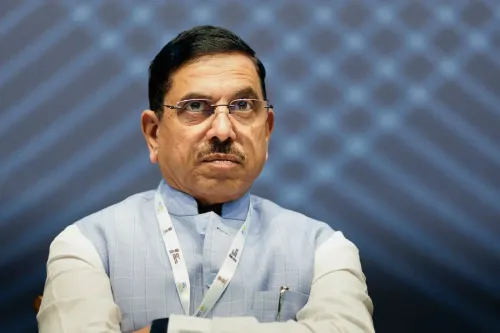
New Delhi, Jan 21 (NationPress) Union Minister for New and Renewable Energy Pralhad Joshi engaged in a series of high-profile discussions at the World Economic Forum Annual Meeting 2026 in Davos, highlighting India's role as a frontrunner in promoting a just, affordable, and inclusive global energy transition.
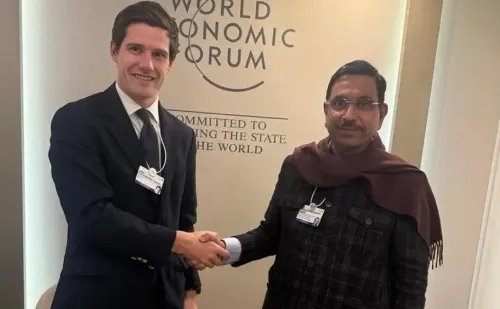
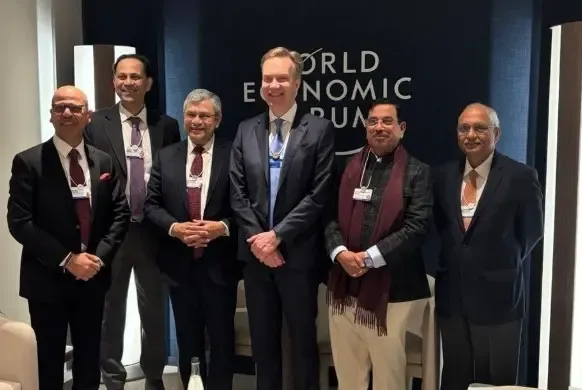
During his meetings, Joshi conversed with Borge Brende, President and CEO of the World Economic Forum, alongside Union Minister of Railways, Electronics & IT and Information & Broadcasting Ashwini Vaishnaw. The discussions underscored the significance of international collaboration in tackling shared economic and developmental challenges, emphasizing the vital role of multilateral platforms like the World Economic Forum in fostering global consensus.
At a roundtable event, Joshi shared insights from India's rapid advancement in rooftop, agricultural, and decentralized renewable energy solutions, particularly beneficial for the Global South. Notable attendees included Devendra Fadnavis, Chief Minister of Maharashtra, and Amon Murwira, Minister of Foreign Affairs and International Trade from Zimbabwe.
The Union Minister noted that, under the guidance of Prime Minister Narendra Modi, India's clean energy transition illustrates that rapid growth, affordability, and sustainability can indeed coexist. He elaborated on flagship initiatives such as the PM Surya Ghar Muft Bijli Yojana for rooftop solar adoption and PM-KUSUM for solar-powered agriculture, which are broadening clean energy access for households and farmers while reducing costs.
Joshi emphasized the importance of decentralized renewable energy systems and mini-grids in enhancing reliability and resilience in remote areas with weak power grids.
Highlighting India's dedication to inclusive energy transitions and stronger South-South cooperation, he reiterated that India would keep sharing practical, scalable solutions through platforms like the International Solar Alliance, as the global community collaborates towards a resilient and climate-secure future.
During a session on ‘De-Risking the Green Leap: Subnational Blueprints for Utility-Scale Energy Transition Session’ alongside Madhya Pradesh Chief Minister Mohan Yadav, Joshi asserted that India is currently in the global spotlight for its leadership in the renewable energy transition. He stated that India's energy transition is being propelled not just nationally but also through robust, reform-oriented states converting policy into real outcomes.
Joshi pointed out that the core challenge in the global energy transition today is not ambition or capital, but effective execution, and stated that India's state-led renewable energy success stories provide valuable lessons globally.
On the sidelines of WEF 2026, Pralhad Joshi met with Guillaume Vermersch, Group Chief Financial Officer of Mercuria Group, to discuss enhancing collaboration aligned with India's clean energy and transition goals, including scaling renewable energy through market mechanisms, strengthening carbon markets and climate finance, and advancing green hydrogen, biofuels, and energy storage.
The Minister welcomed Mercuria Group's intention to invest nearly 50% in green energy and its interest in India's growing clean energy sector.
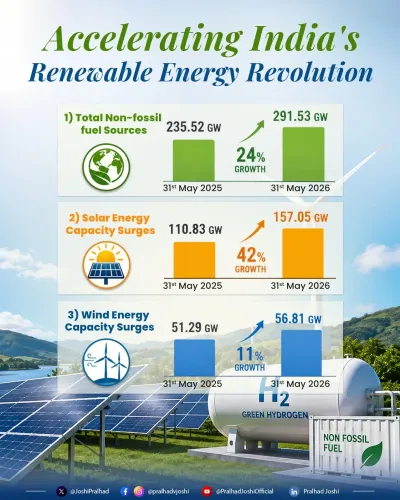
Highlighting India's scale and rapid execution, he noted that solar tariffs have dropped by nearly 80%, renewable energy coupled with storage has become cost-competitive, and that the prices for green hydrogen and green ammonia discovered in India rank among the most competitive globally, with domestic renewable energy manufacturing capacity reaching 144 GW.
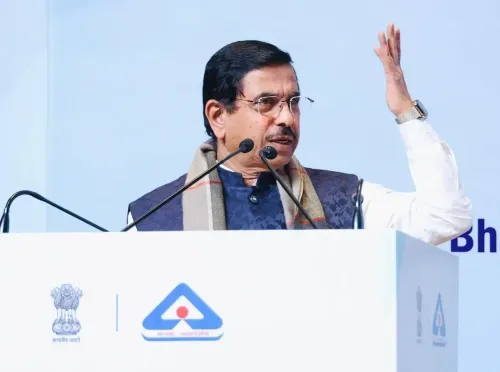
Joshi also delivered a keynote address during the session titled ‘Call to Action: Spotlight on the Global Mission on AI for Energy’ at the World Economic Forum, showcasing India’s energy transition journey and its significance for the global community, especially the Global South.
The Union Minister highlighted the transformational potential of Artificial Intelligence in the energy sector, asserting that AI can enhance forecasting, minimize losses, reduce costs, and bolster grid reliability.
Point of View
I believe this engagement at the World Economic Forum marks a pivotal moment for India, showcasing its potential to lead in renewable energy. The emphasis on affordability and inclusivity aligns perfectly with the global demand for sustainable practices. India's initiatives reflect a proactive stance, and the collaboration with global leaders reinforces the notion that shared solutions are vital in combating climate change and promoting economic development.
NationPress
22 Sept 2026
Frequently Asked Questions
What initiatives are highlighted by Pralhad Joshi?
Pralhad Joshi highlighted initiatives like the PM Surya Ghar Muft Bijli Yojana for rooftop solar and PM-KUSUM for solar-powered agriculture.
What is India's commitment towards clean energy?
India is committed to an inclusive energy transition, sharing practical solutions through platforms like the International Solar Alliance.
How does AI play a role in India's energy transition?
AI can enhance forecasting, reduce losses, lower costs, and improve grid reliability in the energy sector.
What are the achievements in solar tariffs in India?
Solar tariffs in India have declined by nearly 80%, making renewable energy more cost-effective.
Who attended the discussions at the World Economic Forum?
Notable attendees included Borge Brende, Ashwini Vaishnaw, Devendra Fadnavis, and Amon Murwira.