Joshi Highlights German Envoy's Praise for India's Renewable Energy
Synopsis
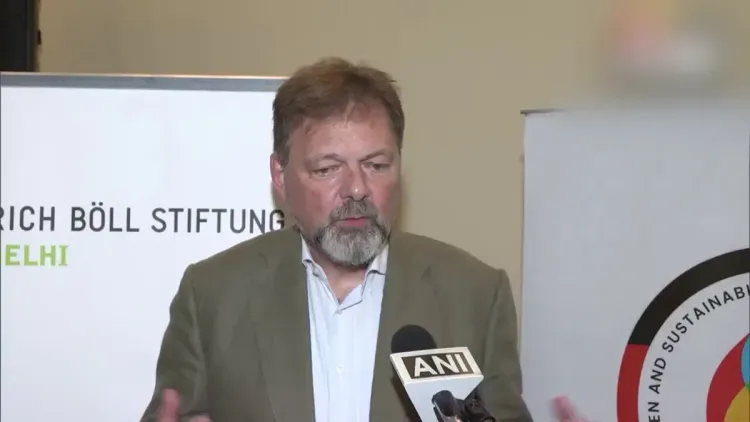
Union Minister Pralhad Joshi highlighted the German Ambassador's description of India's renewable energy sector as 'top-notch,' citing it as international recognition of the country's climate leadership under PM Modi and its progress toward the 500 GW non-fossil capacity target by 2030.
Key Takeaways
Union Minister Pralhad Joshi shared remarks by the German Ambassador to India calling the country's renewable energy sector 'top-notch' on 10 July 2026 .
Joshi credited PM Narendra Modi's leadership for India's growing international recognition in clean energy.
India has committed to 500 GW of non-fossil fuel capacity by 2030 under its updated NDCs announced at COP26 in 2021 .
PM Modi presented the Panchamrit climate pledges at Glasgow , including a net-zero target by 2070 .
Germany is a key bilateral partner in India's clean energy transition, with cooperation spanning solar, wind, and green hydrogen.
The International Solar Alliance , launched by India in 2015 , underpins its multilateral leadership in global solar deployment.
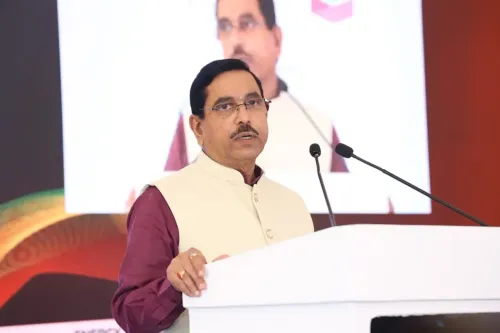
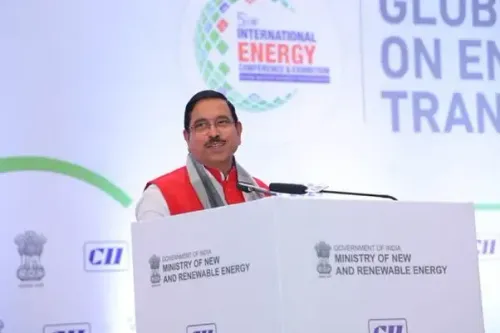
Union Minister for New and Renewable Energy Pralhad Joshi on Friday, 10 July 2026, shared remarks by the German Ambassador to India describing the country's renewable energy sector as 'top-notch,' citing the recognition as evidence of India's growing stature in global clean energy. Joshi attributed the sector's progress to the leadership of Prime Minister Narendra Modi, framing the diplomatic endorsement as validation of India's climate commitments on the world stage.
Context
In his post, Joshi quoted the German Ambassador as commending India's achievements in renewable energy and calling the country's ecosystem 'top-notch.' The minister described the sector as 'a key driver of sustainable growth and global climate action,' underlining that India's progress is 'earning recognition from partners around the world.' The remarks reflect an ongoing diplomatic dialogue between India and Germany on clean energy cooperation.
Germany has been a long-standing partner in India's clean energy transition, engaging through technology cooperation, investment channels, and joint research programmes. The ambassador's comments, as cited by Joshi, reinforce the bilateral dimension of India's renewable energy push beyond domestic policy targets.
Policy Backdrop
India's renewable energy ambitions are anchored in a set of commitments made at the international level. At COP26 in Glasgow in 2021, PM Modi presented the Panchamrit (five nectar elements) climate pledges, which include achieving 500 GW of non-fossil fuel-based electricity capacity by 2030 and reaching net-zero emissions by 2070. These updated Nationally Determined Contributions (NDCs) set the framework within which the renewable sector has expanded.
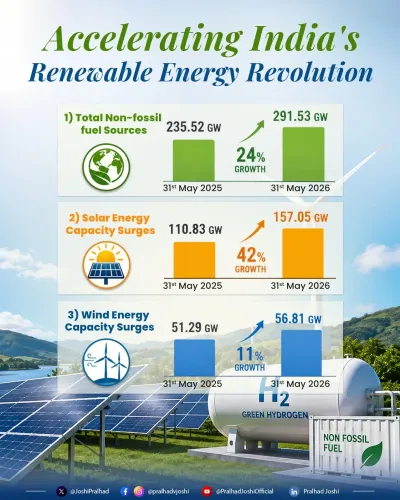
India crossed the 100 GW installed renewable capacity milestone around 2021, building on the initial 175 GW target announced in 2015. Solar and wind energy have led this expansion, with green hydrogen emerging as a newer priority. The International Solar Alliance, an India-initiated multilateral platform launched in 2015, has further cemented the country's role as a leader in global solar deployment.
Joshi, who holds the renewable energy portfolio alongside Consumer Affairs, has been a vocal advocate for positioning India's clean energy growth as both an economic and a geopolitical asset. His post situates the German ambassador's remarks within this larger narrative of international recognition.
Stakeholders and Impact
The diplomatic endorsement carries significance for Indian renewable energy firms, project developers, and technology investors who look to international partnerships for capital and expertise. Germany's interest in India's market scale and policy framework has historically translated into bilateral cooperation on solar manufacturing, energy storage, and now green hydrogen.
For the BJP-led government, external validation of its renewable energy record serves a dual purpose: reinforcing domestic policy credibility and strengthening India's negotiating position ahead of future international climate forums. The reference to PM Modi's 'leadership and vision' follows a consistent pattern of linking large-scale policy outcomes to the prime minister's personal direction.
What's Next
Attention will turn to the progress of India-Germany joint projects in green hydrogen and technology transfer, areas identified as the next frontier of bilateral clean energy cooperation. India's positioning ahead of upcoming COP sessions will also be closely watched, as the country seeks to balance its development imperatives with accelerating climate commitments.
With the 2030 target of 500 GW non-fossil capacity now the central benchmark, the pace of capacity addition and the depth of international partnerships — including with Germany — will determine whether India's 'top-notch' reputation translates into sustained structural leadership in the global clean energy order.
Point of View
Not merely a technical cooperation channel.
NationPress
9 Oct 2026
Frequently Asked Questions
What did the German Ambassador say about India's renewable energy?
The German Ambassador to India described the country's renewable energy sector as 'top-notch,' according to a post shared by Union Minister Pralhad Joshi on 10 July 2026. The remarks were cited as evidence of growing international recognition of India's clean energy progress.
What is India's renewable energy target by 2030?
India has committed to achieving 500 GW of non-fossil fuel-based electricity capacity by 2030 , a goal formalised as part of its updated Nationally Determined Contributions announced at COP26 in Glasgow in 2021 .
Who is Pralhad Joshi and what ministry does he hold?
Pralhad Joshi is a senior BJP leader from Karnataka who serves as Union Minister for New and Renewable Energy as well as Minister of Consumer Affairs, Food and Public Distribution in the central government.
What is India's net-zero target year?
India has committed to achieving net-zero carbon emissions by 2070 , as announced by PM Narendra Modi through the Panchamrit climate pledges at COP26 in Glasgow in 2021 .
How is Germany involved in India's clean energy sector?
Germany is a longstanding partner in India's clean energy transition, engaging through technology cooperation, investment, and joint research in areas including solar energy, wind power, and green hydrogen projects.