CM Fadnavis: Maharashtra safer than most states

Synopsis
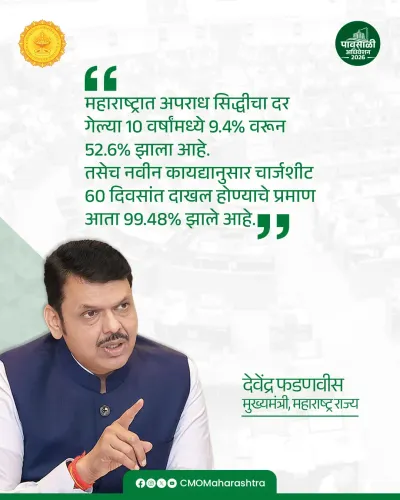
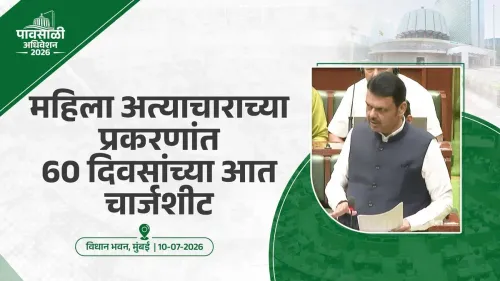
Chief Minister Devendra Fadnavis told the Maharashtra Legislative Assembly on 10 July 2026 that the state records a lower crime rate than most other states and is among India's safer states, making the assertion during the Monsoon Session 2026 in Mumbai.
Key Takeaways
Devendra Fadnavis made the law-and-order claim on the floor of the Maharashtra Legislative Assembly on 10 July 2026 .
The statement was made during the Monsoon Session 2026 , lending it formal legislative standing.
Fadnavis asserted that Maharashtra has a lower crime rate compared to other states and is a safer state.
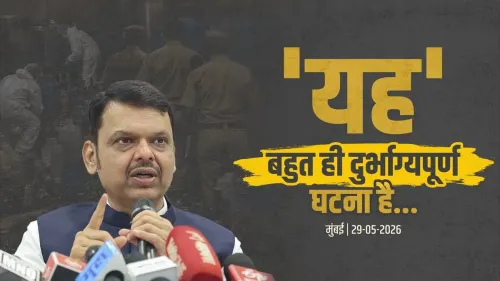
The claim was made in both English and Marathi, with a video accompanying the post on X.
Maharashtra governments have cited NCRB crime data in assembly debates consistently since 2014 .
The next NCRB annual report will be the key document to verify or challenge the comparative claim.
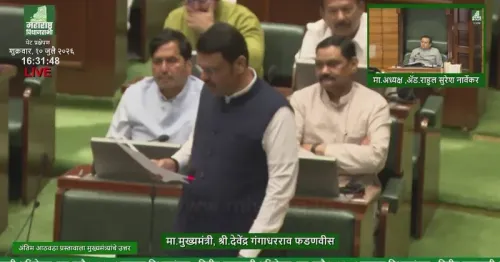
Maharashtra Chief Minister Devendra Fadnavis declared on Friday, 10 July 2026 that the state has a lower crime rate compared to other states and is among the safer states in the country. He made the statement on the floor of the Maharashtra Legislative Assembly in Mumbai during the ongoing Monsoon Session 2026.
Context
Posting on X, Fadnavis stated in both English and Marathi: 'इतर राज्यांच्या तुलनेत महाराष्ट्रात गुन्हेगारीचे प्रमाण कमी असून, राज्य अधिक सुरक्षित आहे' ('Compared to other states, the crime rate in Maharashtra is lower and the state is safer'). The assertion was made from the floor of the Vidhan Sabha, lending it the weight of an official government position placed on legislative record.
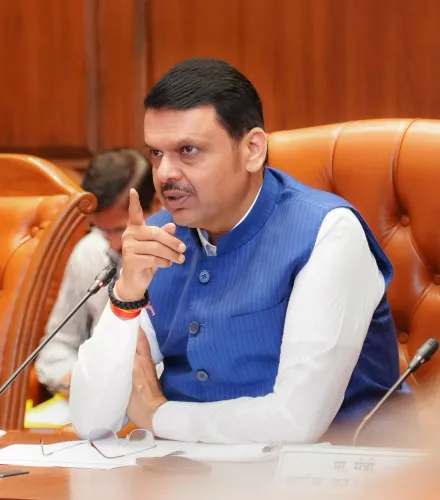
The statement was accompanied by a video, suggesting it was drawn from the chief minister's address inside the assembly chamber. Such claims during session proceedings carry formal significance as they are subject to scrutiny by opposition members present in the house.
Policy Backdrop
Maharashtra governments have a documented practice of citing state-level crime data — typically drawn from the National Crime Records Bureau (NCRB) annual report — during assembly debates on law and order. This pattern has been consistent across multiple sessions since 2014, with ruling dispensations using comparative statistics to defend their governance record against opposition criticism.
As the country's financial hub and most populous state by urban concentration, Maharashtra faces particular scrutiny on policing and public safety. Official emphasis on crime metrics has therefore been a recurring feature of home-department discussions in the legislature, regardless of which party holds power.
Stakeholders and Impact
The primary stakeholders are Maharashtra's approximately 12 crore residents, whose daily security and perception of safety are directly tied to the state's policing outcomes. The Maharashtra Police force, one of the largest in the country, is the institutional arm through which such governance claims are operationalised.
For the ruling BJP-led Mahayuti alliance, the claim serves as a political counter to opposition narratives around law and order. Opposition parties in the assembly are likely to demand the specific data underpinning the comparison, making the next NCRB report a key reference document for this debate.
What's Next
The publication of the next NCRB annual crime report will be the definitive test of the chief minister's assertion, as it will supply independently compiled, state-wise comparable data. Opposition benches are expected to press the home department for the precise figures and methodology used to arrive at the comparative claim made during the Monsoon Session 2026.
Further home-department discussions are anticipated in the remaining days of the current session, which could see the government table supporting data or face formal questions on the floor of the house. How the government substantiates this claim in writing will shape the broader law-and-order narrative heading into the next electoral cycle.
Point of View
But the timing — during a monsoon session that typically invites opposition scrutiny — signals that the Mahayuti government is moving to pre-empt law-and-order attacks before they gain traction. By placing the claim on legislative record, Fadnavis raises the stakes: the opposition must now either produce counter-data or concede the ground. The assertion also fits a broader BJP pattern of framing governance in measurable, comparative terms to build an administrative credibility narrative. The real test will come when the next NCRB report lands, turning a political claim into a verifiable data point.
NationPress
10 Jul 2026
Frequently Asked Questions
What did CM Devendra Fadnavis say about Maharashtra's crime rate?
Devendra Fadnavis stated in the Maharashtra Legislative Assembly on 10 July 2026 that Maharashtra has a lower crime rate compared to other states and is a safer state.
When and where did Fadnavis make the Maharashtra crime rate statement?
He made the statement from the floor of the Maharashtra Vidhan Sabha in Mumbai during the Monsoon Session 2026 on 10 July 2026 .
What data is used to compare crime rates across Indian states?
State-level crime comparisons in India are typically drawn from the National Crime Records Bureau (NCRB) annual report, which compiles state-wise crime statistics.
Is Maharashtra considered a safe state in India?
Chief Minister Fadnavis claimed on 10 July 2026 that Maharashtra is safer than most states; independent verification will depend on the next NCRB annual crime report.
What is the Maharashtra Monsoon Session 2026?
The Monsoon Session 2026 is the annual sitting of the Maharashtra Legislative Assembly , typically held in July in Mumbai , where legislators debate government policy and legislative business.