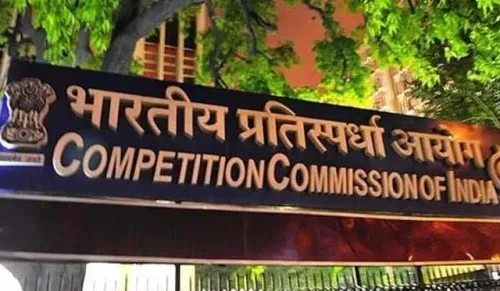
Retailers' body files CCI complaint against Flipkart over alleged predatory practices

Synopsis
A retailers' association has accused Flipkart of using alleged GST avoidance worth ₹3,000 crore to fund deep discounts, giving preferential access to 33 hand-picked sellers, and secretly running an inventory-led model banned under India's FDI rules — all while the Walmart-owned platform reportedly prepares for a public listing.
Key Takeaways
FIRST , under the India SME Forum , has filed a complaint with the CCI against Flipkart and parent Walmart .
The complaint alleges GST avoidance created a pool of nearly ₹3,000 crore used to fund predatory discounts.
33 select sellers allegedly received preferential treatment, allowing them to list products below cost.
FIRST claims Flipkart effectively operates an inventory-led model , violating India's FDI rules for e-commerce marketplaces.
The complaint also covers group entities Myntra , Ekart , and Cleartrip for alleged Competition Act violations.
Flipkart denied the allegations, saying it enables more than 1.4 million sellers and complies with all applicable laws.
The Forum for Internet Retailers, Sellers and Traders (FIRST), an association of online retailers operating under the India SME Forum, has filed a complaint with the Competition Commission of India (CCI) alleging that Flipkart engaged in predatory pricing, discriminatory treatment of sellers, and structural violations of India's foreign direct investment (FDI) rules for e-commerce. The complaint, reported on 10 July, targets not just Flipkart but also its parent Walmart and group entities including Myntra, Ekart, and Cleartrip.
Key Allegations Against Flipkart
According to the complaint, FIRST alleged that Flipkart's GST avoidance created a pool of nearly ₹3,000 crore, which the Walmart-owned platform allegedly deployed to offer deep discounts that independent sellers could not match. The association further alleged that 33 select sellers received preferential treatment, being permitted to list products below cost — placing the broader marketplace at a structural disadvantage.
FIRST also claimed that Flipkart was effectively operating an inventory-led model — a structure prohibited under India's FDI rules, which permit foreign-owned platforms to function only as neutral marketplaces. Critics argue this distinction is central to the fairness of India's digital commerce ecosystem.
Scope of the CCI Complaint
The retailers' body has urged the competition watchdog to investigate Flipkart, Walmart, and group companies Myntra, Ekart, and Cleartrip for alleged violations of the Competition Act. The complaint represents one of the more expansive regulatory challenges to the Flipkart group, covering pricing conduct, seller discrimination, and corporate structure simultaneously.
Flipkart's Response
Flipkart denied any wrongdoing. 'Flipkart operates in compliance with all applicable laws and regulations and will cooperate with any regulatory process, as required,' a company spokesperson said in a statement. The company added that it currently enables more than 1.4 million sellers — the majority of them MSMEs, farmer producer organisations (FPOs), and small businesses — to reach customers across India.
Broader Context and What's at Stake
The complaint arrives at a particularly sensitive moment: Flipkart is reportedly preparing for a public listing, and fresh regulatory scrutiny could complicate that timeline. This is not the first time large e-commerce platforms have faced such allegations — the CCI has previously examined Amazon and Flipkart over concerns about preferential treatment and deep discounting. Notably, the Parliamentary Standing Committee on Commerce has also flagged marketplace neutrality as a systemic concern for Indian MSMEs.
With over 1.4 million sellers on its platform and a dominant share of India's online retail market, the outcome of any CCI inquiry could have significant implications for how e-commerce marketplaces structure seller relationships and pricing policies going forward.
Point of View
Acquisition, or expansion — regulatory scrutiny intensifies. What makes this filing notable is its breadth: GST avoidance, seller discrimination, and FDI structure violations are three distinct legal theories bundled into one complaint, maximising the surface area for a CCI inquiry. Flipkart's boilerplate response — compliance with all laws — is standard crisis communication, but it sidesteps the structural question at the heart of the complaint: whether a foreign-owned marketplace can simultaneously be the dominant buyer, logistics provider, and platform operator without distorting competition. That question remains unresolved in Indian regulatory jurisprudence, and the CCI's response here could set a precedent that reshapes the entire sector.
NationPress
9 Oct 2026
Frequently Asked Questions
What is the CCI complaint against Flipkart about?
The complaint, filed by the Forum for Internet Retailers, Sellers and Traders (FIRST), alleges that Flipkart engaged in predatory pricing, gave preferential treatment to 33 select sellers, and violated India's FDI rules by effectively operating an inventory-led model. It also alleges that GST avoidance created a pool of nearly ₹3,000 crore used to fund deep discounts.
Who filed the complaint and with which authority?
FIRST, an association of online retailers under the India SME Forum, filed the complaint with the Competition Commission of India (CCI). The complaint names Flipkart, its parent Walmart, and group companies Myntra, Ekart, and Cleartrip.
How has Flipkart responded to the allegations?
Flipkart denied any wrongdoing, stating it operates in compliance with all applicable laws and will cooperate with any regulatory process. The company also said it supports more than 1.4 million sellers, most of them MSMEs and small businesses.
Why does India's FDI rule on e-commerce matter here?
India's FDI policy permits foreign-owned companies to operate e-commerce platforms only as neutral marketplaces — not as inventory-led retailers. FIRST alleges Flipkart has blurred this line, giving it an unfair structural advantage over independent sellers who must operate within marketplace rules.
What is the significance of the timing of this complaint?
The complaint comes as Flipkart is reportedly preparing for a public listing, adding a layer of regulatory risk to that process. It also follows broader parliamentary and regulatory scrutiny of large e-commerce platforms over marketplace neutrality and deep discounting practices.