Shekhawat Spotlights Kargil Tiranga Rangoli Ahead of I-Day
Synopsis
Union Culture Minister Gajendra Singh Shekhawat amplified a stone tricolour rangoli made by Team Stringmo on Kargil's historic ground, calling it a symbol of patriotism and unity, and urged all citizens to join the annual Har Ghar Tiranga campaign ahead of Independence Day on 15 August 2026.
Key Takeaways
Team Stringmo created a large tricolour rangoli using stones in Kargil, Ladakh , ahead of Independence Day 2026 .
Union Culture Minister Gajendra Singh Shekhawat shared and amplified the initiative on 11 August 2026 .
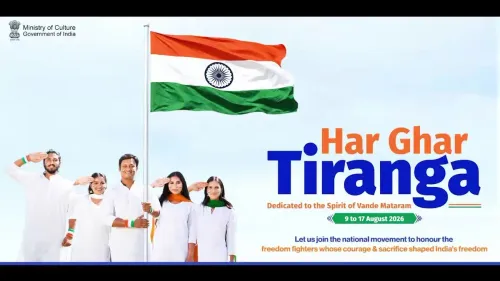
The event is part of the annual #HarGharTiranga campaign, first launched by the Ministry of Culture in 2022 under Azadi Ka Amrit Mahotsav .
Citizens are invited to hoist the tricolour and upload selfies at harghartiranga.com before 15 August .
Kargil was chosen for its deep association with the 1999 Kargil War , connecting civilian participation with military sacrifice.
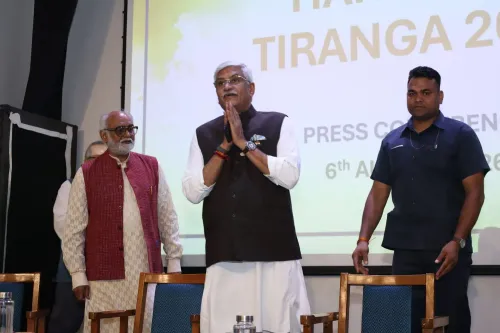
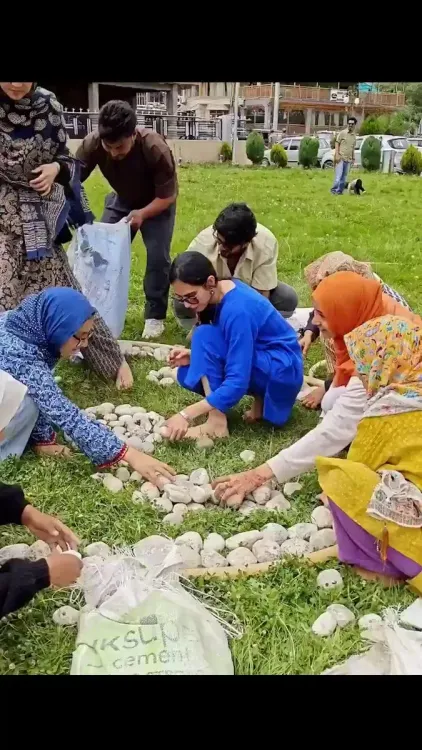
On the hallowed ground of Kargil — where India's soldiers held the line in 1999 — patriotism took a vivid, stone-by-stone form this week. Union Culture and Tourism Minister Gajendra Singh Shekhawat highlighted a striking tricolour rangoli crafted entirely from stones by Team Stringmo, sharing the initiative on Tuesday, 11 August 2026, as the country counts down to Independence Day.
Shekhawat's post, in Hindi, captured the moment with characteristic pride: 'कारगिल की वीरभूमि पर रंगों में खिला तिरंगे का गौरव!' — 'The glory of the tricolour bloomed in colours on the brave land of Kargil!' He called the installation a remarkable picture of 'patriotism, unity, and national pride,' and urged citizens to join the #HarGharTiranga campaign by hoisting the flag and uploading a selfie at harghartiranga.com.
Kargil as Canvas: Why This Location Carries Extra Weight
The choice of Kargil is not incidental. The district in Ladakh is permanently associated with the sacrifice of Indian soldiers in the 1999 Kargil War, making it one of the most emotionally resonant venues the campaign could have chosen. A stone rangoli of the tricolour here is less a craft project and more a statement — civilian creativity meeting military memory on the same soil.
Team Stringmo, a local group, constructed the large-scale rangoli using stones rather than the traditional coloured powder, giving the installation a permanence and ruggedness fitting for the landscape. The Ministry of Culture has consistently sought to anchor the Har Ghar Tiranga campaign at sites linked to military history, precisely to bridge the gap between border communities and the national flag-hoisting movement.
Har Ghar Tiranga: Four Years Running
The Har Ghar Tiranga campaign was launched by the Ministry of Culture in 2022 as a centrepiece of Azadi Ka Amrit Mahotsav, the government's celebration of 75 years of Indian independence. What began as a single-year push has become an annual fixture, with citizens encouraged each August to hoist the national flag at their homes and share selfies on the official portal.
The campaign's digital arm — harghartiranga.com — serves as both a registration platform and a participation tracker, with selfie uploads functioning as a crowd-sourced measure of reach. As 15 August 2026 approaches, the Ministry is amplifying local events like the Kargil rangoli to drive fresh registrations and keep momentum high in the campaign's fifth year.
From the peaks of Ladakh to living rooms across the country, the tricolour's reach this Independence Day is being measured one selfie at a time.
Point of View
When novelty risk is real. By anchoring Independence Day messaging to a site of military sacrifice, the government reinforces the campaign's core argument: that flag-hoisting is not a bureaucratic exercise but an act of remembrance. For Minister Shekhawat, amplifying a border-community initiative also carries political utility, projecting the BJP's nationalist cultural agenda through grassroots imagery rather than top-down directives. The campaign's longevity will ultimately depend on whether digital participation numbers continue to grow — a metric the Ministry has yet to make fully transparent.
NationPress
11 Aug 2026
Frequently Asked Questions
What is the Har Ghar Tiranga campaign?
Har Ghar Tiranga is a national campaign launched by India's Ministry of Culture in 2022 under Azadi Ka Amrit Mahotsav to encourage every household to hoist the tricolour around Independence Day. Citizens can register and upload selfies at harghartiranga.com.
Who is Team Stringmo and what did they do in Kargil?
Team Stringmo is a local group based in the Kargil region of Ladakh. They created a large-scale tricolour rangoli using stones — rather than traditional coloured powder — on the grounds of Kargil ahead of Independence Day 2026.
Why was Kargil chosen for this Har Ghar Tiranga event?
Kargil holds deep national significance as the site of the 1999 Kargil War, where Indian soldiers defended the country's borders. Organising a patriotic event there connects civilian participation in the campaign with themes of military sacrifice and national unity.
How can I participate in Har Ghar Tiranga 2026?
You can participate by hoisting the national flag at your home and uploading a selfie on the official portal harghartiranga.com before 15 August 2026.
What did Gajendra Singh Shekhawat say about the Kargil rangoli?
Minister Shekhawat described the stone tricolour rangoli as a remarkable picture of 'patriotism, unity, and national pride,' and called Kargil a 'veerbhoomi' — a land of the brave — urging all citizens to join the Har Ghar Tiranga campaign.