Shekhawat urges Har Ghar Tiranga participation ahead of I-Day
Synopsis
Union Culture Minister Gajendra Singh Shekhawat on 26 July 2026 urged Indians to display the tricolour at home under the Har Ghar Tiranga campaign, calling it a natural expression of patriotism and invoking the spirit of previous years' participation ahead of Independence Day 2026.
Key Takeaways
Union Culture and Tourism Minister Gajendra Singh Shekhawat posted on 26 July 2026 urging citizens to join the Har Ghar Tiranga campaign.
The campaign was first launched by the Ministry of Culture in July 2022 under Azadi Ka Amrit Mahotsav to mark 75 years of independence .
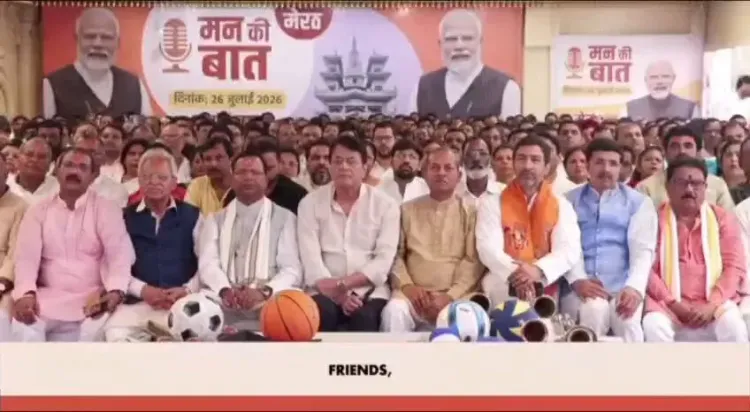
The post was tagged to #MannKiBaat , linking the appeal to Prime Minister Narendra Modi 's monthly public outreach programme.
The campaign has been repeated annually in 2023 , 2024 , and 2025 , with state governments coordinating flag distribution drives.
Official participation data for 2026 is expected around 15 August 2026 .
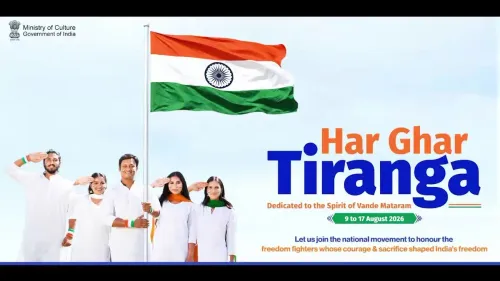
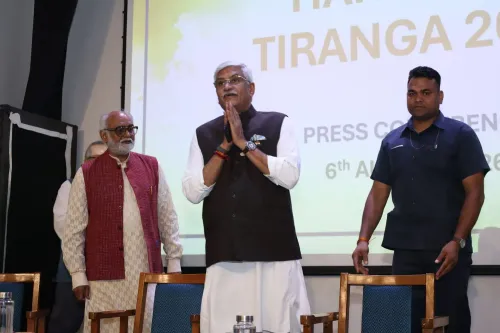
Union Culture and Tourism Minister Gajendra Singh Shekhawat on Sunday, 26 July 2026, called on citizens to continue flying the national flag at their homes under the Har Ghar Tiranga campaign, citing the initiative's growing role as a natural expression of patriotism.
Posting on X and tagging #MannKiBaat and #HarGharTiranga, the minister wrote: 'Har Ghar Tiranga abhiyaan ab deshprem ki sahaj abhivyakti ka madhyam ban gaya hai' ['The Har Ghar Tiranga campaign has now become a natural medium for expressing love for the country']. He urged citizens to 'ensure their participation as in previous years.'
Context
The Har Ghar Tiranga campaign was formally launched by the Ministry of Culture in July 2022 as a centrepiece of Azadi Ka Amrit Mahotsav, the government's series of events marking 75 years of India's independence. The drive asks every household across the country to hoist or display the tricolour in the days leading up to and on Independence Day, 15 August.
Since its debut, the campaign has been repeated annually. Prime Minister Narendra Modi has consistently amplified it through his monthly radio programme Mann Ki Baat, issuing fresh calls for participation in 2023, 2024, and 2025. Shekhawat's post, tagged to #MannKiBaat, signals that the campaign is once again being coordinated in step with the Prime Minister's public outreach.
Policy Backdrop
The initiative sits within a broader government effort to popularise national symbols and foster civic patriotism through mass participation rather than top-down mandates. The Ministry of Culture has anchored it alongside programmes such as Ek Bharat Shreshtha Bharat, which promotes cultural unity across states.
State governments play a key logistical role each year, coordinating flag distribution and awareness drives at the district level. Social-media amplification by Union ministers and BJP leaders has been a consistent feature of the campaign's outreach strategy, with posts timed to build momentum in the three weeks before 15 August.
Stakeholders and Impact
Indian households are the primary audience, with the campaign designed to be low-barrier — citizens need only display a flag at home. The tricolour's display is governed by the Flag Code of India, 2002, which was amended in 2022 to allow machine-made polyester flags and round-the-clock hoisting at private residences, directly enabling the campaign's mass scale.
The campaign has drawn participation from tens of millions of households in previous editions, with the Ministry of Culture releasing state-wise data around each Independence Day. Official figures for 2026 are expected to be published around 15 August 2026.
What's Next
With Independence Day 2026 falling on Saturday, 15 August, the coming weeks are likely to see coordinated calls from central and state governments, fresh guidelines from the Ministry of Culture, and continued social-media mobilisation. Any updated participation data or new directives from the ministry will offer a clearer picture of the campaign's reach this year.
Point of View
Reinforcing a top-down-meets-grassroots messaging architecture the BJP has refined since 2022. The campaign also serves a secondary function — keeping the Azadi Ka Amrit Mahotsav legacy visible even as that formal programme has concluded. For the Ministry of Culture, participation numbers released on or after 15 August function as a soft metric of public engagement with the government's cultural agenda.
NationPress
25 Oct 2026
Frequently Asked Questions
What is the Har Ghar Tiranga campaign?
Har Ghar Tiranga is a national campaign launched by India's Ministry of Culture in July 2022 that encourages every household to display the national flag at home around Independence Day on 15 August each year.
Why is Gajendra Singh Shekhawat calling for Har Ghar Tiranga participation?
As Union Minister of Culture and Tourism, Shekhawat is responsible for the campaign and issued the appeal on 26 July 2026 to mobilise citizens ahead of Independence Day 2026, as has been done in previous years.
What is Mann Ki Baat and how is it linked to Har Ghar Tiranga?
Mann Ki Baat is Prime Minister Narendra Modi's monthly radio address to citizens. Modi has used the programme to promote the Har Ghar Tiranga campaign each year since 2022, and Shekhawat's post was explicitly tagged to #MannKiBaat.
When did the Har Ghar Tiranga campaign start?
The campaign was formally launched in July 2022 as part of Azadi Ka Amrit Mahotsav, the government's programme marking 75 years of India's independence.
Can citizens display the Indian flag at home at night under Har Ghar Tiranga?
Yes. The Flag Code of India, 2002 was amended in 2022 to permit round-the-clock hoisting of the tricolour at private residences, a change that directly enabled the mass-participation model of the Har Ghar Tiranga campaign.