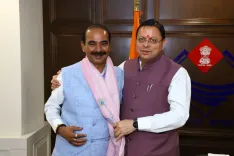
Supreme Court grants bail to Mahesh Joshi in Jal Jeevan Mission scam case
Synopsis
Former Rajasthan PHED minister Mahesh Joshi, already once bailed by the Supreme Court in the ED's money-laundering case, has now secured bail in the ACB's separate corruption case tied to alleged ₹900-crore JJM tender fraud. This is his second Supreme Court bail in under a year — a legal trajectory that underscores both the complexity of parallel investigations and the courts' scrutiny of prolonged pre-trial detention.
Key Takeaways
The Supreme Court granted regular bail to former Rajasthan PHED minister Mahesh Joshi and co-accused Mukesh Pathak in the Rajasthan ACB case on 16 October 2026 .
The case involves alleged irregularities in Jal Jeevan Mission contracts worth more than ₹900 crore , including bribery and use of forged documents.
The Rajasthan High Court had rejected bail for eight accused , including Joshi, in August 2026 ; he then moved the Supreme Court.
Joshi was earlier granted bail by the Supreme Court on 3 December 2025 in a separate ED money-laundering case; the ACB re-arrested him on 7 May 2026 .
The bail order does not amount to acquittal; ED and ACB investigations continue independently.
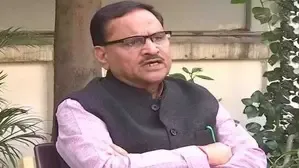
Former Rajasthan Public Health Engineering Department (PHED) minister Mahesh Joshi has secured significant legal relief, with the Supreme Court granting him regular bail in the Jal Jeevan Mission (JJM) scam case registered by the Rajasthan Anti-Corruption Bureau (ACB). Co-accused Mukesh Pathak has also been granted bail in the same order. The development comes after Joshi spent months in custody following his re-arrest in May 2026.
Background of the Case
The case centres on alleged irregularities in the awarding of government contracts worth more than ₹900 crore under the Jal Jeevan Mission — a central government scheme aimed at providing functional tap-water connections to rural households. Investigating agencies have alleged the use of forged documents, favouritism towards select companies, and bribery involving officials and intermediaries. Questions have also reportedly been raised over the quality of materials used in several projects.
The Enforcement Directorate (ED) and the Rajasthan ACB have been pursuing parallel investigations in their respective jurisdictions. Joshi, who served as a minister in the previous Rajasthan government, has faced proceedings before multiple agencies in connection with these allegations.
Supreme Court Hearing and Order
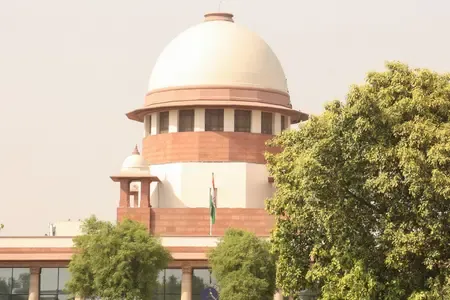
A Supreme Court Bench comprising Justice Dipankar Datta and Justice Sheel Nagu heard arguments on Joshi's bail petition on 12 October 2026 and reserved its verdict. The court has now granted him regular bail in the ACB case. His release remains subject to completion of the necessary legal formalities and any other judicial conditions the court may have attached.
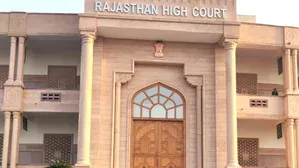
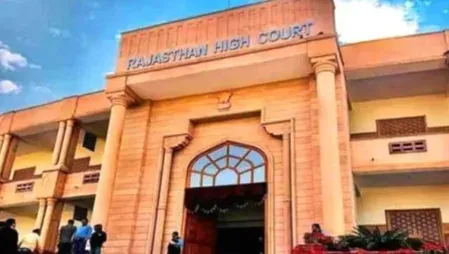
Notably, the Rajasthan High Court had in August 2026 rejected bail pleas of eight accused, including Joshi and former IAS officer Subodh Agarwal. A single-judge Bench of Justice Vipin Gupta had cited the seriousness of the allegations and substantial financial implications for the state exchequer. Joshi subsequently challenged that order before the Supreme Court.
Joshi's Earlier Legal Journey
This is not Joshi's first brush with custody in matters linked to the JJM controversy. In April 2025, the ED arrested him in a money-laundering case connected to the alleged scam. After approximately seven months in custody, the Supreme Court granted him regular bail on 3 December 2025, taking into account his period of incarceration and his age, then reported to be 71.
However, the Rajasthan ACB re-arrested Joshi on 7 May 2026 from his Jaipur residence in a separate corruption case linked to the same alleged tender irregularities. He had remained in custody in the ACB case until the Supreme Court's latest order.
What the Bail Order Does Not Mean
The Supreme Court's bail order provides Joshi relief specifically in the ACB case. It does not constitute an acquittal, and the allegations against all accused, including Joshi and Pathak, remain subject to ongoing judicial proceedings. Both the ED and the ACB investigations into the alleged JJM irregularities in Rajasthan continue independently. How courts weigh the evidence at trial will ultimately determine accountability in what has emerged as one of the more closely watched corruption cases in the state.
Point of View
Now from ACB custody — raises a pointed question about the coordination between parallel investigative agencies. When a former minister can be re-arrested days after one agency's case collapses, the risk is that bail becomes a procedural revolving door rather than a meaningful liberty safeguard. More broadly, the JJM scam in Rajasthan is a test case for whether India's multi-agency approach to corruption investigations strengthens accountability or simply extends pre-trial detention without advancing convictions. The trial, not the arrest cycle, will be the real reckoning.
NationPress
16 Oct 2026
Frequently Asked Questions
Why did the Supreme Court grant bail to Mahesh Joshi in the Jal Jeevan Mission case?
The Supreme Court granted regular bail to former Rajasthan PHED minister Mahesh Joshi in the ACB's corruption case linked to alleged JJM tender irregularities after a Bench of Justice Dipankar Datta and Justice Sheel Nagu heard his petition. The Rajasthan High Court had earlier rejected his bail plea in August 2026, citing the seriousness of the allegations and financial implications for the state.
What is the Jal Jeevan Mission scam in Rajasthan about?
The alleged scam involves irregularities in the awarding of government contracts worth more than ₹900 crore under the Jal Jeevan Mission, a scheme to provide tap-water connections to rural households. Investigating agencies have alleged bribery, use of forged documents, favouritism towards certain companies, and questions over materials quality.
Has Mahesh Joshi been granted bail before in this matter?
Yes. The Supreme Court granted Joshi bail on 3 December 2025 in a separate ED money-laundering case, after he had spent approximately seven months in custody. The Rajasthan ACB then re-arrested him on 7 May 2026 in its own corruption case, leading to the latest bail petition.
Does the Supreme Court bail mean Mahesh Joshi has been acquitted?
No. The bail order provides relief from custody in the ACB case but does not constitute an acquittal. All allegations against Joshi and other accused remain subject to ongoing judicial proceedings by both the ED and the Rajasthan ACB.
Who else is accused in the Jal Jeevan Mission case in Rajasthan?
Co-accused Mukesh Pathak has also been granted bail alongside Joshi. Former IAS officer Subodh Agarwal was among eight accused whose bail pleas were rejected by the Rajasthan High Court in August 2026. Multiple other accused are part of the broader investigation by the ED and the ACB.