Rajasthan ACB files 3,000-page chargesheet in ₹20,000 crore JJM scam
Synopsis
The Rajasthan ACB has filed a 3,000-page chargesheet in the ₹20,000 crore Jal Jeevan Mission scam, directly naming former PHED Minister Mahesh Joshi — even as the High Court has flagged serious procedural lapses by the same bureau in how it communicated grounds of arrest. A massive corruption case with a self-inflicted credibility problem.
Key Takeaways
The Rajasthan ACB filed a 3,000-page chargesheet on 1 July in the alleged ₹20,000 crore JJM scam .
Former PHED Minister Mahesh Joshi and private individual Sanjay Badaya are named in the latest chargesheet.
11 accused , including Mahesh Joshi, are currently in judicial custody ; arrest warrants are pending against 3 others .
The Rajasthan High Court dismissed a habeas corpus plea by Joshi's son but flagged procedural lapses by the ACB, including failure to communicate grounds of arrest in writing.
The ACB has indicated supplementary chargesheets will be filed as the investigation continues.
The Rajasthan Anti-Corruption Bureau (ACB) has filed a nearly 3,000-page chargesheet before a special court in Jaipur in the alleged Jal Jeevan Mission (JJM) scam worth ₹20,000 crore, naming former Public Health Engineering Department (PHED) Minister Mahesh Joshi and private individual Sanjay Badaya as accused. The chargesheet was submitted on 1 July before the court of Special ACB Judge Rajesh Kumar Dadiya.
Public Prosecutor Manjula Jain, appearing for the state government, told the court that the investigation remains ongoing and has not yet been concluded.
Phase-Wise Chargesheets as Probe Widens
This is not the first chargesheet filed in the case. The ACB had previously submitted a chargesheet against 10 other accused, including former Additional Chief Secretary Subodh Agrawal. The agency has adopted a phase-wise approach to filing chargesheets as the investigation progresses, and has indicated that supplementary chargesheets may follow.
According to the ACB, the probe is focused on alleged irregularities in the tender process, contract awards, and financial transactions under the Jal Jeevan Mission in Rajasthan.
Accused in Judicial Custody
A total of 11 individuals are currently lodged in judicial custody in connection with the case: former Minister Mahesh Joshi, Sanjay Badaya, Dinesh Goyal, Krishnadeep Gupta, Shubhanshu Dixit, Sushil Sharma, Vishal Saxena, D.K. Gaur, Mahendra Prakash Soni, Mukesh Pathak, and Niril Kumar.
Accused Arun Srivastava has been granted bail by the Rajasthan High Court. Standing arrest warrants have been issued against Jitendra Sharma, Mukesh Goyal, and Sanjeev Gupta, with efforts underway to apprehend them.
High Court Flags Procedural Lapses by ACB
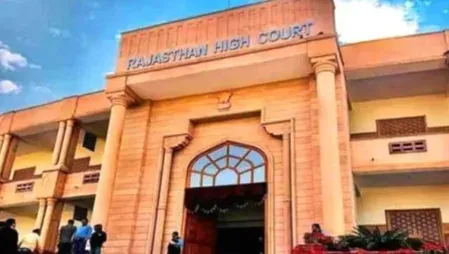
In a significant parallel development, the Rajasthan High Court recently dismissed a habeas corpus petition filed by Rohit Joshi, son of former Minister Mahesh Joshi, which challenged the legality of his father's arrest. While rejecting the plea, the court made pointed observations against both the ACB and the Special Judge, noting serious procedural lapses and expressing concern that certain facts appeared to have been manipulated.
A Division Bench comprising Justice Umashankar Vyas and Justice Ashok Kumar Jain found that the constitutional requirement of communicating the grounds of arrest in writing had not been properly followed. The court recorded that the ACB had failed to place any document on record showing that Mahesh Joshi had been informed of the actual grounds of his arrest — a constitutional mandate, the Bench underscored.
The court, however, held that since Mahesh Joshi was already in judicial custody pursuant to court orders, the legality of his initial arrest could not be examined through a habeas corpus petition, in line with Supreme Court precedents. The petition was dismissed while leaving open the option of challenging the Special Judge's order through appropriate legal remedies.
What the JJM Scam Involves
The Jal Jeevan Mission is a flagship Central scheme aimed at providing piped drinking water to every rural household. Allegations in the Rajasthan case centre on large-scale irregularities in tendering and contract awards under the mission, with the estimated financial irregularity placed at ₹20,000 crore. This is among the largest corruption cases to be prosecuted by the Rajasthan ACB in recent years, and the probe's expanding scope — reflected in successive chargesheets — signals the bureau's intent to pursue the matter comprehensively.
With supplementary chargesheets expected and three accused still at large, the case is far from its final chapter.
Point of View
The timeline to trial remains uncertain — and prolonged judicial custody without a concluded probe puts due-process pressure on the state.
NationPress
30 Sept 2026
Frequently Asked Questions
What is the Rajasthan JJM scam?
The Rajasthan Jal Jeevan Mission (JJM) scam refers to alleged large-scale irregularities in tendering, contract awards, and financial transactions under the Central government's Jal Jeevan Mission scheme in Rajasthan, with estimated financial irregularities of ₹20,000 crore. The Rajasthan Anti-Corruption Bureau is investigating the case and has filed multiple chargesheets against senior officials and politicians.
Who has been named in the latest ACB chargesheet?
The latest 3,000-page chargesheet names former Public Health Engineering Department (PHED) Minister Mahesh Joshi and private individual Sanjay Badaya. An earlier chargesheet had named 10 other accused, including former Additional Chief Secretary Subodh Agrawal.
How many accused are currently in judicial custody?
Eleven accused are currently in judicial custody, including former Minister Mahesh Joshi. Accused Arun Srivastava has been granted bail by the Rajasthan High Court, while standing arrest warrants are in force against Jitendra Sharma, Mukesh Goyal, and Sanjeev Gupta.
What did the Rajasthan High Court say about the ACB's handling of the case?
The Rajasthan High Court dismissed a habeas corpus petition challenging Mahesh Joshi's arrest but made sharp observations against the ACB, finding that the constitutional requirement of communicating grounds of arrest in writing had not been followed. The court noted that no document was placed on record to show Joshi had been informed of the actual grounds of his arrest.
Will more chargesheets be filed in the JJM scam case?
Yes. The ACB has indicated that supplementary chargesheets will be filed as the investigation progresses. The probe into tender irregularities, contract awards, and financial transactions under the Jal Jeevan Mission in Rajasthan is officially described as still ongoing.